
What is natural weight management: a 2026 guide
TL;DR:
- Natural weight management focuses on gradual, lifestyle-driven habits rather than restrictive diets or shortcuts. It emphasizes consistent behaviors like adequate protein, fiber intake, regular movement, quality sleep, and stress management for sustainable results. Patience and system-building, rather than quick fixes, are key to long-term success.
Most people assume losing weight means cutting calories aggressively and suffering through it until the number on the scales drops. That framing is why so many attempts fail. What is natural weight management, really? It is the practice of achieving and sustaining a healthy body weight through gradual, habit-driven lifestyle changes rather than restrictive diets or pharmaceutical shortcuts. It works with your biology, not against it. This guide covers the science behind it, the strategies that actually hold up over time, and the common traps that derail even the most motivated people.
Table of Contents
- Key takeaways
- What natural weight management really means
- Key strategies backed by research
- Common pitfalls and how to avoid them
- Building your natural weight management system
- My honest take on why most people struggle
- Support your goals with Oxyhealth
- FAQ
Key takeaways
| Point | Details |
|---|---|
| Gradual loss wins long-term | Losing 1 to 2 pounds per week is the most sustainable rate for keeping weight off. |
| Habits take time to form | Consistent behaviours take roughly 59 to 66 days to become automatic. |
| Protein and fibre are foundational | Prioritising protein and whole plant foods supports satiety and metabolic health without side effects. |
| Sleep and stress matter as much as food | Poor sleep raises hunger hormones and promotes fat storage, making rest a weight management tool. |
| Flexibility prevents burnout | An 80/20 approach to eating keeps you consistent without social isolation or restriction fatigue. |
What natural weight management really means
Natural weight management is not a diet. It is a system of behaviours that, when practised consistently, allow your body to reach and hold a weight that supports your health. The word “natural” here refers to methods that work through lifestyle rather than medication, extreme calorie restriction, or synthetic interventions.
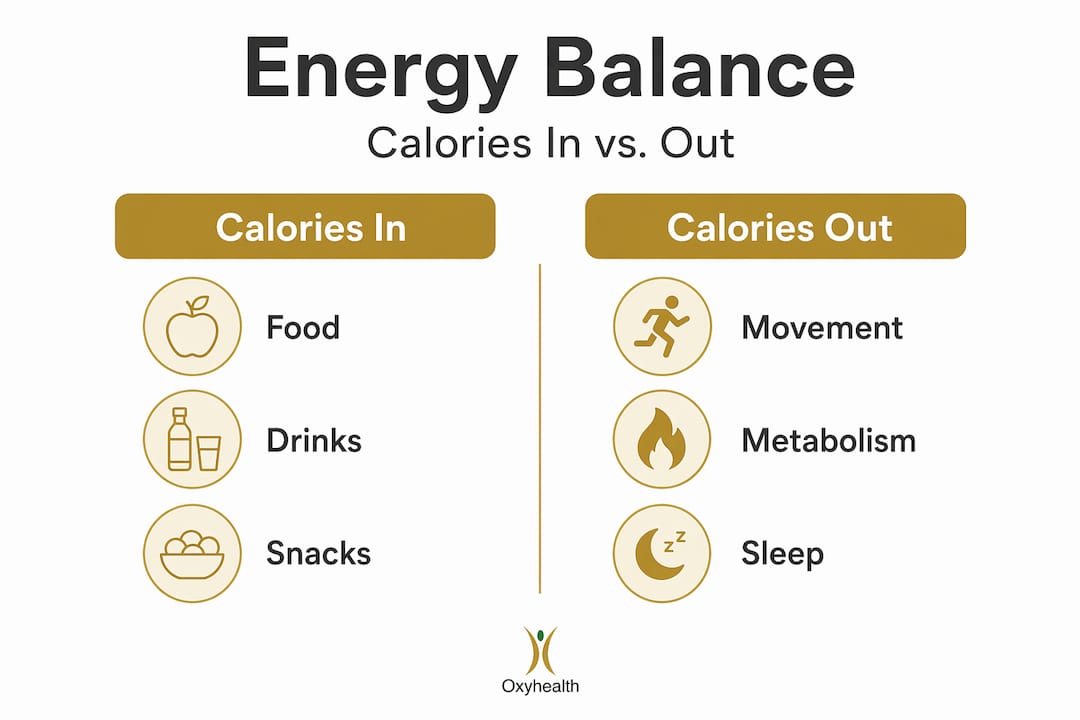
From a physiological standpoint, weight is governed by energy balance: the relationship between calories consumed and calories expended. But that is only part of the picture. Hormones, sleep quality, stress levels, gut health, and muscle mass all influence how your body stores and burns energy. Natural weight management addresses all of these together.
| Pillar | Role in weight management |
|---|---|
| Protein intake | Preserves muscle, increases satiety, supports metabolism |
| Dietary fibre | Slows digestion, feeds gut bacteria, reduces hunger signals |
| Physical movement | Burns calories, builds muscle, improves insulin sensitivity |
| Sleep quality | Regulates hunger hormones ghrelin and cortisol |
| Stress management | Reduces cortisol-driven fat storage, especially around the abdomen |
Research supports a gradual loss of 1 to 2 pounds per week as the rate most likely to lead to lasting results. Faster approaches tend to cause muscle loss and metabolic slowdown, making regain almost inevitable. Natural weight management also recognises that behaviour and biology interact constantly. Your habits shape your hormones, and your hormones shape your habits. Getting that relationship working in your favour is the whole game.
Pro Tip: Do not judge your progress solely by the scales. Track waist measurements, energy levels, and sleep quality alongside weight. These indicators often reveal positive change before the number moves.
Key strategies backed by research
Understanding the principles is one thing. Knowing which specific habits to build is another. The following strategies represent the most research-supported approaches for how to manage weight naturally over the long term.
-
Prioritise protein at every meal. Aim for 1.6 to 2.2 grams of protein per kilogram of body weight daily. Protein keeps you fuller for longer, reduces muscle loss during a calorie deficit, and has a higher thermic effect than carbohydrates or fat, meaning your body burns more energy just digesting it. Practical sources include eggs, Greek yoghurt, legumes, fish, chicken, and tofu.
-
Build meals around whole plant foods. Polyphenols and fibre in plants target hunger signals and support metabolic health without the side effects associated with pharmacological options. Aim for at least five portions of vegetables and fruit daily, with an emphasis on variety. Lentils, oats, broccoli, and berries are particularly fibre-dense options.
-
Move your body daily, not just intensely. The research recommends 150 minutes of moderate aerobic activity plus strength training twice per week. But daily movement matters beyond formal exercise. Walking after meals, taking the stairs, and standing regularly throughout the day all contribute to calorie expenditure and insulin sensitivity in ways that structured gym sessions alone cannot replicate.
-
Protect your sleep. Poor sleep raises ghrelin and cortisol, the hormones that drive hunger and belly fat storage. Seven to nine hours of quality sleep per night is not optional for natural weight loss. It is a core strategy. Consistent sleep and wake times, limiting screen exposure before bed, and keeping your bedroom cool all improve sleep architecture meaningfully.
-
Manage stress deliberately. Chronic stress keeps cortisol elevated, which encourages fat storage and undermines the satiety signals from leptin. Techniques like breathwork, walking in nature, and reducing caffeine after midday are practical, low-cost tools that compound over time.
-
Slow down at meals and drink more water. Eating more slowly allows satiety signals to reach your brain before you have overeaten. Drinking a glass of water before meals reduces calorie intake without any conscious effort.
Pro Tip: Habit formation for natural weight management takes 59 to 66 days on average to become automatic. Do not evaluate whether a strategy is working after two weeks. Give each new habit at least two months before deciding.
Common pitfalls and how to avoid them
Even with the best intentions, most people hit predictable obstacles. Knowing them in advance is the most practical form of preparation.
-
The all-or-nothing trap. One off-plan meal becomes a reason to abandon the entire week. This thinking does more damage than the meal ever could. The 80/20 principle is a far more durable framework: focus on nutrient-dense whole foods 80% of the time and allow flexibility for the remaining 20%. This prevents the social isolation and burnout that rigid dieting creates.
-
Decision fatigue. Every food choice you make throughout the day draws from a finite reserve of mental energy. Meal anchors and environmental cues reduce this drain significantly. If you know you will have eggs and vegetables for breakfast every weekday, that is one fewer decision to make. Systems beat willpower every time.
-
Misreading plateaus. When weight loss stalls after several weeks of progress, most people either panic and cut calories further or give up entirely. Neither is the right response. Plateaus are physiological adaptations, not failures. Short diet breaks of 7 to 14 days at maintenance calories restore hormonal balance and reduce metabolic fatigue far more effectively than intensified restriction.
-
Assuming natural means safe. This is one of the most overlooked nuances in any natural weight management guide. Natural weight loss methods carry possible health risks and produce varied outcomes per individual. Herbal supplements, extreme detox protocols, and aggressive elimination diets can all cause harm. If you are considering natural supplements as part of your approach, research them carefully and speak to a healthcare professional first.
-
Ignoring individual variation. What works brilliantly for one person may do very little for another. Genetics, gut microbiome composition, stress load, and sleep quality all influence how your body responds to dietary and lifestyle changes. Personalisation is not a luxury. It is a requirement for long-term success.
Building your natural weight management system
Knowing the strategies is not the same as having a system. Here is how to translate the above into a structure you can actually live with.
-
Set realistic, incremental goals. Rather than targeting a specific weight, focus on behaviour targets: eating protein with every meal, walking 8,000 steps daily, sleeping by 10:30pm. Behaviour goals are within your direct control. Weight is not. Tracking food, activity, and sleep with a journal or app builds the self-awareness that makes adjustment possible.
-
Design your meal pattern around protein and plants. Build each meal starting with a protein source, then add vegetables, then add a small amount of complex carbohydrates if needed. This sequence naturally limits calorie density without requiring you to count anything.
-
Choose movement you enjoy. Sustainable physical activity is activity you will actually do consistently. Cycling, swimming, dancing, hiking, and yoga all count. The evidence-based activity levels recommended for weight control are achievable through any form of movement you genuinely look forward to.
-
Build a sleep routine. Set a consistent bedtime, remove devices from the bedroom, and treat sleep as a non-negotiable health behaviour rather than something that happens when everything else is done.
-
Prepare for social situations. Eating out, social gatherings, and celebrations are part of life. Plan ahead by eating a protein-rich snack before events, choosing dishes with visible vegetables and lean protein, and giving yourself permission to enjoy the occasion without guilt.
-
Use natural supplements as support, not solutions. Products like plant-based digestive aids or vitamin supplements can complement a strong lifestyle foundation. They are not replacements for it. Understanding why synthetic supplements fall short helps clarify what to look for when choosing natural alternatives.
Pro Tip: Review your system every four weeks, not every day. Daily fluctuations in weight and energy are normal. Monthly reviews give you enough data to spot genuine trends and adjust without overreacting to noise.
My honest take on why most people struggle
I have seen a consistent pattern in how people approach weight management, and it comes down to one fundamental misunderstanding. They treat it as something they do for a period of time rather than something they become over time.

The psychological barriers to maintaining healthy weight routines are real and underestimated. Willpower is not a character trait. It is a resource that depletes. People who succeed long-term are not more disciplined. They have built better systems that require less daily discipline to maintain.
What I have found genuinely useful is shifting the question from “How do I lose weight?” to “What kind of person do I want to be, and what does that person do each day?” That reframe moves the focus from outcomes you cannot directly control to behaviours you can. It also makes the process feel less like deprivation and more like identity.
Societal pressure to achieve fast, dramatic results is real and damaging. It sells products and programmes, but it does not reflect how human biology actually works. Patience is not a weakness in natural weight management. It is the strategy.
— John
Support your goals with Oxyhealth
If you are building a natural weight management routine and want to complement it with high-quality supplements, Oxyhealth has you covered.

Oxyhealth stocks a curated range of natural supplements sourced primarily from Global Healing, one of the most respected names in organic and plant-based health products. From digestive support and detox kits to superfoods and vitamins, every product is chosen with quality and transparency in mind. Orders placed before 2pm are dispatched the same day, with free delivery on orders over £50 across the UK. Explore the full health kits and cleanse programmes to find targeted support that works alongside the lifestyle habits you are building. Every purchase is backed by a 365-day satisfaction guarantee.
FAQ
What is natural weight management?
Natural weight management is the process of reaching and maintaining a healthy body weight through lifestyle habits including nutrition, movement, sleep, and stress management, without relying on medication or extreme restriction.
How quickly can you lose weight naturally?
Losing 1 to 2 pounds per week is the most sustainable rate for natural weight loss, as faster approaches tend to cause muscle loss and increase the likelihood of regaining weight.
How long does it take for healthy habits to stick?
Research suggests that weight management habits take 59 to 66 days on average to become automatic, so consistency over at least two months is needed before a new behaviour feels effortless.
Are natural weight loss methods always safe?
Not necessarily. Natural methods carry health risks and vary in effect from person to person. Herbal supplements and extreme dietary protocols should be approached with caution and ideally discussed with a healthcare professional.
What role does sleep play in managing weight naturally?
Sleep directly influences hunger hormones. Poor sleep raises ghrelin and cortisol, which increase appetite and promote fat storage, making consistent quality sleep one of the most effective natural weight control strategies available.