
Why Use Natural Supplements for Better Health
Finding safe, high-quality supplements in the United Kingdom can seem overwhelming with so many options and changing regulations. For those who value well-being, understanding what actually defines a natural supplement is essential. This guide breaks down key concepts, trusted ingredient sources, and the latest UK standards, so you can make confident choices about products that support your personal health goals.
Table of Contents
- Defining Natural Supplements And Key Concepts
- Types Of Natural Supplements And Main Uses
- How Natural Supplements Support Well-Being
- Regulation And Labelling Of Supplements In The UK
- Risks, Interactions, And Safety Advice
- Comparing Natural Supplements With Conventional Alternatives
Key Takeaways
| Point | Details |
|---|---|
| Understanding Natural Supplements | Natural supplements are concentrated nutritional products designed to complement standard diets and address specific health needs. |
| Regulatory Standards | In the UK, natural supplements must adhere to strict safety and labelling regulations to ensure consumer protection and product efficacy. |
| Consult Healthcare Professionals | It is essential to consult healthcare professionals before starting new supplements, especially for individuals with pre-existing conditions or those taking medication. |
| Personalised Approach | A personalised supplement strategy is recommended, taking individual metabolic factors and health objectives into account for optimal results. |
Defining Natural Supplements and Key Concepts
Natural supplements represent concentrated nutritional products designed to enhance dietary intake and support overall wellness. These specialised formulations provide essential nutrients beyond what individuals typically consume through regular meals. Understanding their precise definition helps health-conscious consumers make informed choices about nutritional supplementation.
In the United Kingdom, food supplements are legally defined as concentrated sources of nutrients intended to complement standard dietary patterns. These products come in various formats including:
- Capsules and tablets
- Liquid extracts
- Powdered formulations
- Softgel preparations
- Chewable variants
The European regulatory framework emphasises that these supplements cannot claim medicinal properties or promise disease treatment. Instead, they are designed to provide targeted nutritional support when dietary intake might be insufficient. Natural supplements typically contain concentrated extracts from vitamins, minerals, herbs, amino acids, and other biological compounds.
Quality and sourcing remain critical considerations when selecting natural supplements. Consumers should prioritise products from reputable manufacturers that provide transparent ingredient information and adhere to stringent production standards. Nutritional supplement regulations in the UK and European Union mandate rigorous testing to ensure consumer safety and product efficacy.
Pro tip: Always consult healthcare professionals before introducing new supplements to your wellness routine, particularly if you have pre-existing health conditions or are taking medication.
Types of Natural Supplements and Main Uses
Natural supplements encompass a diverse range of nutritional products designed to address specific health needs and support overall wellness. Common dietary supplement categories help individuals target specific nutritional requirements and enhance their dietary intake strategically.
The primary types of natural supplements include:
-
Vitamin and Mineral Supplements
- Essential micronutrient replacements
- Support metabolic functions
- Address potential dietary deficiencies
-
Sports and Performance Supplements
- Protein powders
- Creatine
- Amino acid complexes
- Performance enhancement formulations
-
Botanical and Herbal Supplements
- Turmeric extracts
- Ginseng preparations
- Adaptogenic herb blends
- Natural plant-based wellness support
Athletes and fitness enthusiasts frequently utilise specific performance-enhancing supplements to manage micronutrient levels and support physical performance. These specialised nutritional products can provide targeted benefits depending on individual metabolic requirements and fitness goals.
Quality and individual metabolic variation remain critical considerations when selecting natural supplements. Consumers should prioritise products with transparent ingredient sourcing, scientific validation, and personalised nutritional assessments to ensure optimal effectiveness and safety.
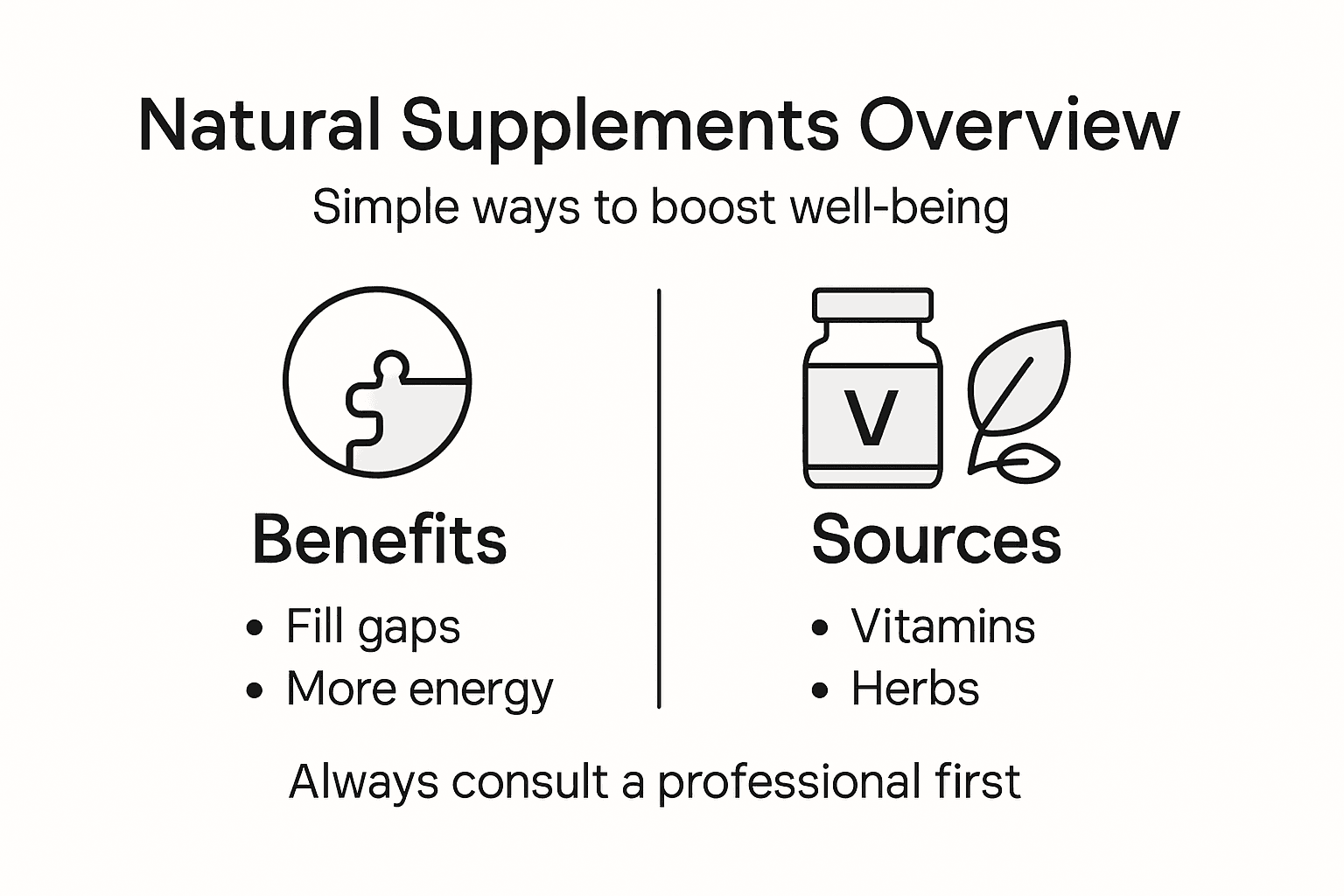
To help summarise at a glance, here’s an overview of the main supplement categories and their typical applications:
| Supplement Category | Typical Use Case | Example Ingredients |
|---|---|---|
| Vitamins and Minerals | Fill dietary gaps | Vitamin D, iron, calcium |
| Sports Performance | Enhance physical outcomes | Protein, creatine, BCAAs |
| Botanical & Herbal | Support holistic wellness | Turmeric, ginseng, ashwagandha |
Pro tip: Consult healthcare professionals to develop a personalised supplement strategy tailored to your unique physiological needs and health objectives.
How Natural Supplements Support Well-Being
Natural supplements play a crucial role in supporting overall well-being by addressing nutritional gaps and enhancing physiological functions. Dietary supplements help individuals maintain optimal health by providing essential nutrients that might be challenging to obtain through diet alone.
Key ways natural supplements support well-being include:
-
Nutrient Deficiency Management
- Compensate for dietary limitations
- Support metabolic processes
- Enhance nutritional intake
-
Targeted Health Support
- Boost immune system function
- Improve energy levels
- Support specific bodily systems
-
Life Stage Nutritional Needs
- Pregnancy support
- Age-related nutritional requirements
- Stress and lifestyle management
Athletes and active individuals can particularly benefit from specific dietary supplement strategies that support physical performance and recovery. These specialised nutritional interventions can help manage micronutrient levels and support overall physiological resilience.

Individual response to supplements varies significantly, making personalised nutritional assessment critical. Consumers should approach supplement use with careful consideration, understanding that effectiveness depends on individual metabolic factors, existing health conditions, and specific nutritional requirements.
Pro tip: Consult a healthcare professional to develop a personalised supplement strategy that addresses your unique physiological needs and wellness objectives.
Regulation and Labelling of Supplements in the UK
The regulatory landscape for nutritional supplements in the United Kingdom has undergone significant transformation following Brexit, with new legislative frameworks governing product standards emerging to protect consumer interests.
Key aspects of UK supplement regulation include:
-
Regulatory Oversight
- Department of Health and Social Care
- Food Standards Scotland
- Welsh Government authorities
- Independent UK regulatory control
-
Labelling Requirements
- Clear ingredient declarations
- Nutritional content transparency
- Accurate dosage instructions
- Restricted health claims
-
Consumer Protection Principles
- Mandatory safety assessments
- Precise product information
- Prevention of misleading marketing
- Rigorous quality standards
Recent legislative updates in 2023 have further refined regulations surrounding supplements for specific groups, including infants, children, and individuals with particular medical requirements. These amendments demonstrate the UK’s commitment to maintaining robust nutritional supplement standards post-Brexit.
The regulatory approach ensures that supplement manufacturers provide transparent, accurate information while preventing unsubstantiated health claims. Consumers can feel confident that products undergo thorough scrutiny before reaching the market, with an emphasis on safety, efficacy, and clear communication.
Pro tip: Always check the product label for detailed ingredient information and consult healthcare professionals before starting any new supplement regimen.
Risks, Interactions, and Safety Advice
Natural supplements, while beneficial, require careful and informed consumption. Safe supplement usage involves understanding potential risks and interactions to protect individual health and prevent unintended complications.
Critical safety considerations include:
-
Potential Interaction Risks
- Prescription medication conflicts
- Unexpected drug interactions
- Potential allergic reactions
- Metabolic interference
-
Vulnerable Population Concerns
- Pregnancy and breastfeeding
- Chronic medical conditions
- Age-related sensitivities
- Compromised immune systems
-
Dosage and Consumption Warnings
- Strict adherence to recommended amounts
- Avoiding self-diagnosis
- Understanding individual tolerances
- Regular health monitoring
Food supplement regulations emphasise consumer protection by mandating clear guidance on potential health risks. Consumers must recognise that supplements are not medicinal replacements and should complement, not substitute, balanced nutritional intake.
Professional medical guidance remains crucial when introducing new supplements. Pharmacists and healthcare practitioners can provide personalised advice, helping individuals navigate potential interactions and determine appropriate supplementation strategies.
Pro tip: Maintain a comprehensive record of all supplements and medications, and always consult healthcare professionals before introducing new nutritional products.
Comparing Natural Supplements with Conventional Alternatives
Understanding the distinctions between natural supplements and conventional medical treatments is crucial for making informed healthcare decisions. Fundamental differences exist in their regulatory frameworks and intended purposes that significantly impact their application and effectiveness.
Key comparative aspects include:
-
Regulatory Approach
- Supplements: Less stringent oversight
- Medicines: Rigorous clinical testing
- Approval processes differ substantially
- Varying evidence requirements
-
Primary Intended Use
- Supplements: Nutritional enhancement
- Medicines: Specific disease treatment
- Preventative versus curative focus
- Targeted physiological intervention
-
Evidence and Efficacy
- Supplements: Variable scientific validation
- Medicines: Extensive clinical research
- Context-specific effectiveness
- Individual metabolic response variations
Natural supplements demonstrate unique benefits in specific contexts such as sports nutrition and dietary deficiency management. While conventional medicines remain more tightly regulated, natural alternatives can offer complementary nutritional support when used responsibly.
Healthcare professionals recommend a balanced approach, recognising that both natural supplements and conventional treatments have their place in comprehensive health management. Individual health needs, existing medical conditions, and personal metabolic factors should guide supplement and treatment choices.
To illustrate key differences, here is a comparison between natural supplements and conventional medicines:
| Criteria | Natural Supplements | Conventional Medicines |
|---|---|---|
| Regulation | Moderate oversight, less strict | Stringent clinical testing |
| Intended Purpose | Nutritional enhancement | Disease treatment |
| Evidence Basis | Limited, varies by product | Robust clinical evidence |
| Consumer Access | Over-the-counter, easy available | Prescription or pharmacist only |
Pro tip: Consult healthcare professionals to develop a personalised strategy integrating both natural supplements and conventional treatments tailored to your specific health requirements.
Unlock Better Health with Natural Supplements from Oxyhealth
If you are seeking to address nutritional gaps, support your well-being, or improve your energy levels through trusted natural supplements then Oxyhealth offers a carefully curated range designed with quality and efficacy in mind. The challenges of understanding supplement types and ensuring safety become simpler when you choose from products backed by transparent ingredient sourcing and quick UK dispatch.
Explore our diverse selection including Liquid Vitamins, Supplements, and Powders & Shakes that cater to personalised nutritional needs.
Start your journey towards improved health today with Oxyhealth. Benefit from same-day shipping and a 365-day satisfaction guarantee that puts your wellness first. Visit Oxyhealth now to discover natural solutions tailored to your lifestyle and health goals.
Frequently Asked Questions
What are natural supplements?
Natural supplements are concentrated nutritional products designed to enhance dietary intake and support overall wellness, providing essential nutrients beyond what individuals typically consume through regular meals.
How do natural supplements support overall well-being?
Natural supplements address nutritional gaps, enhance physiological functions, help manage nutrient deficiencies, boost immune function, and support specific health needs based on life stages or lifestyle requirements.
What types of natural supplements are available?
Common types of natural supplements include vitamins and minerals, sports performance supplements, and botanical or herbal supplements, each targeting specific health needs and nutritional requirements.
Are there any risks associated with using natural supplements?
Yes, potential risks include interactions with medications, allergic reactions, and issues pertaining to dosage and individual health conditions. It’s important to consult healthcare professionals before starting any new supplement regimen.