
Why Supplement Quality Matters for Health-Conscious Adults
Finding supplements that truly support your body’s detoxification is not as simple as picking any bottle off the shelf. With health and longevity at stake, understanding supplement quality becomes more important for British residents aiming to lead a balanced life. This article highlights the crucial markers for authentic, high-quality products and explains why careful selection protects you from hidden risks found in many supplements on the market.
Table of Contents
- Defining Supplement Quality and Its Impact
- How Supplement Quality Varies Between Brands
- Risks of Poor-Quality Supplements in the UK
- Quality Standards, Certification, and Regulation
- Identifying Authentic and Trusted Supplement Sources
Key Takeaways
| Point | Details |
|---|---|
| Understanding Supplement Quality | The quality of supplements impacts nutrient absorption and long-term health; key factors include accurate labelling, purity, and third-party testing. |
| Variability Between Brands | Not all supplement brands maintain high quality; consumers should investigate manufacturing standards and testing practices before purchasing. |
| Risks of Poor-Quality Supplements | Low-quality supplements can pose health risks due to contamination, misleading labels, and incorrect dosages; vigilance is essential. |
| Importance of Certification | Look for recognised certification marks to ensure product safety and integrity; independent testing and transparent documentation are crucial. |
Defining Supplement Quality and Its Impact
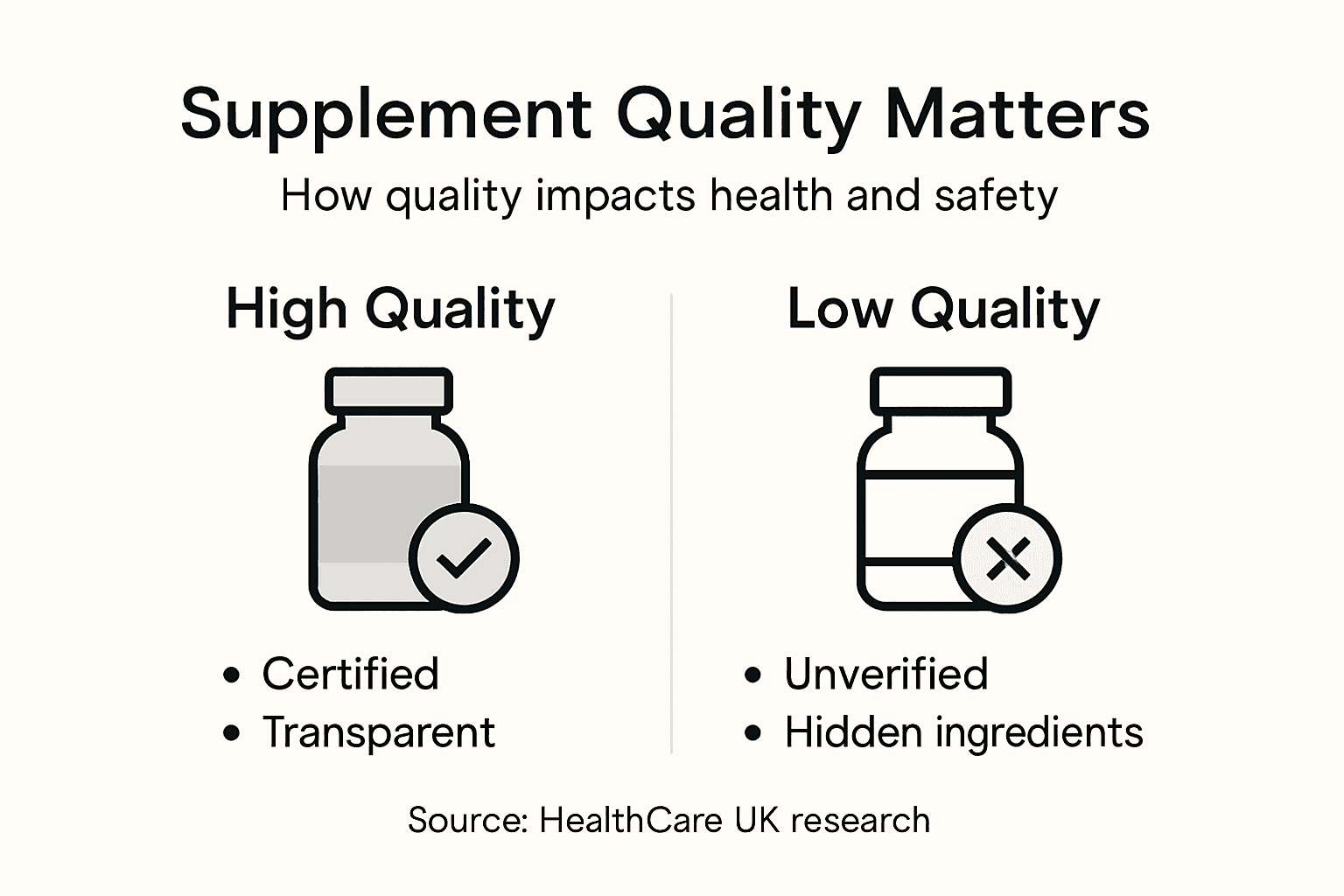
Understanding supplement quality represents far more than a simple purchasing decision. It directly influences your body’s ability to absorb essential nutrients and protect your long-term health. The scientific evaluation of dietary supplements reveals critical factors that determine whether a product genuinely supports wellness or potentially introduces risks.
At its core, supplement quality encompasses several fundamental aspects: accurate ingredient labelling, precise dosage measurements, purity of components, and verifiable absence of harmful contaminants. The metrological approaches used in supplement verification demonstrate the sophisticated scientific processes required to validate product integrity. These stringent analytical techniques help manufacturers ensure that what appears on the label matches the actual contents, protecting consumers from potential adulteration or misleading claims.
Key markers of high-quality supplements include:
- Third-party laboratory testing
- Transparent sourcing of raw ingredients
- Comprehensive batch-level documentation
- Rigorous quality control protocols
- Adherence to strict manufacturing standards
Consumers must recognise that not all supplements are created equal. Variations in production methods, ingredient sourcing, and manufacturing environments can dramatically impact a product’s effectiveness and safety. A supplement produced with meticulous attention to scientific standards will offer far more reliable nutritional support compared to mass-produced alternatives with minimal quality oversight.
Savvy Consumer Tip: Always request and review a supplement’s certificate of analysis before purchasing to understand its precise nutritional composition and quality assurance measures.
How Supplement Quality Varies Between Brands
The world of dietary supplements is far from uniform, with manufacturers displaying significant variations in product quality and manufacturing standards. Nutraceutical supplement variations reveal that no single brand consistently delivers high-quality products across their entire range, making consumer discernment crucial.
Different brands exhibit substantial disparities in critical quality dimensions. These variations stem from multiple factors, including:
- Raw material sourcing and origin
- Manufacturing environment standards
- Quality control protocols
- Testing and verification processes
- Ingredient purity and concentration levels
Professional healthcare practitioners increasingly recognise that dietary supplement quality assessment requires comprehensive evaluation beyond surface-level marketing claims. Some brands invest heavily in rigorous third-party testing and transparent documentation, while others prioritise cost-cutting measures that potentially compromise product integrity.
Consumers must develop a critical approach to supplement selection. Brands with robust scientific validation, transparent ingredient sourcing, and comprehensive quality control mechanisms are more likely to provide reliable nutritional support. This means looking beyond attractive packaging and investigating the manufacturer’s commitment to scientific standards and consumer safety.
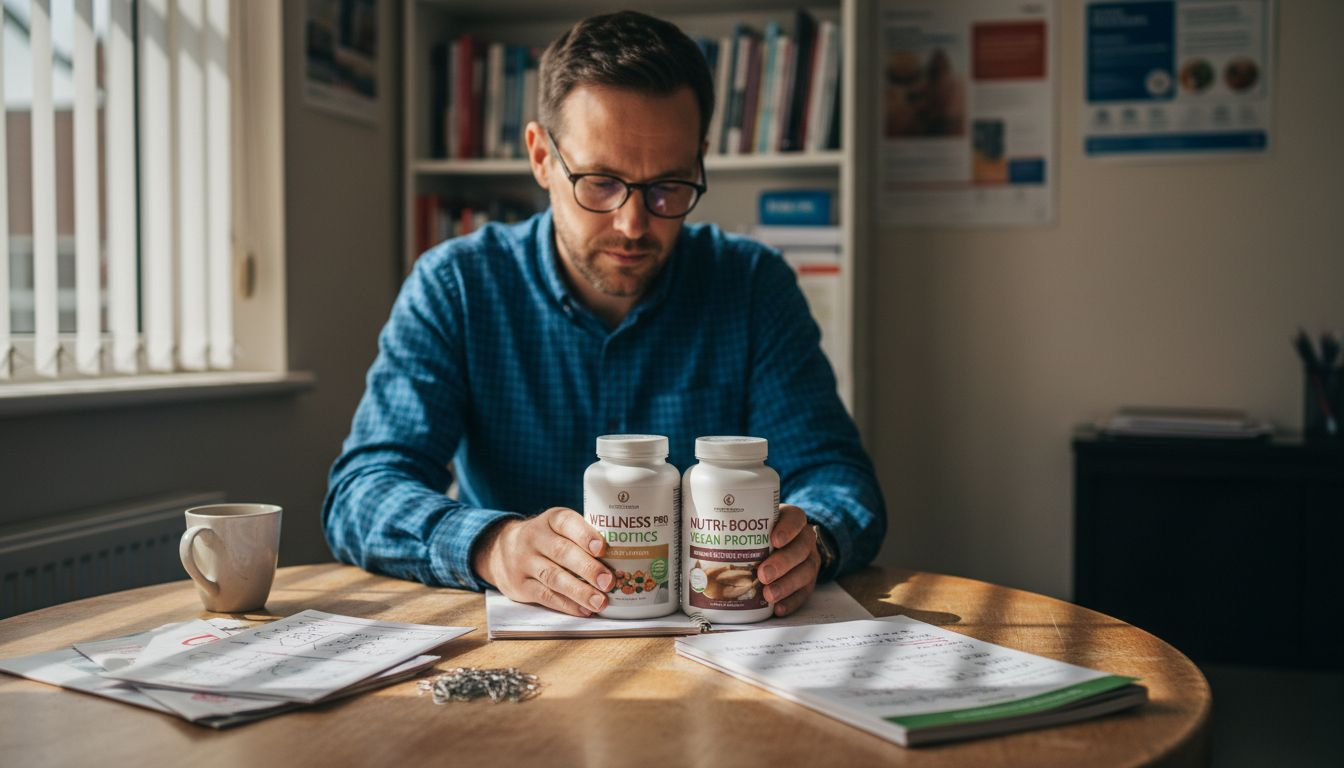
Smart Shopper Tip: Request and review detailed certificates of analysis from supplement manufacturers, which provide comprehensive insights into product composition, purity, and potential contaminant levels.
Here’s a summary table highlighting how supplement brands can differ in their commitment to quality:
| Quality Factor | High-Quality Brands | Low-Quality Brands |
|---|---|---|
| Ingredient Sourcing | Transparent, traceable origins | Unclear, possibly unverified |
| Scientific Validation | Supported by robust studies | Minimal or no research backing |
| Testing Procedures | Independent third-party testing | Internal or sporadic testing |
| Documentation | Detailed batch records available | Limited or undisclosed records |
| Manufacturing Standards | Consistent, regulated processes | Variable or poorly controlled |
Risks of Poor-Quality Supplements in the UK
Health-conscious UK consumers face significant risks from poorly regulated dietary supplements. Dangerous supplement investigations have uncovered alarming inconsistencies in vitamin and mineral product safety, revealing potential health hazards lurking in seemingly innocuous nutritional products.
The primary risks associated with low-quality supplements include:
- Unpredictable vitamin concentration levels
- Potential contamination with undeclared substances
- Incorrect dosage information
- Presence of harmful adulterants
- Misleading marketing claims
Moreover, UK government research has exposed shocking instances of herbal supplements containing undeclared pharmaceutical ingredients. These hidden components pose particular dangers for vulnerable populations, potentially causing unexpected interactions with existing medications or triggering severe adverse reactions.
Understanding these risks requires a proactive approach. Consumers must scrutinise supplement labels, verify manufacturer credentials, and prioritise products from reputable sources with transparent testing protocols. This means looking beyond attractive packaging and marketing claims to investigate the genuine scientific credibility of nutritional supplements.
Smart Consumer Tip: Always verify a supplement’s certification, request detailed laboratory analysis reports, and consult healthcare professionals before introducing new nutritional products into your wellness routine.
Quality Standards, Certification, and Regulation
Navigating the complex landscape of supplement quality requires a comprehensive understanding of regulatory frameworks and certification processes. Dietary supplement standards play a critical role in ensuring consumer safety, with rigorous scientific protocols designed to validate product integrity and performance.
Key elements of robust quality assurance include:
- Independent third-party testing
- Comprehensive ingredient verification
- Consistent manufacturing standards
- Transparent documentation processes
- Regular product batch monitoring
FDA regulatory guidelines highlight that while premarket approval isn’t mandatory, manufacturers bear significant responsibility for product safety. This means companies must proactively demonstrate adherence to good manufacturing practices, maintain accurate labelling, and ensure their products do not pose potential health risks.
Understanding these standards empowers consumers to make informed choices. Reputable supplements will typically showcase certifications from recognised bodies, providing clear evidence of their commitment to quality control. This transparency allows health-conscious individuals to distinguish between scientifically validated nutritional products and potentially unreliable alternatives.
Smart Consumer Tip: Always request and review a supplement’s certificate of analysis, which provides detailed insights into its composition, purity, and manufacturing standards.
The following table outlines key certification marks and what they signify for supplement users:
| Certification Mark | What It Indicates | Why It Matters |
|---|---|---|
| GMP (Good Manufacturing Practice) | Adherence to strict production protocols | Ensures consistent product safety |
| ISO Accreditation | International quality standards | Validates robust processes |
| Third-Party Lab Seal | Independent purity verification | Confirms claimed ingredients |
| Organic Certification | No synthetic chemicals used | Reduces contaminant risk |
| Vegan Certification | Free from animal-derived components | Supports dietary preferences |
Identifying Authentic and Trusted Supplement Sources
Discerning authentic supplement sources requires a strategic approach to evaluating scientific credibility and product reliability. Evaluating source credibility demands careful consideration of multiple factors, including the expertise behind product development, research methodology, and transparency of manufacturing processes.
Critical indicators of a trustworthy supplement source include:
- Peer-reviewed scientific research supporting product claims
- Clear documentation of ingredient origins
- Independent third-party laboratory testing
- Transparent manufacturing practices
- Detailed nutritional composition information
- Verifiable scientific credentials of product developers
FDA consumer guidance emphasises the importance of selecting supplements from reputable retailers and verifying product certifications. Health-conscious consumers should look beyond attractive packaging and marketing claims, focusing instead on substantive evidence of product quality and scientific validation.
Authentic supplement sources demonstrate commitment to consumer safety through comprehensive disclosure, rigorous testing protocols, and willingness to provide detailed documentation about their products. This means seeking out manufacturers who prioritise scientific integrity over marketing hype and can substantiate their health claims with credible, verifiable research.
Smart Shopper Tip: Request comprehensive certificates of analysis and third-party testing reports directly from supplement manufacturers to validate the authenticity and quality of their products.
Ensure Your Wellness with Trusted, High-Quality Supplements Today
Navigating the complex world of dietary supplements can feel overwhelming, especially when quality and safety are vital for your health. This article highlights the challenges of finding supplements with transparent sourcing, rigorous testing, and authentic certifications. With concerns about inconsistent ingredient purity and misleading claims, your goal as a health-conscious individual is clear: choose products that truly support your well-being without compromise.
At Oxyhealth, we understand these concerns deeply. Our curated range of Supplements, Liquid Vitamins, and Powders & Shakes are sourced from trusted providers who prioritise scientific validation and transparent quality assurance. Benefit from fast UK-based dispatch with same-day shipping on orders placed before 2 p.m. and enjoy free delivery when you spend over £50.
Take control of your health journey with confidence today. Visit https://oxyhealth.co.uk to explore authentic, rigorously tested supplements that meet the highest safety standards. Don’t wait to experience the peace of mind that comes from choosing only the best for your body.
Frequently Asked Questions
What factors determine supplement quality?
Supplement quality is determined by several critical factors, including accurate ingredient labelling, precise dosage measurements, purity of components, and the absence of harmful contaminants. Rigorous third-party testing and transparent sourcing also play essential roles in ensuring product integrity.
How can I evaluate the quality of a supplement before purchasing?
To evaluate a supplement’s quality, request a certificate of analysis from the manufacturer. This document provides insights into the product’s composition, purity, and contaminants. Additionally, look for products that undergo independent third-party testing and adhere to good manufacturing practices.
Why should I be cautious about low-quality supplements?
Low-quality supplements can pose significant health risks, including unpredictable vitamin concentrations, potential contamination with undeclared substances, incorrect dosage information, and harmful adulterants. It’s crucial to choose reputable sources to mitigate these risks.
What certifications should I look for when selecting dietary supplements?
Look for certifications such as GMP (Good Manufacturing Practice), ISO accreditation, and third-party lab seals. These certifications indicate adherence to strict safety protocols, confirming the quality and purity of the supplement you are considering.
Recommended
- Elderberry and Echinacea Key for Boosting Your Immune System! – Oxyhealth
- Ultimate Cellular Health - Aids Libido - Boost Energy - Global Healing – Oxyhealth
- Swedish Nutra Super Kids - For Infants & Childrens Growth 28 – Oxyhealth
- Organic Plant Based Multivitamin with Minerals - Global Healing – Oxyhealth