
Improve Gut Health Process Naturally: Step-by-Step Guide
Finding trustworthy ways to improve your digestive health in the United Kingdom can feel confusing, especially if you want natural solutions and consistent results. Everyday choices like what you eat, your activity levels and stress management directly shape your gut microbiota composition, influencing your energy, immune function and overall wellbeing. This guide helps you identify patterns, eliminate irritants and discover targeted supplements, setting you on the path to a healthier gut with results you can trust.
Table of Contents
- Step 1: Assess Current Gut Health Habits
- Step 2: Eliminate Potential Digestive Irritants
- Step 3: Incorporate Natural Supplements For Gut Support
- Step 4: Adopt A Gut-Friendly Eating Routine
- Step 5: Monitor Progress And Adjust For Optimal Results
Quick Summary
| Key Point | Explanation |
|---|---|
| 1. Assess Current Gut Health | Track your dietary patterns, lifestyle factors, and digestive symptoms to understand your gut health. |
| 2. Eliminate Digestive Irritants | Identify and remove foods and lifestyle elements that may harm gut balance, such as processed foods and common allergens. |
| 3. Incorporate Natural Supplements | Use probiotics, anti-inflammatory supplements, and digestive enhancers to support your gut’s healing process. |
| 4. Adopt a Gut-Friendly Eating Routine | Establish consistent meal timing and consume a variety of nutrient-rich foods to nurture microbiome health. |
| 5. Monitor Progress and Adjust | Regularly track digestive symptoms and adjust your diet and supplements based on health data for optimal gut wellness. |
Step 1: Assess Current Gut Health Habits
In this essential first step, you’ll uncover your existing gut health patterns by conducting a comprehensive self-evaluation of your lifestyle and dietary habits. Understanding how your daily choices impact your digestive system is crucial for developing a targeted approach to improving gut wellness.
To effectively assess your current gut health, begin by tracking key aspects of your lifestyle through a systematic approach. Gut microbiota composition is deeply influenced by multiple factors, and interactions between diet and microbial balance play a significant role in overall health.
Consider evaluating the following critical areas:
-
Dietary Patterns
- Frequency of processed food consumption
- Daily intake of fibre-rich foods
- Variety of fruits and vegetables in your diet
- Hydration levels
-
Lifestyle Factors
- Sleep quality and duration
- Stress management techniques
- Physical activity levels
- Antibiotic usage history
-
Digestive Symptoms
- Frequency of bloating
- Consistency of bowel movements
- Presence of food intolerances
- Energy levels throughout the day
By systematically documenting these elements, you’ll create a comprehensive snapshot of your current gut health status. Personalized health strategies can then be developed to support optimal microbial diversity and digestive wellness.
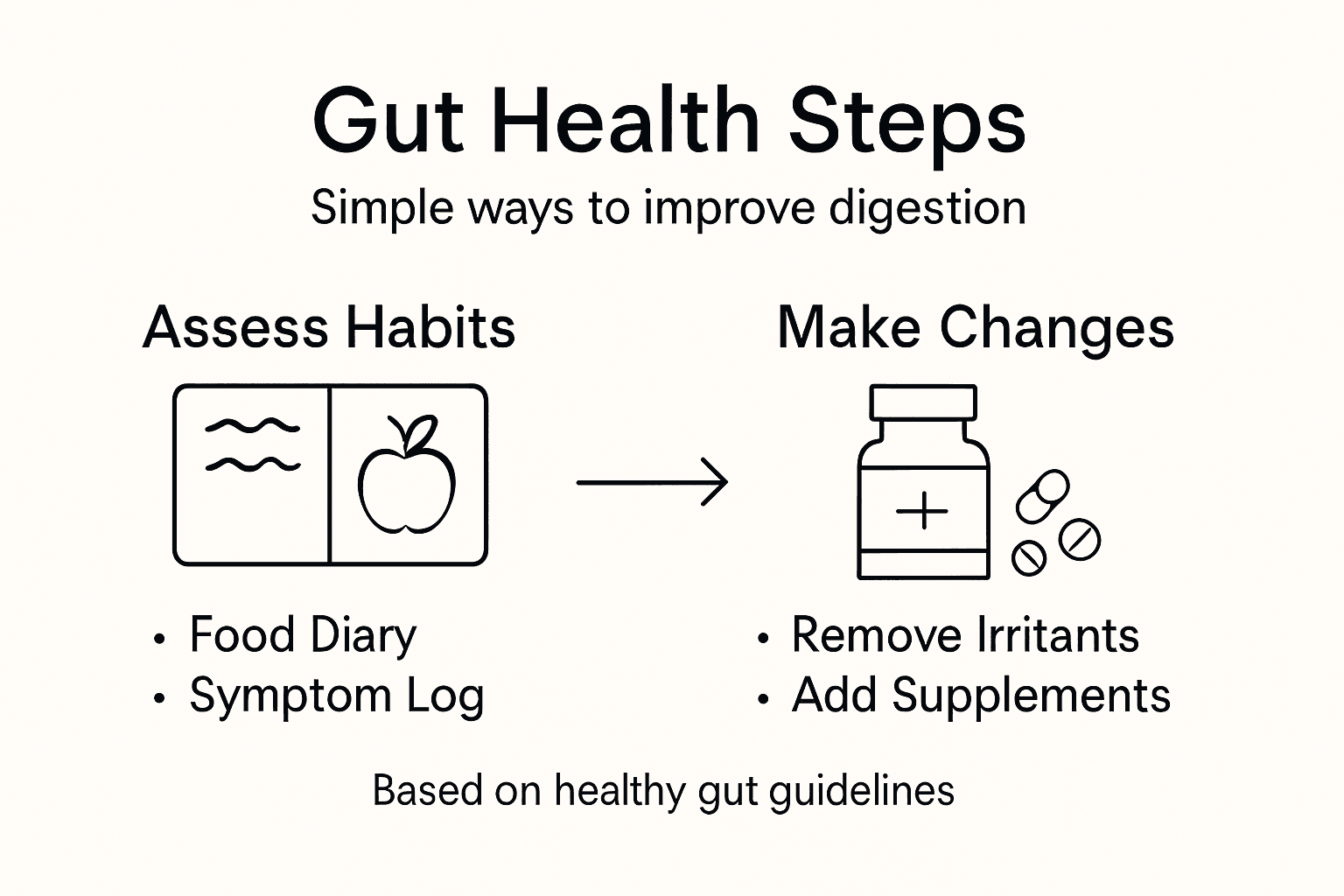
Here’s a summary of major factors influencing gut health and their possible impact:
| Factor Type | Example Effect on Gut | Typical Business Impact |
|---|---|---|
| Diet | Shapes microbial diversity | Influences employee wellbeing |
| Sleep Quality | Affects gut barrier function | Impacts workplace productivity |
| Stress Levels | Triggers dysbiosis | Raises absenteeism rates |
| Physical Activity | Boosts beneficial bacteria | Supports energy and focus |
Tracking your gut health is not about perfection, but about understanding your body’s unique signals and patterns.
Top Tip: Consider maintaining a detailed seven-day food and symptom journal to identify potential triggers and patterns affecting your digestive health.
Step 2: Eliminate Potential Digestive Irritants
In this critical stage of your gut health journey, you’ll systematically identify and remove dietary and lifestyle factors that compromise your digestive system’s delicate balance. By strategically eliminating potential irritants, you can significantly reduce inflammation and promote optimal gut function.

Functional foods with bioactive compounds play a crucial role in mitigating intestinal irritation. Understanding which substances negatively impact your digestive health is paramount for creating a healing environment.
Consider removing the following potential digestive irritants:
-
Processed Foods
- Artificial preservatives
- Refined sugars
- High-sodium packaged meals
- Trans fats and hydrogenated oils
-
Common Inflammatory Triggers
- Dairy products (if lactose intolerant)
- Gluten-containing grains
- Excessive caffeine
- Alcohol
-
Potential Gut Disruptors
- Artificial sweeteners
- Emulsifiers in processed foods
- Excessive red meat consumption
- High-stress environments
Implementing a structured elimination approach allows you to observe how your body responds when specific substances are removed. Natural herbal remedies can simultaneously support your digestive healing process by providing gentle, therapeutic support.
Healing your gut is a personalised journey of understanding your body’s unique responses and sensitivities.
Expert Recommendation: Implement dietary changes gradually and maintain a detailed food diary to track your body’s responses and identify specific irritants affecting your digestive health.
Step 3: Incorporate Natural Supplements for Gut Support
In this transformative stage of your gut health journey, you’ll strategically integrate natural supplements that can enhance your digestive system’s resilience and promote comprehensive microbiome balance. Understanding which supplements can effectively support your gut’s healing process is crucial for long-term wellness.
Dietary bioactive compounds offer powerful mechanisms for regulating gut microbiota and reducing inflammation. These natural interventions can help restore your digestive system’s optimal functioning.
Consider incorporating the following natural gut support supplements:
-
Probiotic Supplements
- Multi-strain bacterial formulations
- Refrigerated, high-quality variants
- Minimum 10-15 billion colony-forming units
- Diverse bacterial strains
-
Natural Anti-Inflammatory Options
- Turmeric extracts
- Omega-3 fatty acids
- Ginger supplements
- Glutamine powder
-
Digestive Health Enhancers
- Digestive enzyme complexes
- Prebiotic fibre supplements
- L-glutamine
- Collagen peptides
Carefully selected herbal and dietary supplements can provide targeted support for alleviating digestive disorders and promoting microbial balance. Consulting with a healthcare professional can help personalise your supplement strategy.
Compare natural supplement categories for gut support, their main function, and typical duration for results:
| Supplement Type | Main Function | Expected Effects Timeline |
|---|---|---|
| Probiotics | Restore microbiome balance | 2-4 weeks for stabilisation |
| Turmeric & Ginger | Reduce inflammation | Noticeable within 1-3 weeks |
| Digestive Enzymes | Enhance food breakdown | Immediate to one week |
| Prebiotic Fibre | Promote growth of good bacteria | 3-6 weeks for diversity |
Natural supplementation represents a holistic approach to restoring your gut’s intricate ecosystem.
Expert Recommendation: Introduce supplements gradually, monitor your body’s response, and maintain consistency to allow your digestive system adequate time to adapt and heal.
Step 4: Adopt a Gut-Friendly Eating Routine
In this transformative phase of your gut health journey, you’ll learn to craft a strategic eating approach that nurtures your microbiome and supports digestive wellness. Developing a systematic eating routine can dramatically enhance your gut’s resilience and overall metabolic function.
Meal timing and frequency play a crucial role in supporting gut microbiota composition and metabolic activity. Understanding how and when you eat can be just as important as what you consume.
Consider implementing these gut-friendly eating strategies:
-
Meal Timing Principles
- Practice time-restricted eating
- Align meals with circadian rhythms
- Maintain consistent meal intervals
- Allow adequate digestion periods
-
Microbiota-Supporting Food Choices
- Prioritise plant-based whole foods
- Increase fibre-rich vegetable intake
- Include fermented food varieties
- Consume diverse polyphenol sources
-
Nutritional Diversity Techniques
- Rotate protein sources
- Experiment with different vegetable colours
- Incorporate international cuisine styles
- Balance macronutrient ratios
Plant-based dietary interventions can significantly enhance microbiota diversity and support immune regulation. The key is creating a personalised nutrition strategy that works harmoniously with your body’s unique requirements.
A gut-friendly diet is not about restriction, but about creating a diverse and nourishing eating ecosystem.
Expert Recommendation: Gradually introduce dietary changes, maintain food variety, and listen to your body’s specific responses during your gut health transformation.
Step 5: Monitor Progress and Adjust for Optimal Results
In this final stage of your gut health transformation, you’ll develop a systematic approach to tracking and refining your progress, ensuring your efforts translate into meaningful long-term wellness. Continuous monitoring allows you to make informed, precise adjustments to your gut health strategy.
Gut Microbiome Wellness Indices provide innovative computational tools for quantitatively assessing gut health by analyzing subtle changes in microbial composition. These advanced tracking methods enable proactive health management.
Implement these comprehensive monitoring techniques:
-
Tracking Methods
- Record daily digestive symptoms
- Measure energy levels
- Note bowel movement consistency
- Monitor mood and mental clarity
-
Assessment Tools
- Regular stool sample analysis
- Periodic blood micronutrient tests
- Comprehensive metabolic panels
- Professional microbiome screenings
-
Adjustment Strategies
- Review health data monthly
- Consult healthcare professionals
- Modify diet based on test results
- Adapt supplement regimen
Multi-omics integrated analysis methods offer comprehensive ways to monitor gut microbiota composition, facilitating precise assessment of dietary and lifestyle interventions.
Progress is not linear - it’s a dynamic journey of continuous learning and adaptation.
Expert Recommendation: Remain patient and consistent, understanding that gut health transformation is a nuanced process requiring gentle, informed adjustments.
Take Control of Your Gut Health with Natural Support from Oxyhealth
Struggling with digestive irritants or searching for effective ways to restore your gut microbiome balance? This step-by-step guide highlights how personalised elimination of triggers and strategic supplementation are essential for long-term gut wellness. If you are ready to confidently enhance your digestive health with trusted natural solutions, our range of carefully selected products at Cleanse & Detox – Oxyhealth can help you begin the healing process today.
Explore our targeted Health Kits & Cleanse Programs – Oxyhealth designed to support systematic gut detoxification and maintain microbial diversity. Incorporate nutrient-dense supplements found in our Powders & Shakes – Oxyhealth collection to complement your gut-friendly eating routine. Take action now and visit https://oxyhealth.co.uk to access fast UK shipping and a 365-day satisfaction guarantee as you embark on your personalised gut health transformation.
Frequently Asked Questions
What are the first steps to assess my gut health?
To assess your gut health, begin by tracking your dietary patterns, lifestyle factors, and any digestive symptoms you experience. Record your daily food intake, sleep quality, stress levels, and bowel movement consistency to create a comprehensive snapshot of your current gut health status.
How can I identify and eliminate digestive irritants from my diet?
Identify potential digestive irritants by systematically removing processed foods, dairy, gluten, and other common inflammatory triggers from your diet. Implement these changes gradually, monitoring your body’s responses to each modification to determine which irritants affect you most.
What natural supplements should I consider for gut health?
Consider incorporating probiotics, natural anti-inflammatory options like turmeric, and digestive health enhancers such as prebiotic fibre supplements into your regimen. Aim to introduce one supplement at a time, monitoring your body’s response over two to four weeks for noticeable effects.
How can I develop a gut-friendly eating routine?
Craft a gut-friendly eating routine by prioritising whole, plant-based foods, practising time-restricted eating, and ensuring nutritional diversity in your meals. Experiment with different fruits, vegetables, and protein sources to enhance your microbiome’s resilience and functionality.
What strategies can I use to monitor my progress?
Monitor your gut health progress by recording daily digestive symptoms, energy levels, and bowel movement consistency. Regularly review this data, and consider conducting assessments, such as stool sample analysis, to refine your gut health strategies effectively.
Recommended
- Gut Health Bundle - Digestive Support - Global Healing – Oxyhealth
- Harmful Organism Cleanse Program - Gut Health - Global Healing – Oxyhealth
- How to Support Liver Detox Naturally for Better Health – Oxyhealth
- Colon Cleanse Program - Supports Intestinal Health - Global Healing – Oxyhealth
- The Connection Between Gut Health and Happiness – Lunix
- The 24-Hour Wellness Routine All Women Should Start (For Energy, Calm – Asli Nutrition