Wellness trends: what UK consumers need to know for 2026
TL;DR:
- Consumers are shifting towards natural, evidence-based, and pleasure-focused wellness practices in 2026.
- The wellness industry emphasizes authenticity, holistic health, and simplicity over over-optimization and extreme detoxes.
- Targeted supplements like medicinal mushrooms, NMN, and herbal detox products are gaining popularity for supporting longevity and wellbeing.
The wellness industry is not what it was five years ago. Forget the notion that getting healthier in 2026 means punishing yourself with restrictive diets, overpriced supplements you barely understand, or a fitness regime that leaves you dreading Monday mornings. UK consumers are increasingly rejecting the idea that wellness should feel like hard work. Instead, a quieter, more considered revolution is taking shape, one built on genuine science, natural solutions, and a renewed focus on feeling genuinely well rather than simply optimised. This guide covers the key trends reshaping health and wellness in 2026 and what they mean for you.
Table of Contents
- The new foundations: Holistic health and the wellness backlash
- Natural supplements: What’s next in 2026?
- Detox products: From myths to meaningful results
- Whole-person wellbeing: Where fitness, beauty, and balance meet
- The uncomfortable truth about wellness trends in 2026: Why simplicity works
- Take your wellness further with Oxyhealth
- Frequently asked questions
Key Takeaways
| Point | Details |
|---|---|
| Holistic trends dominate | The wellness industry in 2026 prioritises joy, nervous system health, and authentic detox over restrictive fads. |
| Targeted supplements | Medicinal mushrooms, longevity boosters, and women’s hormonal support are driving supplement growth. |
| Detox goes natural | Herbal, organic, and science-backed detox products are gaining ground among UK consumers. |
| Whole-person focus | Mental wellbeing, immune support, and traditional medicine are central to holistic health routines. |
The new foundations: Holistic health and the wellness backlash
For years, the wellness conversation was dominated by biohackers, calorie counters, and performance-obsessed routines. Somewhere along the way, the joy got lost. In 2026, that pendulum is swinging back, and forcefully.
The 2026 global wellness summit identified a clear backlash forming against over-optimisation in wellness, with emerging priorities centred on pleasure, nervous system regulation, and authentic approaches to detox. This is not a fringe movement. It reflects a genuine exhaustion among consumers who tried to track every metric, follow every protocol, and still did not feel well.
“The pursuit of perfect wellness has, paradoxically, made many people feel worse. The shift in 2026 is towards wellness that feels good to live, not just good on a spreadsheet.”
So what does this shift actually look like in practice? A few patterns are becoming clear:
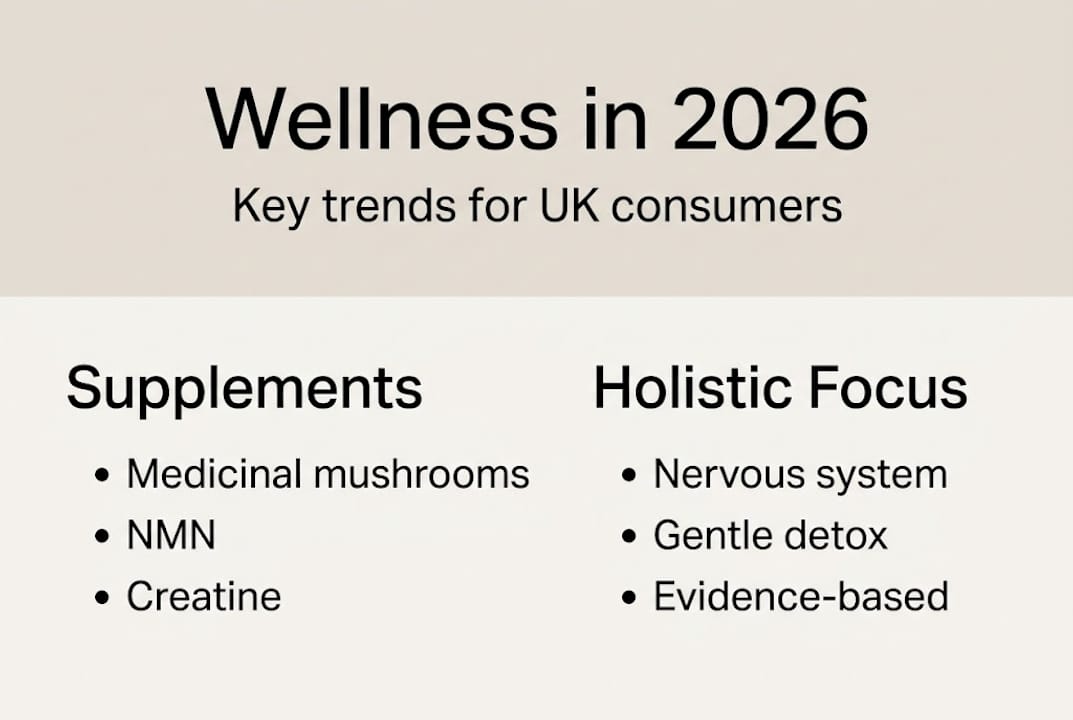
- Neurowellness is gaining serious traction. This means prioritising nervous system regulation through breathwork, nature exposure, rest, and social connection, not just sleep tracking apps.
- Emotional wellbeing is being treated as equally important as physical health, not an afterthought.
- Authentic detox is replacing marketing-heavy cleanse culture. Consumers want to understand what they are supporting in their body and why.
- Pleasure as medicine is a genuine emerging framework, where enjoyment of food, movement, and rest is seen as health-promoting rather than indulgent.
This cultural shift is creating space for gentle detox trends for 2026 that support the body without shock tactics. It is also opening conversations about what real health actually feels like day to day. If you want grounded, practical guidance, natural wellness tips for UK consumers offer a useful starting point for building routines that last.
The defining feature of 2026 wellness is authenticity. Consumers are demanding transparency from brands, evidence behind claims, and products that serve genuine physiological needs rather than manufactured anxiety.
Natural supplements: What’s next in 2026?
As holistic approaches rise, let’s look at which supplements are set to dominate the market.
The supplement industry is in the middle of a significant evolution. Shoppers are moving away from generic multivitamins and towards targeted, evidence-backed formulations. According to supplement trends for 2026, rising consumer demand is centred on medicinal mushrooms, creatine, NMN (nicotinamide mononucleotide), and NR (nicotinamide riboside), with women’s health and longevity emerging as two of the largest growth drivers in the category.
Here is a snapshot of where interest is concentrating:
| Supplement | Primary benefit | Growing audience |
|---|---|---|
| Medicinal mushrooms | Immune and cognitive support | General wellness seekers |
| Creatine | Muscle function, brain health | Women over 35, active adults |
| NMN and NR | Cellular energy, longevity | Over-40s, longevity-focused |
| Magnesium glycinate | Sleep, stress regulation | Anxious, sleep-deprived adults |
| Iodine | Thyroid and metabolism support | Women, those avoiding iodised salt |
What is driving this shift? UK consumers are becoming far more discerning. They are researching ingredients, reading clinical abstracts, and choosing products based on mechanism rather than marketing copy. Women’s hormonal health is a particular flashpoint, with perimenopause awareness growing rapidly and consumers seeking supplements that support oestrogen balance, bone density, and energy levels through natural pathways.
Pro Tip: When evaluating any supplement, look for third-party testing verification and clear information about the source and form of each ingredient. The form of a nutrient matters enormously for absorption.
Understanding minerals in natural detoxification is a smart companion topic here, since many trending supplements overlap with detox support. For skin-focused consumers, the link between internal health and outer radiance is increasingly backed by science, making natural skin detox supplements a worthwhile exploration as well.
The key takeaway is simple: the best supplements in 2026 are specific, sourced with integrity, and chosen with your actual biology in mind.
Detox products: From myths to meaningful results
Natural supplements often work hand in hand with detox, so what is really changing in product trends?
The word “detox” has had a complicated reputation. For a long time, it was shorthand for expensive juice cleanses with dubious science behind them. That era is ending. UK consumers are now far more curious about why detox matters in UK wellness and what it actually achieves physiologically. The conversation has matured.
The UK detox market is growing at a 5.2% CAGR through 2025 to 2030, driven by a clear preference for herbal teas, plant-based formulations, and organic, additive-free products. Consumers are not abandoning detox, they are upgrading their expectations of it.
Some of the most credible and widely used herbal detox ingredients gaining ground in 2026 include:
- Milk thistle for liver support, backed by research into silymarin’s hepatoprotective properties.
- Dandelion root as a gentle diuretic and digestive aid with a long history of traditional use.
- Turmeric for its anti-inflammatory action, especially beneficial alongside a processed food reduction.
- Activated oxygen formulations that support bowel cleansing without harsh laxatives.
- Chlorella and spirulina for binding to heavy metals and supporting elimination pathways.
Pro Tip: Effective detox is not about purging the body dramatically. Supporting your liver, kidneys, and bowel with gentle, consistent nutrients is far more effective than a three-day juice fast.
Comparing common approaches helps clarify the real picture:
| Approach | Evidence level | Typical outcome |
|---|---|---|
| Juice-only cleanses | Low | Short-term caloric restriction, not true detox |
| Herbal supplement regimens | Moderate to high | Liver and digestive support over time |
| Activated oxygen supplements | High (mechanism clear) | Bowel cleansing, improved elimination |
| Sauna and hydration protocols | Moderate | Supports kidney and skin elimination |
Understanding the herbal detox facts, benefits and risks is essential before starting any programme, and knowing the specific role of herbs in detox makes a real difference to outcomes.
Whole-person wellbeing: Where fitness, beauty, and balance meet
Detox and supplements do not exist in isolation. Let’s see how all wellness facets align for true holistic wellbeing.
One of the more surprising findings from recent health data is the gap between how healthy UK adults believe they are and where the actual risks lie. 73% of UK adults report feeling physically healthy, yet a significant proportion underestimate their actual weight-related health risks. This is not about judgement. It reveals something important: self-perceived wellness and measurable health outcomes are not always aligned.

The good news is that awareness is genuinely climbing. Fitness, mental wellbeing, immune support, nutrition, and personal care are being woven together in a way that simply did not happen ten years ago. This integration is the hallmark of whole-person health.
Key areas shaping this integrated approach in 2026 include:
- Mental and emotional health as a primary wellness pillar, not an add-on.
- Immune support through nutrition, rest, and targeted supplementation rather than reactive medicine.
- Affordable wellness becoming a consumer demand, with brands expected to offer quality at accessible price points.
- Beauty from within narratives linking gut health, hydration, and supplements to skin and hair condition.
- Movement for joy rather than punishment, with walking, swimming, and yoga gaining ground over intense training.
The global wellness economy is projected to reach $5.48 trillion by 2026, with traditional and complementary medicine growing at 10.8% annually. Acupuncture, herbal medicine, Ayurveda, and naturopathy are no longer niche. They are being integrated into mainstream wellness conversations across the UK.
Our holistic health resources cover many of these intersecting areas in detail. For those specifically curious about environmental exposures, heavy metal detox in 2026 offers a thorough look at a topic gaining real clinical attention.
The uncomfortable truth about wellness trends in 2026: Why simplicity works
After reviewing the research, attending to the industry data, and watching what actually changes people’s health outcomes over time, one conclusion keeps emerging: simplicity wins.
Every year brings a new supplement stack, a new protocol, or a new metric to obsess over. And every year, the people who feel genuinely well are usually not the ones chasing every trend. They are the ones who sleep consistently, eat real food most of the time, move in ways they enjoy, and manage stress without making a project of it.
The 2026 shift back towards pleasure and nervous system care is actually a signal from the industry that the over-optimisation experiment has not worked for most people. Trends are useful as signposts, but they are not substitutes for consistency. A quality iodine supplement taken daily will outperform a cutting-edge longevity stack used sporadically.
Our advice is to use trends as a filter, not a shopping list. Find what resonates with your body, your lifestyle, and your goals, and build from there. Explore trusted wellness practices as your foundation. Then add with intention.
Frequently asked questions
Which natural supplements should I prioritise in 2026?
Medicinal mushrooms, NMN, and creatine are among the leading supplement trends for 2026, alongside women’s health formulations targeting hormonal balance and longevity support.
How is detox changing in the UK?
Detox in the UK is moving firmly towards gentle, herbal, and organic products. The UK detox market is growing steadily at 5.2% CAGR through 2030, driven by consumer demand for safer, plant-based alternatives to harsh cleansing methods.
Why are UK consumers focusing more on holistic wellbeing in 2026?
73% of UK adults self-report as physically healthy but frequently underestimate actual health risks, prompting a wider shift towards immune support, mental health, and routines that are genuinely sustainable rather than performative.
Are traditional or complementary medicines gaining popularity in the UK?
Yes. Traditional and complementary medicine is growing at 10.8% annually worldwide, and UK interest in practices such as herbal medicine, Ayurveda, and acupuncture is rising alongside mainstream supplement use.
Recommended
- 7 best practices for wellness: natural tips UK consumers trust – Oxyhealth
- Gentle detox trends 2026: natural wellness guide – Oxyhealth
- Sustainable wellness explained: healthy living for you and the planet – Oxyhealth
- Why Detox Matters for Modern UK Wellness – Oxyhealth
- 7 Nutritional Supplement Trends 2025 for Women UK