
Sustainable wellness explained: healthy living for you and the planet
Most people assume that buying a green smoothie or a trendy detox kit counts as sustainable wellness. It does not. Sustainable wellness integrates personal and planetary health for long-term vitality, which is a far bigger idea than any single product or passing health trend. The wellness industry is worth trillions globally, yet many people still confuse short-term fixes with genuine, lasting change. This guide cuts through the noise, explaining what sustainable wellness actually means, how its principles work in practice, and how you can build a realistic, evidence-backed approach that benefits both you and the world around you.
Table of Contents
- What is sustainable wellness?
- Key principles of sustainable wellness
- Sustainable wellness in action: day-to-day practices
- The role of natural supplements and detox strategies
- Sustainable wellness and the NHS: UK progress
- Common misconceptions and edges of sustainable wellness
- Find sustainable wellness solutions for your journey
- Frequently asked questions
Key Takeaways
| Point | Details |
|---|---|
| Holistic integration | Sustainable wellness merges personal health with environmental responsibility for true, long-term well-being. |
| Practical daily actions | Simple habits like choosing organic foods and spending time in nature make a meaningful impact. |
| Supplements as support | Natural supplements and detox products should enhance—not replace—a sustainable, balanced lifestyle. |
| NHS and community alignment | Individual wellness choices align with the NHS’s net-zero ambitions and broader societal health in the UK. |
What is sustainable wellness?
Sustainable wellness is not simply eating well or exercising regularly. It is the deliberate integration of personal well-being with environmental stewardship, so that the choices you make today do not compromise the health of future generations or the planet itself.
“Sustainable wellness avoids short-term fixes for enduring health and environmental vitality.”
This shifts the conversation from individual habits to systems thinking. It asks not just “Is this good for me?” but “Is this good for my community, my environment, and the wider world?” In the UK context, that includes how the NHS delivers care, how food systems are organised, and how everyday consumer choices ripple outward.
The main pillars of sustainable wellness include:
- Nourishment: Choosing organic, local, and plant-forward foods that support both gut health and reduced environmental impact
- Movement: Prioritising active transport and outdoor activity over sedentary, resource-heavy alternatives
- Mindfulness: Building mental resilience through practices that do not rely on excessive consumption
- Connection to nature: Spending regular time outdoors to restore both mind and body
- Equity and access: Recognising that wellness must be available to everyone, not just those with financial privilege
These pillars work together. Neglecting one weakens the others, which is why sustainable wellness is a system, not a checklist.
Key principles of sustainable wellness
Understanding the principles behind sustainable wellness helps you make choices that are genuinely impactful rather than superficially “green.”
Everyday choices like organic foods, reusable items, and time in nature all support sustainable wellness in measurable ways. These are not abstract ideals. They are practical actions with documented benefits for mental and physical health.
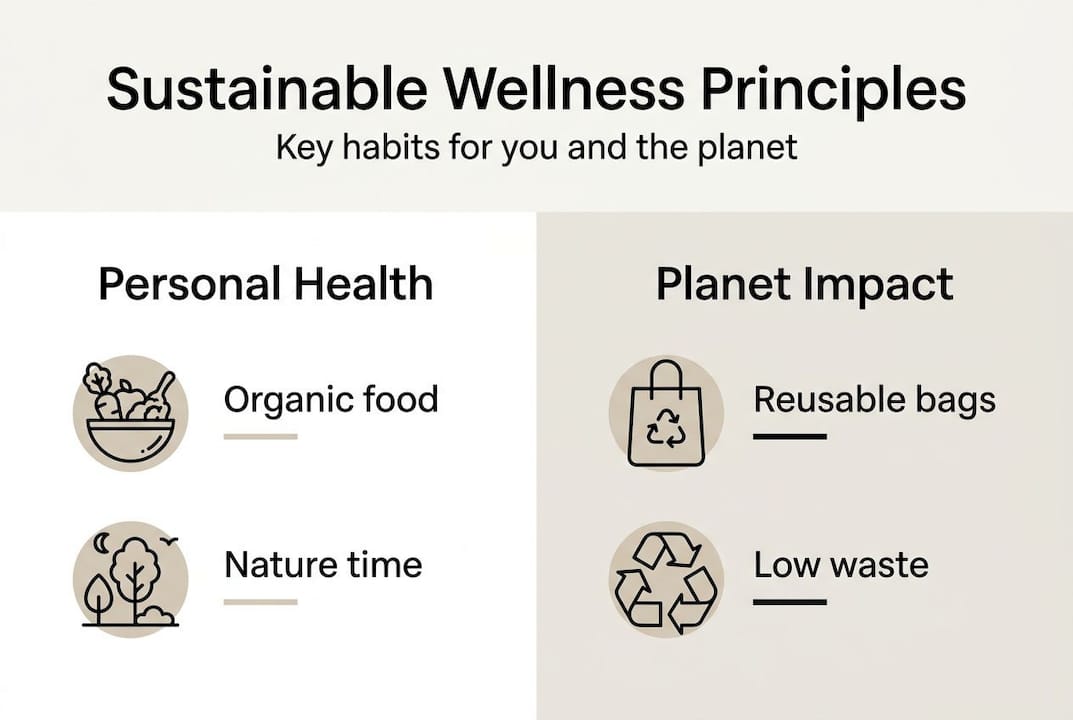
| Principle | Personal benefit | Environmental benefit |
|---|---|---|
| Organic food choices | Reduced toxin exposure | Lower pesticide load on soil |
| Active transport | Improved cardiovascular health | Reduced carbon emissions |
| Nature immersion | Lower stress and anxiety | Supports biodiversity awareness |
| Reduced waste | Mindful consumption habits | Less landfill and pollution |
| Plant-forward diet | Better gut and metabolic health | Lower greenhouse gas output |
At a systems level, frameworks like SusQI (Sustainable Quality Improvement) help healthcare professionals embed sustainability into clinical practice. True sustainability requires multi-layered leadership and equity, meaning that individual action alone is never enough. Structural change, fair access, and community-level thinking are equally essential.
Pro Tip: When evaluating any wellness product or routine, ask yourself two questions: Does this support my long-term health? And does it reduce or increase harm to the environment? If the answer to both is positive, you are on the right track.
Sustainable wellness in action: day-to-day practices
Principles only matter if they translate into real life. Here is a realistic daily framework you can start building this week.
- Buy local and organic where possible. Prioritise seasonal produce from UK farmers markets or organic box schemes to reduce food miles and chemical exposure.
- Spend 120 minutes outdoors each week. Plant-based diets and nature immersion reduce both environmental and personal health burdens. Split your outdoor time across the week for consistent benefit.
- Choose active transport. Walk or cycle for short journeys. This supports cardiovascular health and cuts your carbon footprint simultaneously.
- Reduce single-use packaging. Opt for supplements and health products with minimal, recyclable packaging.
- Explore evidence-based detox support. Understanding detox supplement types helps you make informed choices rather than falling for marketing claims.
- Add superfoods strategically. Incorporating superfoods for natural detox into your meals is a practical, food-first approach to supporting your body’s natural cleansing processes.
Pro Tip: Use habit stacking to make sustainable wellness automatic. Attach a new habit to an existing one. For example, take your morning supplement while your kettle boils, or do a short walk immediately after lunch. Small anchors build lasting routines far more reliably than willpower alone.
The role of natural supplements and detox strategies
Natural supplements and detox products can genuinely support a sustainable wellness approach, but only when used responsibly and in context.
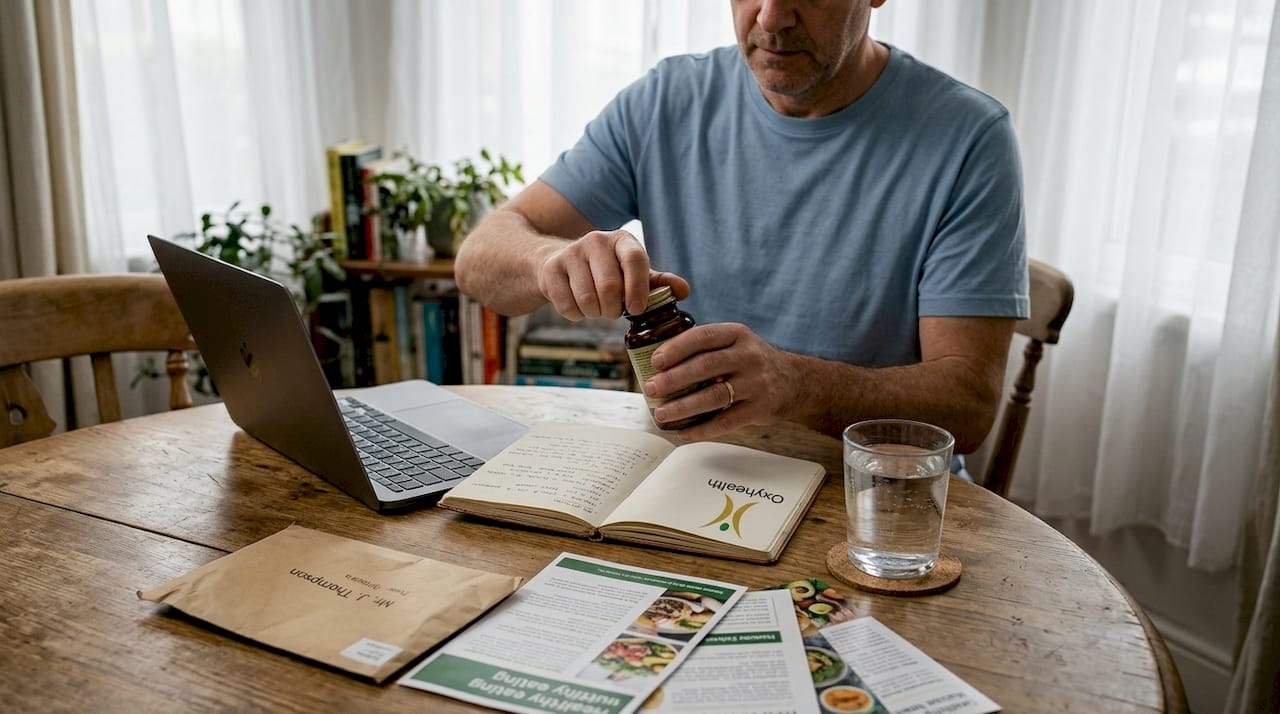
Supplements support but cannot replace holistic lifestyle changes. This is a critical distinction. A high-quality organic supplement can fill nutritional gaps or support a specific detox process, but it will not undo a poor diet, chronic stress, or a sedentary lifestyle.
Here is how sustainable and non-sustainable supplement approaches compare:
| Sustainable approach | Non-sustainable approach |
|---|---|
| Organic, plant-based formulas | Synthetic fillers and artificial additives |
| Targeted, short-term detox support | Indefinite reliance on supplements |
| Consultation with a health professional | Self-diagnosing and over-supplementing |
| Minimal, recyclable packaging | Excessive single-use plastic |
| Complementary to diet and lifestyle | Used as a substitute for healthy habits |
When choosing supplements, keep these points in mind:
- Explore plant-based supplement benefits before committing to a product
- Consider minerals for detox support as part of a broader nutritional strategy
- Always follow detox safely advice and consult a qualified practitioner if you have an existing health condition
- Read the skin detox guide if you are exploring topical or internal approaches to skin health
Importantly, detox teas are not recommended for pregnant or breastfeeding people. This is a firm boundary, not a suggestion. Always check product suitability for your specific circumstances.
Sustainable wellness and the NHS: UK progress
The UK is not just talking about sustainable wellness at an individual level. The NHS is actively embedding it into healthcare delivery.
NHS emissions are down 14% since 2020, in line with the NHS net-zero strategy. This is a significant institutional shift, and it reflects a growing recognition that health and environmental sustainability are inseparable.
For individuals, aligning with this direction means:
- Choosing plant-rich meals that reduce both personal disease risk and agricultural emissions
- Using active travel (walking, cycling) as a primary mode of short-distance transport
- Reducing waste in your health routines, including packaging from supplements and personal care products
- Supporting liver detox support through food-first strategies before reaching for products
- Engaging with sustainable healthcare improvement frameworks to understand how systemic change supports individual health
The NHS direction validates what many health-conscious UK residents already sense: that personal wellness and planetary health are not competing priorities. They are the same goal, approached from different angles.
Common misconceptions and edges of sustainable wellness
Even well-intentioned people can fall into traps when navigating sustainable wellness. Knowing the common misconceptions protects you from wasted effort and potential harm.
“Wellness often focuses solely on the individual, whereas sustainable wellness links to broader planetary health and social context.”
This distinction matters enormously. A juice cleanse that makes you feel better for a week but generates significant plastic waste is not sustainable wellness. A supplement sourced from exploitative supply chains is not sustainable wellness, regardless of its organic certification.
Common edge cases and pitfalls to watch for:
- Overuse of supplements: More is not better. Excessive supplementation can strain the liver and kidneys, and it is rarely evidence-based.
- Cultural variation: Sustainable wellness looks different across communities. Imposing a single model ignores the diversity of food traditions, access to green space, and economic realities across the UK.
- Inappropriate detox products: Not every detox product suits every person. Age, pregnancy, medication use, and existing conditions all affect suitability.
- Greenwashing: Some products market themselves as natural or sustainable without meaningful evidence. Always check ingredients, sourcing, and certifications.
If you are exploring at-home cleansing, start with safe home detox tips before purchasing any product. Knowledge first, products second.
Find sustainable wellness solutions for your journey
Building a sustainable wellness routine is a process, not a purchase. But having access to the right products, sourced responsibly and backed by genuine quality assurance, makes the process considerably easier.
Frequently asked questions
What makes wellness truly sustainable?
Sustainable wellness avoids quick fixes for lasting results by integrating your daily health habits with actions that support environmental and community well-being, aiming for benefits that endure over time rather than fading after a fortnight.
How much nature time is recommended for sustainable wellness?
The benchmark is around 120 minutes in nature weekly, which research links to measurable improvements in self-rated health and mental well-being. Spreading this across several shorter sessions works just as well as one long outing.
Are all detox teas and supplements safe for everyone?
No. Detox teas are not advised for pregnant or breastfeeding people, and over-reliance on any supplement without professional guidance is discouraged regardless of how natural the product appears.
How does the NHS support sustainable wellness?
The NHS promotes net-zero health strategies including plant-based dietary guidance, active travel initiatives, and reduced clinical waste, all of which align closely with the principles of sustainable personal wellness.
Recommended
- Why use plant-based supplements for detox and wellness – Oxyhealth
- Why avoid synthetic supplements for natural wellness in 2026 – Oxyhealth
- Cellular Detox: How It Impacts Daily Wellness – Oxyhealth
- Why Detox Matters for Modern UK Wellness – Oxyhealth
- Healthy Cookware Explained: Essential Guide to Safe Choices – Brass & Steel