
The role of sleep in wellness: 2026 guide
TL;DR:
- Sleep is an active process essential for detoxifying the brain, regulating hormones, and strengthening immunity. Poor or irregular sleep accelerates aging, impairs mood, increases disease risk, and disrupts hormonal balance related to appetite. Prioritizing consistent, high-quality sleep through lifestyle habits can significantly enhance overall health and longevity.
Most people think of sleep as the absence of activity. It is not. The role of sleep in wellness is far more active than that. While you sleep, your brain clears toxic waste, your immune system recalibrates, and your body regulates the hormones that govern hunger, mood, and cellular repair. 2026 research now positions insufficient sleep as the second strongest behavioural predictor of shorter life expectancy. This guide breaks down what actually happens when you sleep, what goes wrong when you do not, and what you can do about it.
Table of Contents
- Key takeaways
- The role of sleep in wellness: what your body is actually doing
- When sleep goes wrong: risks at both extremes
- Quality and consistency matter more than hours
- Practical habits that genuinely improve sleep
- My honest take on sleep and wellness
- Support your sleep and wellness with Oxyhealth
- FAQ
Key takeaways
| Point | Details |
|---|---|
| Sleep is biologically active | Your brain detoxifies, hormones reset, and immunity rebuilds during sleep, not after it. |
| Duration alone is not enough | Sleep quality, timing, and regularity matter as much as how many hours you get. |
| Both too little and too much sleep carry risk | A U-shaped relationship links abnormal sleep duration to accelerated biological ageing. |
| Fragmented sleep impairs function | Broken sleep affects mood, cognition, and immunity even when total hours look adequate. |
| Practical habits make a measurable difference | Consistent routines, environment changes, and reduced stimulants improve sleep within days. |
The role of sleep in wellness: what your body is actually doing
Sleep is active neurological restoration, not downtime. The moment you fall asleep, a cascade of biological processes begins that no other state can replicate.
One of the most striking discoveries of recent neuroscience is the glymphatic system. During deep sleep, this brain-wide waste clearance network flushes out amyloid and tau proteins, the same proteins that accumulate in Alzheimer’s disease. Even one night of sleep deprivation measurably increases amyloid deposits in the brain. That is not a long-term trend. It happens the very next morning.
Beyond detoxification, sleep governs neurotransmitter balance. Serotonin and dopamine, the chemicals most associated with mood stability and motivation, are reset during quality sleep. Research shows measurable improvements in brain function, mood, and immunity within just seven days of consistent, high-quality sleep. The implication is significant: you do not need months of perfect sleep to feel the difference.
Sleep also plays a direct role in immune function. Your body produces cytokines during sleep, proteins that target infection and inflammation. Sleep deprivation triples the risk of developing a cold and raises systemic inflammation markers. No supplement replaces this process, though some can support it.
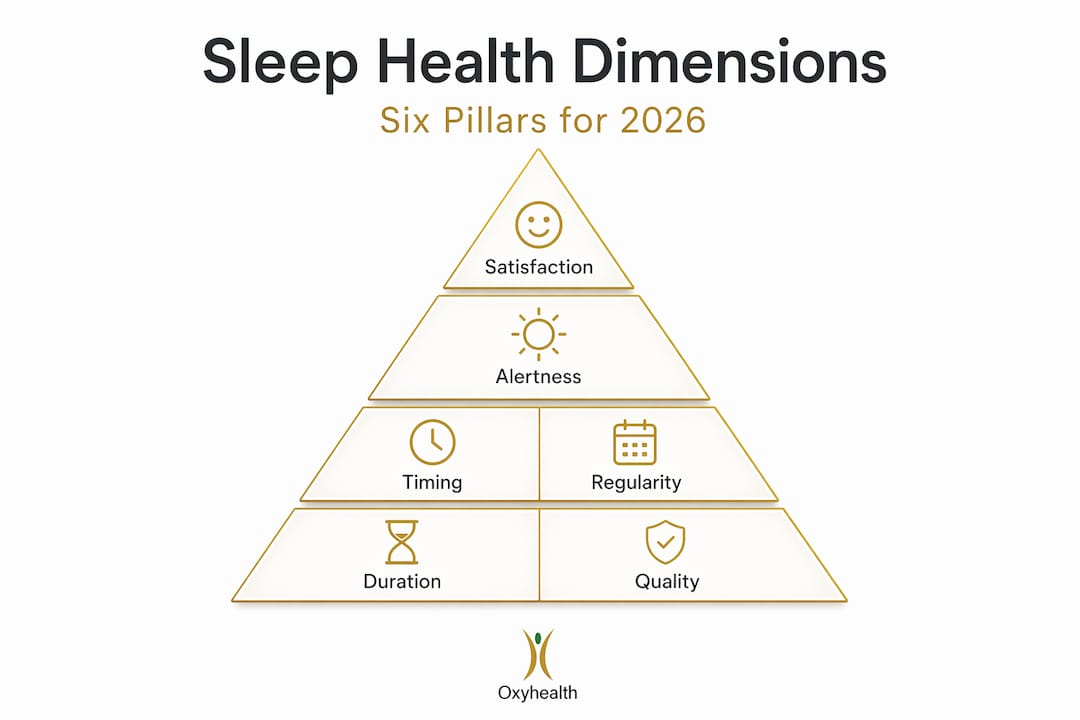
The six dimensions of sleep health
Sleep researchers now recognise that sleep is multidimensional, involving six key components:
- Regularity: Going to bed and waking at consistent times, even at weekends
- Satisfaction: Subjective sense of feeling rested and restored
- Alertness: Ability to stay awake and focused during the day without relying on caffeine
- Timing: Alignment of sleep with your natural circadian rhythm
- Efficiency: The proportion of time in bed actually spent asleep
- Duration: Total hours of sleep obtained per night
Fixating on duration alone misses five of these six dimensions. That is where most sleep advice goes wrong.
Pro Tip: Track your alertness levels throughout the day, not just your hours in bed. Persistent afternoon fatigue is a more reliable signal of poor sleep quality than the number on your sleep tracker.
When sleep goes wrong: risks at both extremes
The relationship between sleep and health is not linear. It follows a U-shape. Both sleeping too little and sleeping too much are linked to accelerated biological ageing across multiple organ systems, according to research published in Nature.
Short sleep carries the more direct disease risk. Genetic and survival analyses confirm causative pathways linking chronic short sleep to cardiovascular disease, metabolic dysfunction, musculoskeletal conditions, and psychiatric illness. Regularly sleeping under six hours raises the risk of hypertension, obesity, and type 2 diabetes in ways that diet and exercise alone cannot fully offset.
Here is how the risks break down across sleep duration categories:
| Sleep duration | Key health risks |
|---|---|
| Under 6 hours | Hypertension, obesity, type 2 diabetes, accelerated ageing, immune suppression |
| 6 to 8 hours | Generally associated with lower disease risk when quality and timing are good |
| Over 9 hours consistently | Elevated mortality risk, often reflecting underlying illness rather than causing it |
The hormonal picture is particularly telling. Sleep loss reduces leptin and increases ghrelin, the hormones governing appetite suppression and appetite stimulation respectively. This is why poor sleepers tend to eat more, crave calorie-dense foods, and struggle with natural weight management despite their best efforts. It is not a willpower problem. It is a hormonal one caused by insufficient sleep.

Mental health follows a similar pattern. Chronic sleep deprivation impairs the prefrontal cortex, the region responsible for emotional regulation and decision-making. The result is heightened anxiety, reduced stress tolerance, and in severe cases, a significantly elevated risk of depression and cognitive decline.
Quality and consistency matter more than hours
Here is something most sleep articles will not tell you plainly: obsessing over the eight-hour target can actually make your sleep worse. Fixating on duration creates performance anxiety around sleep, which activates the stress response and makes falling asleep harder. The goal is consolidated, regular sleep, not a specific number.
Fragmented sleep is a good example of why this matters. Someone who spends nine hours in bed but wakes repeatedly throughout the night may function worse than someone who sleeps a solid six and a half hours without interruption. Sleep efficiency, the ratio of time asleep to time in bed, is a more meaningful metric than raw duration for many people.
How do you actually improve sleep quality rather than just duration? Here is a practical sequence:
- Set a fixed wake time. This single habit anchors your circadian rhythm more reliably than any other change. Pick a time and hold it seven days a week for at least two weeks.
- Reduce time in bed initially. If you are sleeping poorly, spending fewer hours in bed builds sleep pressure, which makes falling asleep faster and sleep deeper. This is the principle behind clinical approaches to insomnia.
- Audit your sleep environment. Temperature between 16 and 19 degrees Celsius, complete darkness, and low noise levels are the three biggest environmental levers.
- Track efficiency, not just hours. Many wearables now report sleep efficiency scores. Aim for above 85 per cent consistently before worrying about extending duration.
- Limit time in bed to sleep and sex only. Using your bed for work, scrolling, or watching television weakens the mental association between bed and sleep.
Pro Tip: If you wake in the night and cannot fall back asleep within 20 minutes, get up and do something calm in dim light. Lying awake in bed trains your brain to associate the bed with wakefulness, which compounds the problem.
Practical habits that genuinely improve sleep
The evidence for sleep hygiene for wellness is more specific than the generic advice suggests. Consistent sleep schedules, environmental adjustments, and targeted lifestyle habits produce measurable improvements in sleep quality and overall wellbeing.
The following habits are backed by the strongest evidence:
- Caffeine cut-off at 2 pm. Caffeine has a half-life of around five to six hours. A coffee at 3 pm still has half its stimulant effect at 9 pm, raising your sleep onset time significantly.
- Morning light exposure. Getting natural light within 30 minutes of waking sets your circadian clock and improves sleep onset that evening. This is one of the most underused and cost-free sleep interventions available.
- Exercise timing. Regular physical activity improves sleep depth and reduces the time it takes to fall asleep. Morning or afternoon exercise is preferable. Vigorous exercise within two hours of bedtime can delay sleep onset in some people.
- Alcohol awareness. Alcohol may help you fall asleep faster but it suppresses REM sleep and causes fragmented sleep in the second half of the night. Even two drinks significantly reduce sleep quality.
- Wind-down routine. A 30 to 60 minute pre-sleep routine signals to your nervous system that the day is ending. Reading, light stretching, or a warm bath are all effective. The bath works partly because the subsequent drop in body temperature mimics the natural cooling that triggers sleep.
- Magnesium and nutrition. Magnesium deficiency is associated with poor sleep quality. Foods rich in magnesium, including dark leafy greens, nuts, and seeds, support the nervous system’s ability to downregulate before sleep.
The connection between sleep and stress is bidirectional. Stress disrupts sleep, and poor sleep amplifies the stress response. Breaking this cycle requires addressing both sides, which is why lifestyle interventions work better than sleep aids alone for most people. For those dealing with chronic insomnia, preventative wellness strategies that address underlying inflammation and pain can also make a meaningful difference.
My honest take on sleep and wellness
I have spent years reading the research on health and longevity, and the finding that still surprises me most is how consistently sleep outperforms other interventions. I have seen people spend hundreds of pounds on supplements, follow restrictive diets, and train six days a week, yet remain exhausted, inflamed, and struggling with their weight. When we look at their sleep, it is almost always poor quality, inconsistent, or both.
The uncomfortable truth is that sleep may be the most impactful longevity factor available to us, yet it is treated as the first thing to sacrifice when life gets busy. We celebrate people who sleep five hours and still perform. We should not. We are watching them spend a biological resource they will not get back.
What I have found actually works is not complicated. It is consistency. Going to bed and waking at the same time, protecting the wind-down hour, and treating sleep as a non-negotiable rather than a luxury. Supplements and nutrition matter. Exercise matters. But none of them function properly on a foundation of chronic sleep debt.
My advice is to audit your sleep before you audit anything else. If you are not sleeping well, everything else you do for your health is working against a headwind. Fix the sleep first. The role of vitamins in ageing and the benefits of a clean diet become far more pronounced when your body actually has the overnight window it needs to use them properly.
— John
Support your sleep and wellness with Oxyhealth
If you are working to improve your sleep and overall health, the right nutritional support can make a real difference to how your body performs during those restorative hours. At Oxyhealth, we stock a carefully selected range of natural supplements designed to support immune function, cellular recovery, and general vitality, all of which work in tandem with quality sleep.

Whether you are looking to support your immune system, aid gentle detoxification, or fill nutritional gaps that may be affecting your energy and sleep quality, our wellness supplements and health kits are a practical next step. All products are dispatched from the UK, with same-day shipping on orders placed before 2 pm and free delivery on orders over £50.
FAQ
What is the role of sleep in wellness?
Sleep is an active biological process during which the brain clears toxins, hormones are regulated, and the immune system rebuilds. It is one of the strongest predictors of long-term health and longevity.
How does sleep affect mental health and mood?
Poor sleep disrupts serotonin and dopamine balance, impairing emotional regulation and stress tolerance. Research shows measurable mood improvements within seven days of consistent, quality sleep.
Does sleep quality matter more than sleep duration?
Yes, for many people. Fragmented or poorly timed sleep can impair function even when total hours look adequate. Sleep researchers now assess six dimensions of sleep health, not just duration.
How does poor sleep affect weight and appetite?
Sleep loss reduces leptin and increases ghrelin, the hormones that regulate appetite. This directly increases hunger and cravings for high-calorie foods, making weight management significantly harder.
What are the most effective sleep hygiene habits?
A fixed wake time, morning light exposure, a caffeine cut-off at 2 pm, and a 30 to 60 minute wind-down routine are among the most evidence-backed habits for improving sleep quality and overall wellbeing.