
What is whole food nutrition? A UK guide
TL;DR:
- Whole food nutrition involves choosing minimally processed foods that stay close to their natural state, preserving fiber, vitamins, and minerals. It is more practical than strict raw diets and supports better digestion, nutrient absorption, and long-term health when incorporated into balanced eating habits. Emphasizing moderation and realistic goals, it encourages adding nutritious whole foods to your UK diet while allowing some processed options for convenience.
Whole food nutrition is one of those phrases that gets thrown around constantly, yet most people carry a slightly wrong version of it in their heads. Many assume it means eating only raw, unprocessed foods in near-perfect purity, which sounds admirable but exhausting. The reality is far more practical. What is whole food nutrition, truly? It is the deliberate habit of choosing foods that remain close to their natural state, keeping their fibre, vitamins, and minerals largely intact. This guide explains what that means in a UK context, why it matters, and how to apply it without overhauling your entire life.
Table of Contents
- What is whole food nutrition and why does it matter
- The science behind whole foods: nutrients and food structure
- Whole food diet patterns: balancing benefits with everyday life
- Practical tips for integrating whole food nutrition into your UK diet
- Comparing whole food nutrition with other popular diet approaches
- Rethinking whole food nutrition: balance over perfection
- Support your whole food nutrition journey with Oxyhealth
- Frequently asked questions
Key Takeaways
| Point | Details |
|---|---|
| Whole foods defined | Whole foods are minimally processed foods close to their natural state, such as fruits, vegetables, and unprocessed meats. |
| Food structure matters | The natural structure and fibre in whole foods affect digestion and nutrient absorption beyond their nutrient content. |
| Balance over perfection | A balanced approach with mostly whole foods and some nutritious processed items is more sustainable and practical. |
| Practical swaps | Small changes like choosing whole fruit instead of juice can make a big difference in health. |
| Support with supplements | Complement whole food nutrition with natural supplements and health kits to fill nutrient gaps and support wellness. |
What is whole food nutrition and why does it matter
Whole food nutrition centres on one key idea: eat food that has not been significantly altered from how it exists in nature. According to the British Heart Foundation, “whole foods” generally describes foods left close to their natural state, including fruit, vegetables, nuts, seeds, beans and lentils, milk, wholegrains, and unprocessed meats and fish.
What this excludes is equally telling. Foods heavily laden with added sugars, salt, saturated fat, or artificial additives do not qualify. Think shop-bought sauces packed with sweeteners, ultra-processed breakfast cereals, or flavoured crisps with a twelve-item ingredient list. Understanding whole food nutrition means recognising that it is less about a strict rulebook and more about a spectrum, where you aim to stay on the minimally processed end as much as possible.
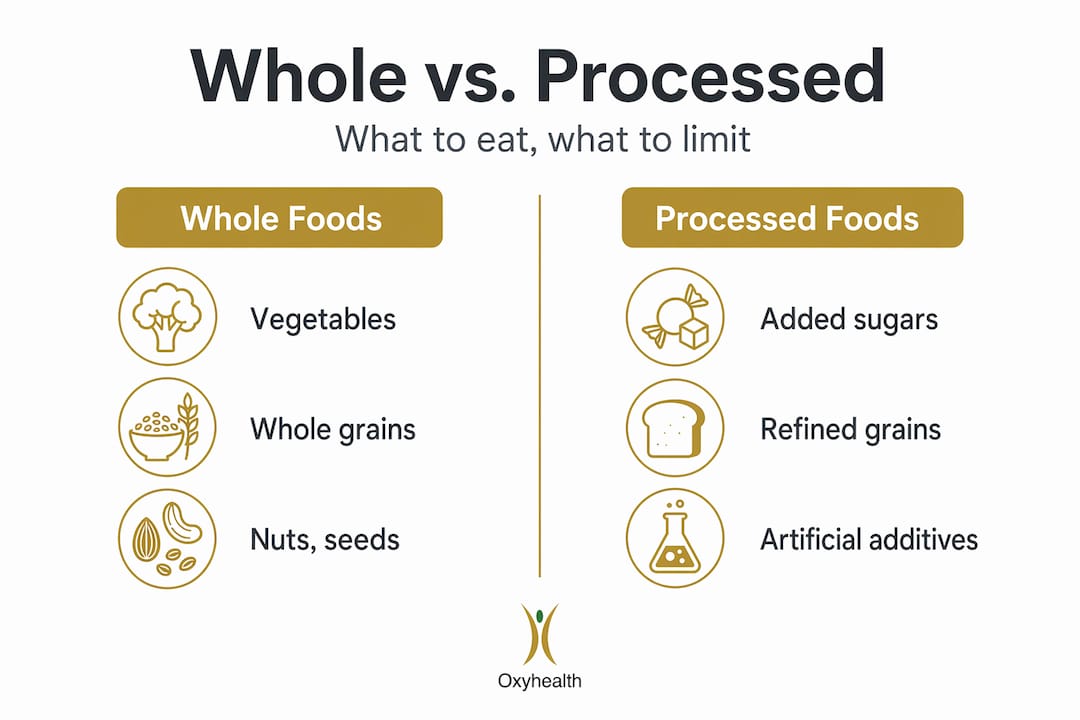
Why does this matter for your health? Whole foods retain their natural fibre, vitamins, and minerals in a way that heavily processed alternatives cannot match. Fibre supports gut health, helps manage cholesterol, and keeps you full longer. Micronutrients like magnesium, potassium, and B vitamins are present in their natural food matrix, where they tend to be better absorbed than in isolated supplement form. If you are exploring superfoods for better health in the UK, the foundation is nearly always whole food nutrition first.
Common examples of whole foods in the UK:
- Fresh or frozen fruit and vegetables (no added sauces or syrups)
- Wholegrains such as oats, brown rice, and wholemeal bread
- Legumes including lentils, chickpeas, and kidney beans
- Nuts and seeds in their natural or plain roasted form
- Milk, plain yogurt, and eggs
- Unprocessed meats, poultry, and fresh or frozen fish
The science behind whole foods: nutrients and food structure
Most nutrition conversations focus exclusively on nutrients, how much protein, how many vitamins, what the calorie count is. Whole food nutrition asks a more interesting question: does the physical structure of the food change how your body uses those nutrients? The answer, backed by research, is yes.
The structure of whole foods directly affects digestion and nutrient absorption. A striking example involves almonds. When you eat whole almonds, much of the fat remains bound inside intact cell walls and passes through the digestive system without being fully absorbed. Ground almonds, by contrast, release more of that fat because the physical barrier has been broken down. Same food, different metabolic outcome, simply because of structure.
This principle extends to sugar absorption too. Whole fruit contains fibre that slows how quickly glucose enters the bloodstream, making it far superior to fruit juice for blood sugar management. A glass of orange juice can contain the sugar of four oranges with almost none of the fibre. That distinction matters enormously if you are monitoring energy levels, managing weight, or simply aiming for steadier focus throughout the day.
Processing methods also strip foods of nutrients. Heavy processing typically adds salt, sugar, and fat while removing the fibre and micronutrients that made the original food valuable. Minimal processing such as washing, chopping, or freezing is entirely acceptable and largely preserves nutritional value. Understanding this helps you optimise vitamin intake from food before you even consider supplements.
“The physical structure of what you eat is just as important as its nutrient content. Processing changes structure, and structure changes what your body actually receives.”
Key science-backed benefits of whole food structure:
- Intact fibre slows glucose absorption and supports stable energy
- Cell structure in nuts and seeds limits excess fat absorption
- Natural food matrices improve micronutrient bioavailability
- Reduced processing means fewer disruptive additives reaching the gut
Pro Tip: When buying frozen vegetables, check the ingredient list. A single-ingredient pack, say “garden peas”, is as nutritious as fresh and often more convenient. A pack with “peas, salt, sugar, modified starch” is not.
Whole food diet patterns: balancing benefits with everyday life
Here is where the whole food diet explained in theory often falls apart in practice. A fully whole-foods diet is difficult to maintain and may limit dietary variety, which can actually reduce overall nutritional quality if it leads to avoiding nutritious foods that happen to be lightly processed.
Life in the UK does not always make whole food eating straightforward. Long commutes, busy work schedules, and the sheer convenience of pre-made meals mean that an all-or-nothing approach tends to collapse quickly. The goal, then, is not perfection. It is proportion. Most of your food, most of the time, should come from whole or minimally processed sources. The remaining portion can include foods like plain tinned fish, reduced-salt baked beans, or shop-bought hummus, all of which carry genuine nutritional value even if they do not meet a strict whole food definition.

A sensible daily supplement routine can also bridge gaps when busy weeks make ideal eating unrealistic. The key is to use supplements as genuine support, not as an excuse to eat poorly most of the time.
| Approach | Sustainability | Nutrient variety | Practicality for UK lifestyles |
|---|---|---|---|
| 100% strict whole foods | Low | Can be limited | Difficult |
| Mostly whole foods with some processed | High | Broad | Very achievable |
| Primarily processed, few whole foods | High short-term | Poor | Easy but damaging |
Simple swaps that shift the balance without overhauling your life:
- Brown rice or quinoa instead of white rice
- Plain oats instead of sugary breakfast cereals
- Whole fruit instead of fruit juice or smoothies
- Unsalted nuts instead of crisps for snacking
- Home-cooked lentil dishes instead of ready meals
Pro Tip: Aim for an 80/20 balance. If 80% of what you eat in a week comes from whole or minimally processed sources, you are already getting most of the benefits without the stress of perfection.
Practical tips for integrating whole food nutrition into your UK diet
Knowing the theory is one thing. Building the habit is another. These steps are ordered by impact and ease, starting with the changes most worth your attention.
- Swap juice for whole fruit. This single change reduces sugar spikes significantly and adds fibre your gut will thank you for. A portion of blueberries or an apple with breakfast beats a glass of orange juice on almost every nutritional measure.
- Upgrade your grains. Switching from white bread to wholemeal, or from white pasta to wholewheat, requires almost no extra effort. The fibre and blood sugar benefits are immediate and meaningful.
- Use frozen and tinned wisely. Frozen spinach, canned chickpeas with no added salt, and tinned tomatoes are all whole food wins. They are cheaper, last longer, and remove the time pressure of cooking fresh every day.
- Build your plate deliberately. Fill half with vegetables or salad, one quarter with a whole food protein (eggs, fish, chicken, lentils), and one quarter with a wholegrain or starchy vegetable. This simple framework covers most nutritional bases.
- Read labels properly. A short ingredient list with recognisable names is a reliable sign of minimal processing. If the label reads like a chemistry catalogue, it is worth putting back.
- Batch cook on weekends. A pot of lentil soup, a tray of roasted vegetables, or a batch of overnight oats takes an hour on Sunday and removes five days of temptation to reach for something processed.
Pro Tip: Shop the perimeter of your supermarket first. Fresh produce, meat, fish, and dairy are typically around the edges. The middle aisles are where ultra-processed foods live. You can still go there, but filling your basket with whole foods first leaves less room and less budget for the alternatives.
Improving your wellness practices consistently matters more than any one perfect meal. Small, repeated habits compound into meaningful health outcomes over time.
Comparing whole food nutrition with other popular diet approaches
Whole food nutrition often gets confused with specific named diets. It is worth being clear about where it sits relative to approaches you may have already encountered.
A whole food diet is plant-forward and focused on minimal processing, but it is not the same as veganism or a plant-based diet. You can eat eggs, fish, poultry, and even red meat within a whole food framework, as long as those foods are minimally processed and not loaded with additives.
| Diet approach | Animal products allowed? | Processed foods excluded? | Primary focus |
|---|---|---|---|
| Whole food nutrition | Yes, minimally processed | Mostly yes | Food state and structure |
| Strict plant-based / vegan | No | Varies | Animal product exclusion |
| Ketogenic (keto) | Yes | Varies | Macronutrient ratios (low carb) |
| Ultra-processed food heavy | Yes | No | Convenience, cost |
Keto, for instance, allows processed meats and artificially sweetened foods as long as they are low in carbohydrates. Whole food nutrition would exclude those same products because of the additives and processing involved, regardless of their carb count. The focus is on what was done to the food, not just its macronutrient breakdown.
The advantages of a whole food diet over heavily processed eating are supported by consistent evidence: better fibre intake, improved heart health markers, steadier blood sugar, and lower intake of additives linked to inflammatory responses. For UK consumers keeping an eye on wellness trends in 2026, whole food nutrition continues to grow as the evidence-based approach people return to after trying more restrictive alternatives.
Key whole food nutrition benefits compared to other approaches:
- Broader nutrient variety than strict elimination diets
- More fibre than keto or carnivore approaches
- Less reliance on supplements than heavily restrictive vegan diets
- More sustainable long-term than any approach requiring total food group exclusion
Rethinking whole food nutrition: balance over perfection
Here is the perspective that most articles on this topic do not offer: the biggest enemy of whole food nutrition is not the occasional biscuit or a packet of shop-bought soup. It is the all-or-nothing mindset that convinces people they have already failed because their diet is not 100% pure.
We have seen this pattern repeat itself. Someone reads about whole food nutrition, gets genuinely motivated, and spends two weeks eating nothing but vegetables, oats, and plain chicken. Then a birthday, a work lunch, or a tired Tuesday evening happens, and they eat a pizza. Suddenly the whole effort feels wasted, and they revert entirely. This is not a willpower problem. It is a framing problem.
The key is balance rather than complete exclusion. The evidence consistently supports this. People who aim for mostly whole food eating with genuine flexibility maintain that pattern far longer and see better cumulative health outcomes than those who pursue short bursts of dietary perfection.
There is also a point worth making about food structure and fibre that tends to get buried under conversations about nutrient counts. You could technically hit your daily vitamin targets through supplements and still eat a diet that wrecks your blood sugar, disrupts your gut bacteria, and leaves you perpetually hungry. Nutrients in isolation are not the same as nutrients delivered in their natural food matrix. Structure matters. Fibre matters. The experience of eating real food, chewing it properly, and allowing your digestive system to work through it as nature intended, that matters too.
This does not mean supplements are irrelevant. Far from it. When whole food eating has gaps, whether through a busy schedule, restricted access to variety, or specific health needs, high-quality natural supplements can provide genuine support. The distinction is using them to reinforce good habits, not replace them.
Support your whole food nutrition journey with Oxyhealth
Eating more whole foods is the foundation, but even the most considered diet can have gaps. Stress, seasonal variation in food quality, and the realities of UK life mean that targeted nutritional support often makes a meaningful difference.

At Oxyhealth, we stock a carefully chosen range of natural supplements that complement a whole food approach rather than replacing it. Whether you are looking to support your vitamin and mineral intake, or you want to give your digestive system a reset, our health kits and cleanse programmes are designed to work alongside a balanced, whole food diet. For those exploring detoxification as part of their wellness routine, our cleanse and detox products can support your body’s natural processes. All products are dispatched from the UK, with same-day shipping on orders placed before 2 p.m. and free delivery on orders over £50.
Frequently asked questions
What exactly counts as a whole food in the UK?
Whole foods in the UK include fruits, vegetables, nuts, seeds, whole grains, beans, lentils, milk, and unprocessed meats or fish, typically with minimal processing and no added sugars or additives.
Is eating only whole foods necessary for good health?
No. Aiming to eat mostly whole or minimally processed foods, balanced with some nutritious processed items, is more realistic and sustainable. Experts recommend balance over strict exclusion to avoid narrowing food variety and creating unnecessary stress around eating.
Can processed foods ever be part of a healthy diet?
Yes. Some processed foods such as plain yogurt, reduced-salt canned beans, or shop-bought hummus carry genuine nutritional value. Healthy processed options can sit comfortably within a predominantly whole food pattern without undermining overall health.
How does the structure of whole foods affect nutrition?
The natural structure and fibre in whole foods slow sugar absorption and reduce fat availability compared to processed forms. Intact cell walls in almonds, for example, keep fat bound during digestion in a way that ground almonds simply do not, which changes the caloric and metabolic impact meaningfully.