What is holistic health? A complete guide to natural wellness
TL;DR:
- Holistic health treats the mind, body, and spirit as interconnected, combining traditional wisdom and modern science.
- It effectively supports chronic illness management, prevention, daily wellness, and mental health.
- In the UK, holistic approaches are best integrated with conventional medicine through informed, personalized care.
Holistic health is still misunderstood by many UK residents who assume it means choosing crystals over conventional medicine. The reality is far more grounded. Holistic health is a structured, evidence-informed approach that treats your mind, body, and spirit as one interconnected system rather than a collection of separate symptoms. It draws on centuries of traditional wisdom from Ayurveda and Traditional Chinese Medicine, alongside modern clinical research, to support your overall well-being. This guide cuts through the noise, explains the real frameworks behind holistic wellness, and shows you practical ways to apply them in everyday British life.
Table of Contents
- Understanding holistic health: Beyond alternative therapies
- Core pillars and practices: The holistic health toolbox
- Who benefits most? Holistic health use cases and limitations
- Integrating holistic health with conventional care in the UK
- Why genuine holistic health requires personal responsibility and clear boundaries
- Explore authentic holistic wellness solutions
- Frequently asked questions
Key Takeaways
| Point | Details |
|---|---|
| Whole-person wellness | Holistic health means caring for your body, mind, and spirit together. |
| Evidence matters | UK experts recommend combining holistic methods with NHS guidance for best results. |
| Personalisation is crucial | Tailoring holistic approaches to your needs brings better outcomes than a one-size-fits-all plan. |
| Know the limits | Holistic health is effective for prevention and chronic cases but is not a replacement for emergency care. |
Understanding holistic health: Beyond alternative therapies
Holistic health is not a rejection of conventional medicine. It is an expansion of it. Rather than treating a headache as just a headache, holistic health asks why the headache keeps returning, what your stress levels look like, how your diet and sleep are functioning, and whether emotional tension is playing a role. Every symptom is a signal from the whole system.
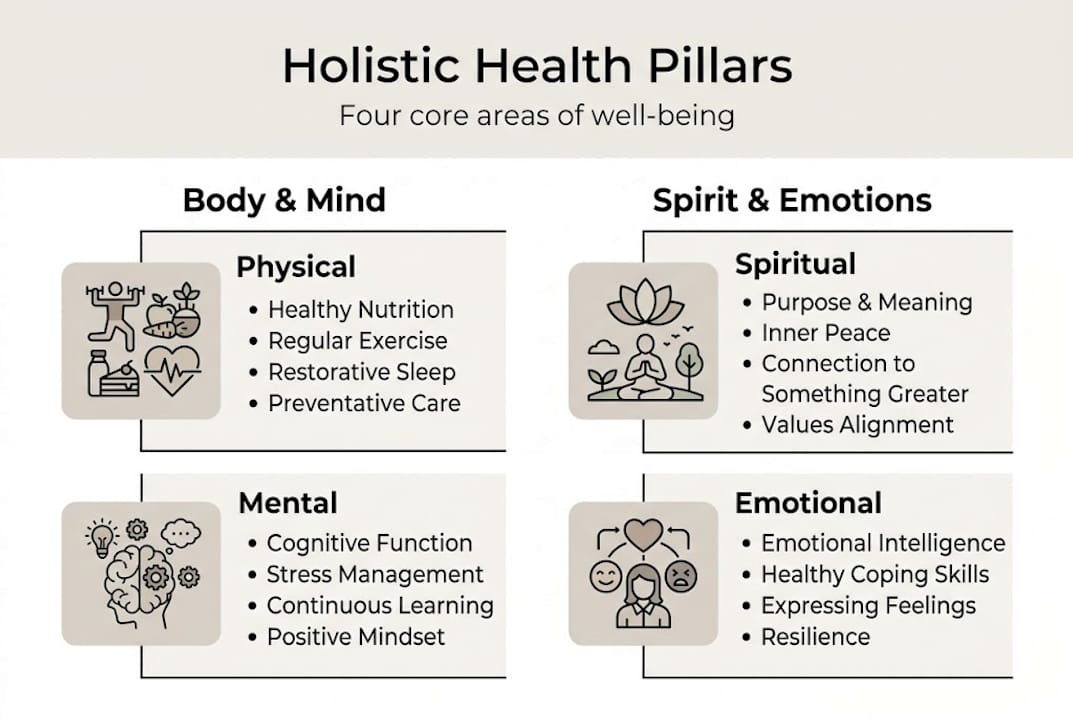
The four core pillars of holistic health are physical, emotional, mental, and spiritual well-being. These are not separate categories. They are constantly influencing one another. Poor sleep affects mood. Chronic stress weakens immunity. Unresolved emotional tension can manifest as physical pain. Holistic health works precisely because it addresses these connections rather than isolating them.
Traditional systems like Ayurveda and Traditional Chinese Medicine (TCM) have understood this interconnection for thousands of years. Modern integrative medicine is now catching up, validating many of these approaches through clinical trials and population studies. The NHS acknowledges that body-mind-spirit interventions span a wide range, including traditional systems, biological treatments such as herbs and nutrition, body-based methods like yoga and massage, and energy therapies such as Reiki and aromatherapy.
Here is a quick overview of where holistic practices sit:
| Category | Examples | Pillar supported |
|---|---|---|
| Traditional systems | Ayurveda, TCM | Body, mind, spirit |
| Biological treatments | Herbal supplements, nutrition | Body |
| Body-based methods | Yoga, massage, chiropractic | Body, mind |
| Energy therapies | Reiki, aromatherapy | Spirit, mind |
| Mind-body practices | Meditation, breathwork | Mind, spirit |
In the UK, holistic health works best when it sits alongside your GP’s care rather than replacing it. Many practices now support sustainable wellness as part of a longer-term health strategy, not just a short-term fix.
Key characteristics of genuine holistic health include:
- Treating root causes rather than just symptoms
- Personalising approaches to the individual rather than applying one-size-fits-all solutions
- Combining ancient wisdom with modern scientific evidence
- Encouraging active participation in your own health journey
“Holistic health is not about rejecting science. It is about expanding the lens through which we understand human well-being.”
Core pillars and practices: The holistic health toolbox
Once you understand what holistic health means, the next question is: what does it actually look like in practice? The range of tools available is broader than most people expect, and knowing which tool supports which pillar helps you build a coherent, effective routine.
The NHS confirms that holistic methodologies span body-mind-spirit interventions, traditional systems, biological treatments, body-based methods, and energy therapies. Each has a distinct role.
| Practice | Pillar | Primary benefit |
|---|---|---|
| Yoga | Body, mind | Flexibility, stress reduction |
| Acupuncture | Body, spirit | Pain relief, energy balance |
| Herbal supplements | Body | Nutritional support, detoxification |
| Meditation | Mind, spirit | Clarity, emotional regulation |
| Massage therapy | Body | Circulation, muscle recovery |
| Reiki | Spirit | Energy flow, relaxation |
In the UK, GPs are increasingly supporting social prescribing, which allows them to refer patients to non-clinical services such as yoga classes, walking groups, and mindfulness programmes. This is a formal recognition that well-being extends beyond prescriptions.
For those exploring natural supplements for better health, supplementation fits within the biological treatment category and can fill nutritional gaps that diet alone may not address. Similarly, detox for UK wellness has become a practical entry point for many people beginning their holistic journey.
Practical tips for combining therapies safely:
- Start with one or two practices and track your results before adding more
- Always inform your GP about any supplements or complementary therapies you are using
- Choose qualified practitioners with recognised UK credentials
- Give each practice at least four to six weeks before evaluating its effect
Pro Tip: Keep a simple health journal. Note your energy levels, sleep quality, mood, and any physical symptoms each week. Over time, patterns emerge that help you identify which practices are genuinely working for you.
Who benefits most? Holistic health use cases and limitations
Holistic health is not for everyone in every situation. Understanding where it genuinely helps, and where it does not, is what separates informed wellness from wishful thinking.
Research into UK holistic health users shows that the majority are women, often with chronic conditions and higher levels of education. This reflects a broader pattern: people who have lived with ongoing health challenges tend to seek broader solutions when conventional medicine alone is not enough.
Holistic health is most effective for:
- Chronic illness management such as fibromyalgia, IBS, or autoimmune conditions where lifestyle factors play a significant role
- Prevention through nutrition, stress management, and supplementation before illness takes hold
- Daily wellness optimisation including better sleep, improved energy, and sharper mental focus
- Emotional and mental health support using mindfulness, breathwork, and structured movement
Where holistic health has clear limits: it is not a substitute for emergency or acute medical care. A broken bone needs a hospital. A severe infection needs antibiotics. Holistic health works best as a complement to, not a replacement for, conventional treatment in these situations.
Personalisation is the single most important factor in holistic success. A personalised care approach recognises that what works brilliantly for one person may have no effect on another. Your genetics, lifestyle, stress load, and health history all shape which practices will serve you best.
Statistic: UK surveys show that holistic health users are more likely to have chronic diseases, suggesting that conventional care alone is leaving a gap that people are actively trying to fill.
A daily supplement routine is one of the most accessible entry points for those new to holistic health, particularly for addressing nutritional deficiencies that underlie many chronic complaints.
Pro Tip: Before starting any new holistic practice, write down your specific health goals. Vague intentions produce vague results. Clear goals make it easier to evaluate whether a practice is actually helping.
Integrating holistic health with conventional care in the UK
The most effective approach to health in the UK is not choosing between conventional medicine and holistic practices. It is knowing how to combine both intelligently.

The NHS formally recognises several evidence-based complementary therapies and supports social prescribing as a route to holistic care. This means your GP can refer you to community services, wellbeing coaches, or structured exercise programmes as part of your treatment plan. The NHS advises that evidence-based practices such as nutrition, mindfulness, and acupuncture can be integrated alongside GP consultation for genuine holistic support.
Practical steps for integrating holistic and conventional care:
- Talk to your GP first. Always disclose any supplements or therapies you are using. Some herbs interact with medications.
- Ask about social prescribing. Many GP surgeries now have link workers who can connect you with local holistic services.
- Track your results. Keep a record of symptoms, energy, mood, and sleep over time to share with both your GP and any holistic practitioners.
- Use qualified practitioners. Look for membership of recognised bodies such as the British Acupuncture Council or the Complementary and Natural Healthcare Council (CNHC).
- Set a review date. Commit to reassessing your holistic programme every three months alongside your conventional care.
“Integrated care is not a compromise. It is a more complete picture of what it means to be well.”
For those considering natural vitamins as part of their integrated approach, quality matters enormously. Synthetic supplements and natural, food-derived vitamins behave differently in the body, and choosing wisely can make a measurable difference to your outcomes.
For mental health holistic support, integration is particularly powerful. Mindfulness, yoga, and structured social connection have strong evidence bases and work well alongside therapeutic or pharmacological support from your GP.
Why genuine holistic health requires personal responsibility and clear boundaries
Here is something the wellness industry rarely tells you: holistic health only works if you are willing to be honest with yourself. Not just about what you eat or how much you sleep, but about whether you are chasing a quick fix or genuinely committing to a different way of living.
We see this pattern regularly. Someone tries a supplement for two weeks, notices no dramatic change, and concludes that holistic health is a myth. But real, lasting change in the body takes months, not days. The practices that produce the most profound results, consistent nutrition, daily movement, quality sleep, and targeted supplementation, are also the least glamorous.
The wellness market is full of miracle cure narratives. Scepticism is not cynicism. It is a necessary tool. Ask for evidence. Ask how long results typically take. Ask what the realistic outcome looks like for someone in your specific situation.
True holistic health also means knowing your limits. If a practice is not working after a fair trial, stop and reassess. If a symptom worsens, consult your GP immediately. Holistic health is not about stubbornness. It is about informed, adaptive self-care.
Exploring gentle detox trends is a good example of this balanced approach: evidence-informed, gradual, and respectful of your body’s actual capacity for change.
Explore authentic holistic wellness solutions
If this guide has clarified what genuine holistic health looks like, the next step is finding products and tools that actually match that standard. At Oxyhealth, every product in our range is selected with the whole-person model in mind.
Frequently asked questions
What is holistic health in simple terms?
Holistic health means caring for your mind, body, and spirit as interconnected parts rather than focusing only on individual symptoms. The NHS recognises body-mind-spirit interventions as a legitimate framework for whole-person wellness.
Is holistic health the same as alternative medicine?
No. Holistic health includes alternative therapies but also incorporates mainstream care and scientific evidence for a whole-person approach. It integrates body-mind-spirit methods with modern medicine rather than replacing it.
Who should consider holistic health approaches?
People managing chronic illness, those focused on prevention, and anyone wanting to optimise their daily well-being can benefit. Research confirms it is effective for chronic conditions and wellness optimisation.
Can holistic health help with mental well-being?
Yes. Mindfulness, yoga, and structured social connection are all recognised holistic interventions with strong evidence for improving mental wellness, particularly when used alongside conventional support.
Recommended
- Sustainable wellness explained: healthy living for you and the planet – Oxyhealth
- Gentle detox trends 2026: natural wellness guide – Oxyhealth
- What is digestive health? Your essential 2026 guide – Oxyhealth
- Why Choose Natural Vitamins for Wellness Success – Oxyhealth
- Holistic Oral Care: Natural Solutions for Optimal Health – Stop Oral Care
- Collagen and holistic health: skin, joints, and wellbeing