
Why Choose Natural Vitamins for Wellness Success
Finding quality supplements in the United Kingdom can feel overwhelming when synthetic alternatives often disappoint. Many health-focused Brits want natural options, yet confusion around ingredient sourcing and bioavailability persists. This article cuts through marketing myths to explain what truly defines natural vitamins, focusing on their whole food origins and integrated nutrients that support detoxification and lasting wellness. Discover practical guidance for recognising authentic products and improving your nutritional strategy.
Table of Contents
- Defining Natural Vitamins And Common Myths
- Key Differences: Natural Versus Synthetic Vitamins
- Health Benefits Linked To Natural Supplements
- Navigating UK Regulations And Safety Assurance
- Choosing Authentic Products And Avoiding Pitfalls
Key Takeaways
| Point | Details |
|---|---|
| Natural vs. Synthetic | Natural vitamins provide superior bioavailability and cellular integration compared to synthetic alternatives due to their holistic nutrient profiles. |
| Consumer Awareness | Many consumers are misled by marketing, assuming all supplements are equal, when in fact nutrient sources and structures vary significantly. |
| UK Regulations | The UK has stringent regulations in place to ensure the safety and efficacy of nutritional supplements, though compliance does not guarantee individual suitability. |
| Authenticity in Products | Selecting authentic supplements requires thorough research, including checking for professional certifications and understanding ingredient sourcing details. |
Defining Natural Vitamins and Common Myths
Natural vitamins represent nutritional supplements derived directly from whole food sources, offering a pure and unprocessed approach to supporting wellness. Unlike synthetic alternatives, these vitamins maintain their original molecular structure and include essential co-factors that enhance nutrient absorption and biological effectiveness.
Understanding the fundamental differences between natural and synthetic vitamins requires examining their core characteristics:
- Natural vitamins come from concentrated whole food sources
- Synthetic vitamins are artificially manufactured in laboratory settings
- Natural supplements often include complementary enzymes and minerals
- Whole food-based vitamins provide more comprehensive nutritional profiles
Many consumers misunderstand natural vitamins, believing all supplements are created equal. However, plant based vitamin sources demonstrate significant advantages in bioavailability and cellular integration. The human body recognises and processes nutrients from natural sources more efficiently than their synthetic counterparts.
Common myths surrounding natural vitamins often stem from misinformation and marketing strategies. Some prevalent misconceptions include believing that all vitamins perform identically, or that synthetic versions are perfectly interchangeable with natural alternatives. Research consistently shows that whole food-derived supplements offer superior nutritional benefits, supporting more holistic wellness approaches.
The following table highlights common myths about natural vitamins and clarifies the facts:
| Myth | Reality | Impact on Consumers |
|---|---|---|
| All supplements are equal | Nutrient source and structure differ greatly | Can lead to poor supplement choices |
| Synthetic vitamins are interchangeable | Synthetic options may lack key cofactors | May result in less effective absorption |
| Labels always guarantee quality | Claims can be misleading or unregulated | Consumers may unknowingly buy inferior products |
| High doses enhance benefits | More is not always better or safer | Risk of excess intake and side effects |
Pro tip: When selecting vitamins, prioritise supplements sourced from organic, minimally processed whole food ingredients to maximise nutritional absorption and effectiveness.
Key Differences: Natural Versus Synthetic Vitamins
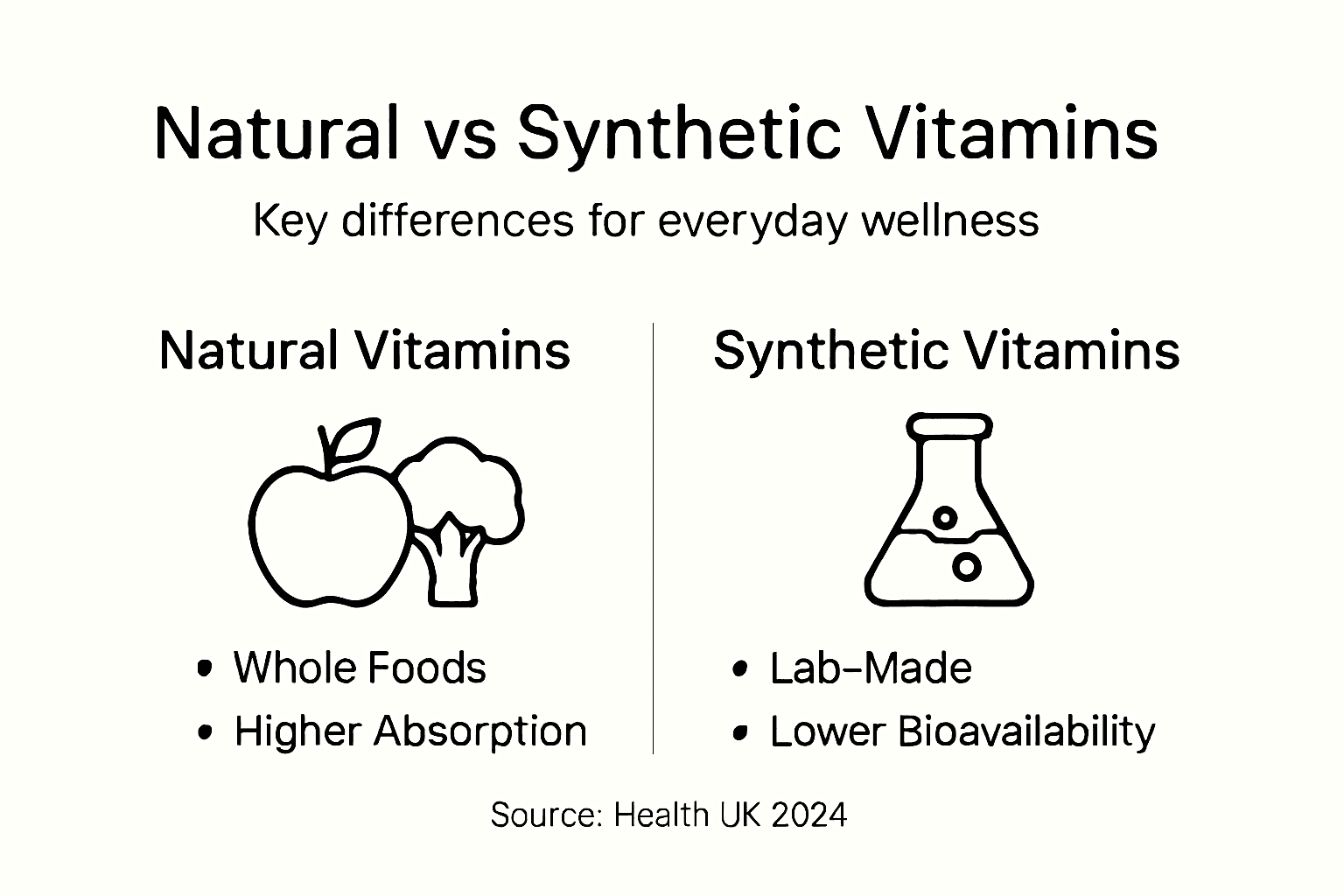
The fundamental distinction between natural and synthetic vitamins lies in their origin, molecular structure, and biological interaction within the human body. Complex vitamin absorption mechanisms reveal that natural vitamins offer more comprehensive nutritional benefits compared to their artificially manufactured counterparts.
Key characteristics differentiate natural and synthetic vitamin formulations:
- Natural vitamins originate from whole food sources
- Synthetic vitamins are chemically produced in laboratories
- Natural supplements contain complementary nutrients and enzymes
- Whole food vitamins provide more holistic nutritional profiles
- Synthetic versions often lack additional supporting micronutrients
Natural vitamins maintain their intricate molecular complexity, which enables more effective cellular integration. The body recognises these nutrients as complete packages, unlike isolated synthetic compounds that lack the supporting nutritional matrix found in whole food sources. This distinction means natural vitamins often demonstrate superior bioavailability and more efficient metabolic processing.
Research indicates that synthetic vitamins might not provide identical physiological benefits to their natural equivalents. Potential limitations include reduced absorption rates, incomplete nutrient utilisation, and potential metabolic inefficiencies. Some synthetic vitamin forms may even be eliminated more quickly by the body, reducing their overall effectiveness in supporting nutritional needs.
Natural vitamins represent a more holistic approach to nutritional supplementation, offering the body complete nutrient complexes rather than isolated chemical compounds.
Pro tip: Prioritise vitamins sourced from organic, minimally processed whole food ingredients to ensure maximum nutritional absorption and biological compatibility.
Health Benefits Linked to Natural Supplements
Natural supplements offer a comprehensive approach to supporting overall wellness, providing targeted nutritional benefits beyond traditional dietary intake. Essential nutritional strategies demonstrate how carefully selected natural supplements can address specific health requirements and support optimal bodily functions.
Key health benefits associated with natural supplements include:
- Enhanced immune system functionality
- Improved metabolic processes
- Balanced hormone regulation
- Increased energy production
- Better cellular repair and regeneration
- Support for cardiovascular health
- Enhanced cognitive function
Whole food-based supplements provide a unique advantage by delivering nutrients in their most bioavailable form. Unlike isolated synthetic alternatives, natural supplements contain additional micronutrients, enzymes, and cofactors that work synergistically to support comprehensive wellness. These complex nutritional matrices enable more efficient absorption and utilisation by the body’s metabolic systems.
Specific population groups may derive particular advantages from natural supplementation. Pregnant women, individuals with dietary restrictions, elderly populations, and those experiencing increased nutritional demands can benefit from targeted natural vitamin and mineral support. The holistic approach of natural supplements ensures that nutritional interventions address underlying physiological needs rather than providing isolated nutrient fragments.
Natural supplements represent a sophisticated approach to nutritional support, offering complete nutrient complexes that mirror the body’s intrinsic nutritional requirements.
Pro tip: Consult a healthcare professional to develop a personalised supplement strategy tailored to your unique physiological needs and wellness goals.
Navigating UK Regulations and Safety Assurance
The United Kingdom maintains rigorous regulatory frameworks to protect consumers purchasing nutritional supplements. Comprehensive vitamin safety standards ensure that dietary supplements meet strict quality control and labelling requirements, safeguarding public health through meticulous government oversight.
Key regulatory considerations for supplement consumers include:
- Mandatory ingredient quality testing
- Precise dosage limitations
- Transparent nutritional labelling
- Evidence-based health claim restrictions
- Regular manufacturer compliance assessments
- Independent third-party verification processes
- Consumer protection mechanisms
Supplements in the UK are regulated by multiple authoritative bodies, including the Food Standards Agency, Medicines and Healthcare Products Regulatory Agency, and the Department of Health. These organisations collaborate to establish comprehensive guidelines that prevent misleading marketing claims and protect consumers from potentially harmful nutritional products. Manufacturers must demonstrate scientific evidence supporting their product’s safety and efficacy before market distribution.

For easy reference, here is a summary of the main UK authorities overseeing supplement safety:
| Regulatory Body | Main Responsibility | Notable Area of Oversight |
|---|---|---|
| Food Standards Agency (FSA) | Food supplement safety | Ingredient testing, contamination control |
| Medicines and Healthcare Products Regulatory Agency (MHRA) | Medical claims and classification | Approval of health claims, product regulation |
| Department of Health | Nutritional policy guidance | Labelling requirements, public policy |
| Trading Standards | Consumer protection enforcement | Marketing accuracy and legal compliance |
Consumers should remain vigilant when selecting supplements, understanding that regulatory compliance does not automatically guarantee individual suitability. UK supplement regulations emphasize the importance of professional medical consultation and recognising that supplements cannot replace a balanced, nutritious diet.
Responsible supplement consumption requires understanding regulatory frameworks and individual health requirements.
Pro tip: Always verify a supplement’s regulatory compliance by checking for official UK certification marks and consulting healthcare professionals before introducing new nutritional products.
Choosing Authentic Products and Avoiding Pitfalls
Identifying genuine, high-quality vitamin supplements requires a strategic approach that goes beyond surface-level marketing claims. Vitamin supplement myths demonstrate the critical importance of consumer awareness and discernment when navigating the complex nutritional supplement marketplace.
Key strategies for selecting authentic nutritional products include:
- Verify professional certifications
- Research manufacturer credibility
- Check ingredient sourcing transparency
- Understand detailed nutritional labelling
- Examine third-party testing documentation
- Compare practitioner-recommended brands
- Evaluate scientific evidence supporting claims
Consumers must develop a critical eye when evaluating supplement options, recognising that not all products marketed as ‘natural’ guarantee quality or effectiveness. Authentic supplements should provide comprehensive ingredient information, clear dosage recommendations, and demonstrable scientific validation. This approach helps individuals avoid potential risks associated with poorly manufactured or misleadingly marketed nutritional products.
Medical consultation remains paramount in supplement selection, as individual health requirements vary significantly. Professional guidance can help identify potential interactions, recommend appropriate dosages, and ensure that supplement choices align with specific health objectives. Understanding the nuanced differences between marketing claims and scientific evidence becomes crucial in making informed nutritional decisions.
Authentic supplement selection requires thorough research, professional consultation, and a discerning approach to health marketing claims.
Pro tip: Always request detailed product documentation and consult healthcare professionals before incorporating new supplements into your wellness routine.
Embrace the Power of Natural Vitamins for True Wellness
Choosing natural vitamins addresses the common challenge of ineffective supplementation due to synthetic alternatives lacking essential cofactors and bioavailability. Many wellness seekers struggle with poor absorption and incomplete nutrient support. The article highlights the importance of whole food-derived vitamins that ensure better cellular integration and holistic health benefits.
Discover how Liquid Vitamins – Oxyhealth and our wider range of Supplements – Oxyhealth are crafted from organic, minimally processed natural sources. These products help you avoid common pitfalls like misleading labels and low-quality nutrients so you can maximise immune support, energy production and overall vitality.
Ready to experience authentic, effective natural vitamins with fast UK-based dispatch and a 365-day satisfaction guarantee?
Explore genuine wellness solutions at Oxyhealth.co.uk today and take the vital step towards supporting your health with trusted natural nutrition.
Frequently Asked Questions
What are the main benefits of choosing natural vitamins over synthetic ones?
Natural vitamins offer enhanced bioavailability, meaning the body can absorb and utilise them more effectively. They also come with complementary nutrients and enzymes that support overall wellness, unlike synthetic vitamins that may lack these beneficial components.
How do I determine if a vitamin supplement is truly natural?
To determine if a supplement is natural, check for transparent ingredient sourcing, professional certifications, and comprehensive labelling. Look for products that are derived from whole food sources and that provide independent third-party testing documentation.
Can I rely solely on natural vitamins for my nutritional needs?
While natural vitamins can significantly support your health, they should complement a balanced diet rather than replace it. It’s essential to consult with healthcare professionals to ensure you meet all your nutritional requirements.
Are there any risks associated with taking natural vitamins?
Although natural vitamins are generally considered safe, it’s important to avoid excessive intake, as high doses can lead to side effects. Consult with a healthcare provider to determine suitable dosages based on individual health needs.