
Superfoods for better health in the UK: what works
TL;DR:
- Superfoods are nutrient-dense foods high in vitamins, minerals, and antioxidants with no official scientific definition.
- Evidence supports broad dietary patterns like the Mediterranean diet over reliance on individual superfoods.
- Prioritize local UK foods like berries, fish, and pulses over expensive imports for better health and value.
The word “superfood” gets thrown around constantly, yet most people would struggle to define it precisely. Walk through any UK health food shop and you will find shelves packed with exotic powders and expensive imports, all promising extraordinary results. The reality is more nuanced. Superfoods are a marketing term referring to nutrient-dense foods high in vitamins, minerals, and antioxidants, and low in calories. There is no official scientific or legal definition, and many of the boldest claims are not backed by robust human evidence. This guide cuts through the noise with a clear, evidence-based look at what superfoods actually are, what the science supports, and how UK consumers can apply this knowledge practically.
Table of Contents
- What qualifies as a superfood?
- What does the science say about superfood health benefits?
- How to apply superfoods safely and effectively in your diet
- Limitations, pitfalls, and expert insights on superfoods
- A fresh perspective: why everyday superfoods, not miracle fixes, matter most
- Discover trusted supplements and health kits for a balanced diet
- Frequently asked questions
Key Takeaways
| Point | Details |
|---|---|
| Superfoods defined by nutrients | Superfoods are nutrient-dense foods high in antioxidants, vitamins, and minerals but not officially regulated. |
| Balanced diet trumps single foods | Health benefits come from a varied diet, not relying on individual superfoods. |
| Evidence supports dietary patterns | Consuming a mix of fruits, vegetables, whole grains, and oily fish lowers disease risk better than single foods. |
| Local UK foods are effective | Everyday foods like berries, pulses, greens and potatoes are proven, accessible superfoods for UK wellness. |
| Superfoods complement, not cure | Treat superfoods as supplements to a healthy lifestyle and medical advice, not miracle fixes. |
What qualifies as a superfood?
Building from that confusion, let’s uncover what actually qualifies as a superfood in Britain today. The term itself has no grounding in formal nutrition science. It emerged largely as a commercial label, and its popularity has grown in step with wellness culture rather than clinical research. In the UK, packaging regulations restrict the use of the word “superfood” unless the health claims attached to it are proven and approved. That is a significant detail most shoppers never realise.
So what does the term actually describe in practice? Generally, foods labelled as superfoods share a few common traits:
- High antioxidant content, which helps neutralise free radicals in the body
- Rich in vitamins and minerals relative to their calorie load
- Contain beneficial compounds such as polyphenols, omega-3 fatty acids, or dietary fibre
- Associated with reduced risk of chronic diseases in observational studies
Common UK examples include blueberries, salmon, dark chocolate, chia seeds, walnuts, kale, and spinach. These are genuinely nutritious foods. The problem is not the foods themselves but the inflated expectations placed upon them.
“No single superfood provides all the nutrients the body needs. The benefits come from eating a wide variety of nutritious foods as part of a balanced diet.”
This is a point worth sitting with. When you optimise vitamin intake through food alone, diversity matters far more than any one ingredient. The idea that a single food can transform your health is a marketing construct, not a medical one. Understanding this distinction protects your wallet and keeps your expectations realistic. For those interested in how nutrition intersects with ageing, the relationship between vitamins and ageing is a useful area to explore further.
What does the science say about superfood health benefits?
Having defined the term and context, let’s turn to the scientific evidence underpinning superfoods’ health claims. The honest summary is this: the evidence is real but often overstated. Studies consistently show that higher intake of nuts, whole grains, fruits, vegetables, and fish is linked with lower all-cause mortality. That is meaningful data. But the mechanism is rarely about one specific food acting in isolation.
The strongest evidence supports broad dietary patterns, such as the Mediterranean diet, rather than individual ingredients. Superfood benefit evidence is often limited, heterogeneous, and more convincing at the population level than in controlled trials on healthy individuals. The benefit is cumulative, built over years of consistent eating habits.
That said, some nutrients do stand out. Polyphenol-rich food consumption is tied to an 8.5% lower cardiovascular risk score, which is a statistically meaningful reduction. Antioxidants, omega-3 fatty acids, and dietary fibre each have credible bodies of research supporting their roles in reducing inflammation and supporting heart and gut health.
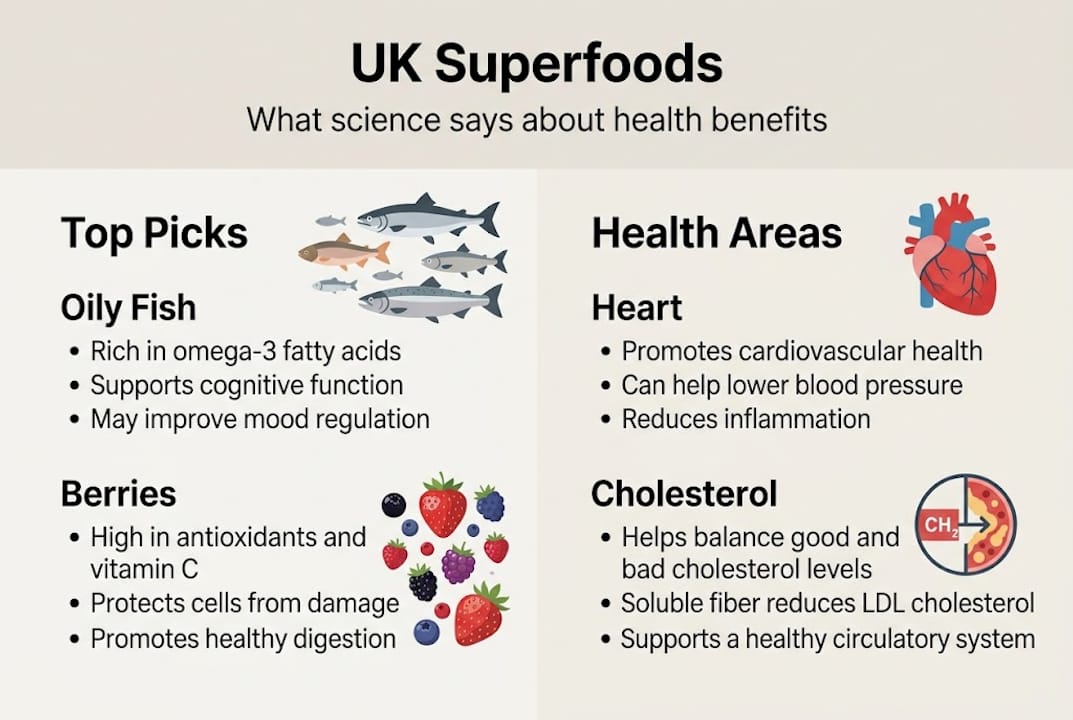
Here is a comparison of how key superfoods perform across common health markers:
| Superfood | Blood pressure | Cholesterol | Heart health | Mortality risk |
|---|---|---|---|---|
| Oily fish (salmon) | Modest benefit | Lowers LDL | Strong evidence | Reduced |
| Blueberries | Mild reduction | Neutral | Good evidence | Reduced |
| Walnuts | Mild reduction | Lowers LDL | Strong evidence | Reduced |
| Chia seeds | Modest reduction | Modest reduction | Moderate evidence | Unclear |
| Dark chocolate | Mild reduction | Neutral | Moderate evidence | Unclear |
| Kale/spinach | Neutral | Neutral | Indirect benefit | Reduced |
This table makes one thing clear: no single food dominates across all markers. The pattern of eating matters more than any individual item. If you are exploring detox superfoods tips or want to understand superfoods for detox more broadly, the same principle applies: variety and consistency outperform any single ingredient.
How to apply superfoods safely and effectively in your diet
Understanding the evidence, let’s translate it into practical steps for your health. The NHS Eatwell Guide provides a solid framework here. It recommends filling at least a third of your plate with fruits and vegetables, choosing wholegrain options, and including protein-rich foods such as fish, beans, and pulses regularly. Many so-called superfoods fit naturally into this model without any exotic shopping required.
One of the most useful reframes is the cost comparison between local and imported options:
| Imported superfood | Local UK equivalent | Nutritional comparison |
|---|---|---|
| Acai berries | Blueberries / blackcurrants | Very similar antioxidant profile |
| Goji berries | Rosehips / raspberries | Comparable vitamin C content |
| Quinoa | Oats / barley | Similar fibre and protein levels |
| Maca powder | Potatoes / sweet potatoes | Comparable complex carbohydrates |
Marketing hype leads to unrealistic expectations, and prioritising affordable local foods like potatoes and pulses is both nutritionally sound and financially sensible. British produce is genuinely competitive with imported trends.
Here is a practical step-by-step approach to building a superfood-rich meal plan:
- Start with colour. Aim for at least five different coloured fruits and vegetables each day. Colour diversity signals nutrient diversity.
- Add oily fish twice a week. Salmon, mackerel, or sardines provide omega-3 fatty acids with strong cardiovascular evidence behind them.
- Swap refined grains for whole grains. Oats, barley, and wholemeal bread add fibre and polyphenols without any extra effort.
- Include a handful of nuts daily. Walnuts or almonds are affordable, widely available, and well-studied.
- Use pulses as a base. Lentils, chickpeas, and kidney beans are among the most nutrient-dense foods available in any UK supermarket.
Pro Tip: Prioritise local, fresh, and diverse foods over expensive imports. A bowl of British blueberries and a tin of sardines will serve your health better than any superfood powder costing £30 a bag.
For broader wellness tips UK consumers can apply day-to-day, keeping meals simple and varied is consistently the most evidence-backed approach. Benefits come from a balanced diet, not from any single ingredient, however well-marketed.
Limitations, pitfalls, and expert insights on superfoods
Now that you know how to add superfoods wisely, it is vital to understand their limits and avoid common mistakes. The most important limitation is one the wellness industry rarely advertises: much of the research supporting superfoods comes from in vitro studies (conducted in lab conditions) or animal models. When those findings are tested in human trials, the effects are often modest in healthy individuals, with more meaningful impact seen in at-risk or deficient populations.
Take chia seeds as an example. A recent meta-analysis found that chia seed supplementation shows modest reductions in blood pressure, cholesterol, and waist circumference, but the certainty of evidence ranges from moderate to low. That is not a reason to avoid chia seeds. It is a reason to keep them in perspective.
Common pitfalls to watch for include:
- Overreliance on one food while neglecting overall dietary balance
- Ignoring evidence quality, particularly when claims are based on small or short-term studies
- Spending excessively on imported powders or capsules when whole food equivalents are far cheaper
- Expecting rapid results from foods that work slowly and cumulatively over time
- Dismissing medical advice in favour of dietary self-treatment for serious conditions
Pro Tip: Use superfoods to supplement a balanced diet, not to replace one. If you are considering adding concentrated supplements to your routine, supplement quality is a critical factor. Not all products are created equal, and understanding why natural supplements differ from synthetic alternatives will help you make better choices.
A fresh perspective: why everyday superfoods, not miracle fixes, matter most
With the facts laid out, here is how our experience shapes a smarter view for UK wellness seekers. The superfood conversation has been dominated for too long by novelty and aspiration. The most effective dietary choices for UK consumers are not the most expensive or the most exotic. They are the most consistent.
Blueberries picked in Scotland, oats grown in Yorkshire, mackerel caught off the British coast: these are your real superfoods. They are affordable, accessible, and backed by decades of research. The wellness industry profits from convincing you otherwise, but the evidence does not support the premium.

What genuinely moves the needle is dietary diversity maintained over years, not months. A colourful plate eaten daily, built around NHS guidelines, will outperform any single miracle ingredient. When you want to support that foundation with targeted nutrition, focusing on UK vitamin optimisation through quality supplements makes far more sense than chasing the next trending powder. The boring truth is that consistency with familiar, nutritious foods is the most powerful health tool available to you.
Frequently asked questions
Which superfoods are best for heart health in the UK?
Berries, oily fish, nuts, and leafy greens are the most evidence-backed options for heart health. Berries’ flavonoids are specifically linked to a lower risk of heart attack, and NHS guidelines consistently support these foods as part of a heart-healthy diet.
Is it safe to eat superfoods every day?
Yes, superfoods are safe as part of a varied daily diet. The key caution is avoiding over-reliance on any single food, as no single superfood provides all the nutrients your body needs.
Should I buy imported exotic superfoods or use local UK options?
Local options are equally effective and far more affordable. Prioritise affordable local foods like berries, potatoes, pulses, and greens over expensive imports, which rarely offer meaningfully superior nutrition.
Can superfoods help lower cholesterol and blood pressure?
Some can, modestly. Chia seed supplementation shows small but measurable reductions in systolic blood pressure, diastolic blood pressure, and cholesterol levels, particularly in at-risk groups rather than healthy individuals.