What is natural immunity? A clear health guide
TL;DR:
- Natural immunity begins at birth with innate, nonspecific defenses that respond immediately to pathogens. Post-infection immunity involves unpredictable risks, including severe illness or long-term effects, unlike safer, guided vaccine immunity. Supporting your immune health daily through sleep, nutrition, stress management, and supplements enhances innate function alongside vaccination.
Your immune system has been working since the moment you were born. Long before any vaccine or supplement entered the picture, your body was already running a sophisticated defence operation. Yet the phrase “what is natural immunity” generates more confusion than almost any other topic in health discussions, particularly since the COVID-19 pandemic put immunity centre stage. This guide cuts through the noise. You will learn what natural immunity actually means biologically, how it differs from vaccine-induced immunity, and what you can genuinely do to support your immune health through everyday choices.
Table of Contents
- Key takeaways
- How natural immunity works in your body
- Post-infection immunity and its real risks
- Natural immunity vs vaccine: what the evidence shows
- How to support your natural immunity every day
- Common misconceptions about natural immunity
- My take on the “natural vs artificial” immunity debate
- Support your immune health with Oxyhealth
- FAQ
Key takeaways
| Point | Details |
|---|---|
| Natural immunity starts at birth | Innate immunity is your body’s immediate, nonspecific defence system present from the moment you are born. |
| Post-infection immunity carries real risks | Acquiring immunity through actual illness is unpredictable and can result in serious complications or long-term effects. |
| Vaccines offer guided immunity | Vaccines train the same immune components as infection but in a controlled, safer way without uncontrolled disease risk. |
| Lifestyle genuinely supports immune function | Sleep, nutrition, stress management, and targeted supplements all contribute meaningfully to immune resilience. |
| Informed choices matter most | Understanding the distinction between innate immunity and post-infection immunity helps you make better health decisions. |
How natural immunity works in your body
The natural immunity definition most people reach for is something like “the immunity you get from catching a disease.” That is actually only one piece of the picture, and arguably the riskier piece. True natural immunity begins with what immunologists call innate immunity: the immediate, nonspecific defence system you are born with.
Innate immunity uses pattern recognition receptors to detect pathogens and mobilises phagocytes, natural killer (NK) cells, and complement proteins within minutes of exposure. It does not need to have met a pathogen before to respond. It simply recognises that something foreign and potentially dangerous has entered the body, and it acts.
The physical components of innate immunity are easy to overlook because they are so ordinary:
- Skin: The body’s largest barrier, physically blocking pathogens from entering.
- Mucous membranes: Line the respiratory and digestive tracts, trapping and expelling foreign particles.
- Stomach acid: Creates a hostile chemical environment that destroys many ingested pathogens.
- Natural killer (NK) cells: NK cells kill virus-infected cells and tumour cells, contributing to immediate defence without waiting for the adaptive immune system to catch up.
Distinct from innate immunity is adaptive immunity, which is antigen-specific and develops memory over time. Innate immunity, by contrast, does not have immunological memory. It remains pattern-specific rather than antigen-specific. This is a critical distinction when people claim that “natural immunity is stronger.” Stronger at what, exactly? Innate immunity is fast but broad. Adaptive immunity is precise but slower to develop.
Pro Tip: Think of innate immunity as your body’s security guards on permanent patrol. They do not know every criminal by name, but they can spot suspicious behaviour immediately and respond within minutes.
Post-infection immunity and its real risks
When most people say “natural immunity,” what they actually mean is post-infection immunity: the antibodies and memory cells your body produces after surviving a disease. This is where the natural immunity explanation gets complicated, because this type of immunity is real but comes with a significant cost.

Natural immunity after infection carries unpredictable risks including hospitalisation, long-term complications, or death. The severity of your immune response depends heavily on factors you cannot control: your age, your baseline health, the dose of pathogen you were exposed to, and even which variant of a pathogen you encountered.
Consider what “getting COVID-19 for immunity” looked like in practice:
- Some people developed robust antibody responses after mild illness.
- Others experienced severe disease requiring intensive care, with no better immunity to show for it.
- A significant proportion developed Long COVID, a condition involving persistent fatigue, cognitive difficulties, and organ stress lasting months or years.
- A portion did not survive to benefit from any immunity at all.
“Vaccines provide immunity without the danger of an actual infection: they act as a fire drill for immune preparedness.” — Mayo Clinic
The clinical term post-infection immunity is more accurate than “natural immunity” for this reason. It captures the biological reality without implying that the process is inherently safe or desirable. Choosing to get infected to build immunity is not a wellness strategy. It is a gamble with unpredictable stakes.
Natural immunity vs vaccine: what the evidence shows
The comparison between natural immunity and vaccine-induced immunity is one of the most debated topics in public health. Here is what the science actually shows, laid out clearly.
Vaccines focus the immune system on critical parts of a pathogen to provoke reliable and consistent immune responses, unlike the unpredictable immunity that follows wild infection. Vaccines engage the same immune components as infection but in a controlled manner, preventing severe illness while training your adaptive immune system.
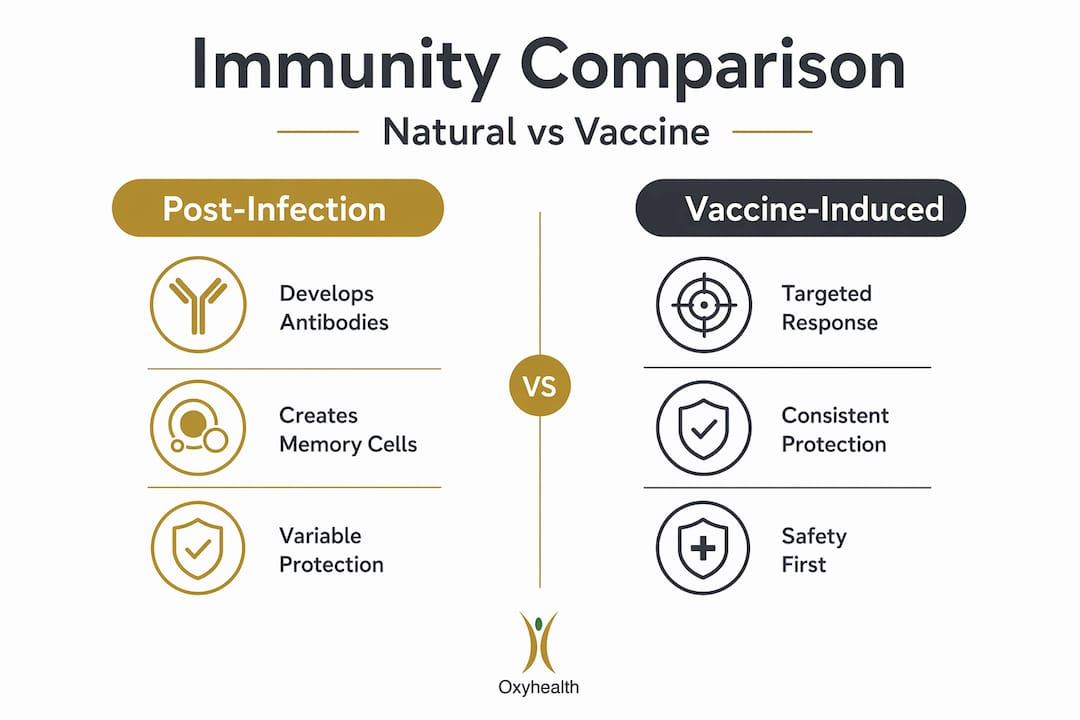
| Feature | Post-infection immunity | Vaccine-induced immunity |
|---|---|---|
| Safety | Requires surviving the disease | No active disease required |
| Consistency | Varies by severity and pathogen dose | Standardised antigen exposure |
| Duration | Varies widely by pathogen | Predictable; boosters extend protection |
| Strain coverage | Limited to strain encountered | Can be engineered for multiple strains |
| Risk of complications | High for vulnerable individuals | Minimal and well-documented |
One persistent myth is that “natural immunity is always stronger.” The reality is more nuanced. Some infections like HPV and pneumococcal disease actually produce longer vaccine-induced immunity than immunity obtained through infection. The quality of immunity depends on the pathogen, not on whether the exposure was “natural.”
The framing of “natural versus artificial” immunity is itself misleading. As immunologists have noted, vaccines provide guided immunity that safely achieves the same immune training without uncontrolled infection risks. The word “artificial” implies something foreign to the body’s processes, when in fact vaccines work precisely because they speak the body’s own biological language.
Pro Tip: When you encounter claims about natural immunity being superior, ask specifically which pathogen, which population, and over what timeframe. The answer is almost never straightforward.
How to support your natural immunity every day
Understanding natural immunity is only useful if it leads somewhere practical. The good news is that your innate immune system responds meaningfully to how you live. Here are the lifestyle factors with the strongest evidence behind them.
- Prioritise sleep. During sleep, your body produces cytokines, proteins that target infection and inflammation. Consistently sleeping fewer than seven hours significantly impairs immune response.
- Eat a varied, nutrient-dense diet. Vitamins C, D, and zinc are particularly important for immune cell function. A diet rich in vegetables, legumes, and whole grains provides the raw materials your immune system needs.
- Manage chronic stress. Prolonged stress elevates cortisol, which suppresses immune activity over time. Even simple practices like walking outdoors or breathing exercises make a measurable difference.
- Exercise regularly but not excessively. Moderate exercise supports immune surveillance. Overtraining without adequate recovery can temporarily suppress immunity.
- Support gut health. Approximately 70% of your immune system resides in your gut. Fermented foods, fibre, and plant-based supplements can support the microbial balance that underpins immune resilience.
Beyond lifestyle, targeted supplementation is where many health-conscious individuals find additional support. Key areas to consider include:
- Vitamin D, which many UK adults are deficient in, particularly through winter months.
- Vitamin B12, which supports cellular energy and immune cell production.
- Iodine, which plays a role in thyroid function and overall metabolic health.
- Antioxidant-rich formulas that reduce oxidative stress on immune cells.
You can explore immune-supporting supplements specifically curated for UK adults to find options suited to your needs.
Pro Tip: Supplements work best when they address genuine deficiencies. Before adding anything new, consider getting a basic blood panel to understand where your levels actually stand.
One critical point: supporting your innate immune system through lifestyle and supplementation is not a substitute for vaccination against serious diseases. These approaches are complementary, not competing. A well-nourished, well-rested body responds better to vaccines too.
Common misconceptions about natural immunity
Even among health-conscious readers, a few misunderstandings about natural immunity persist. Clearing these up matters because they can influence real decisions about health.
- “Innate immunity is the same as post-infection immunity.” These are distinct systems. Innate immunity is present from birth and responds immediately to any threat. Post-infection immunity develops after exposure to a specific pathogen and involves the adaptive immune system.
- “Natural immunity lasts longer than vaccine immunity.” This depends entirely on the pathogen. Vaccines are specifically engineered to produce a more consistent and targeted immune response than natural infection in many cases.
- “Getting the disease is a safer route to immunity for young, healthy people.” Even in low-risk populations, infection carries unpredictable outcomes. The risk-benefit calculation rarely favours deliberate exposure when a vaccine is available.
- “Boosting your immune system means it will fight off everything.” The immune system is not a muscle you can simply strengthen without limit. What you can do is support its normal function through good nutrition, sleep, and stress management. You can read more about practical wellness strategies that genuinely support immune health.
The societal dimension matters here too. When large numbers of people choose to rely on post-infection immunity rather than vaccination, the result is more severe illness circulating in communities, more pressure on healthcare systems, and greater risk for those who genuinely cannot be vaccinated.
My take on the “natural vs artificial” immunity debate
I have spent years reading and writing about immune health, and the framing that frustrates me most is the “natural versus artificial” binary. It sounds intuitive. It feels meaningful. But it is not how the immune system actually works, and it leads people toward decisions that carry real consequences.
What I have come to understand is that the more useful distinction is between out-in-the-wild exposure and guided immunity. When you catch a disease, your immune system learns from the encounter, but the lesson comes at a price you cannot predict in advance. When you receive a vaccine, your immune system goes through the same learning process in a controlled environment. The biology is the same. The risk is not.
I also think the wellness community sometimes does itself a disservice by treating “natural” as synonymous with “safe” or “superior.” Immune responses vary widely depending on health status and exposure dose, and that variability is precisely what makes unguided infection risky. Supporting your innate immunity through sleep, nutrition, and quality supplements is genuinely worthwhile. Treating that support as a reason to avoid vaccination is a different claim entirely, and one the evidence does not support.
The most informed approach combines both: protect your immune system through lifestyle and supplementation, and use vaccination where it offers a safer path to protection. That is not a compromise. It is just good science.
— John
Support your immune health with Oxyhealth
If this article has you thinking about what you can actually do to support your immune system day to day, Oxyhealth has you covered. Oxyhealth stocks a curated range of natural health products sourced from Global Healing, including supplements, liquid vitamins, and cleanse kits designed to support your body’s defences from the inside out.
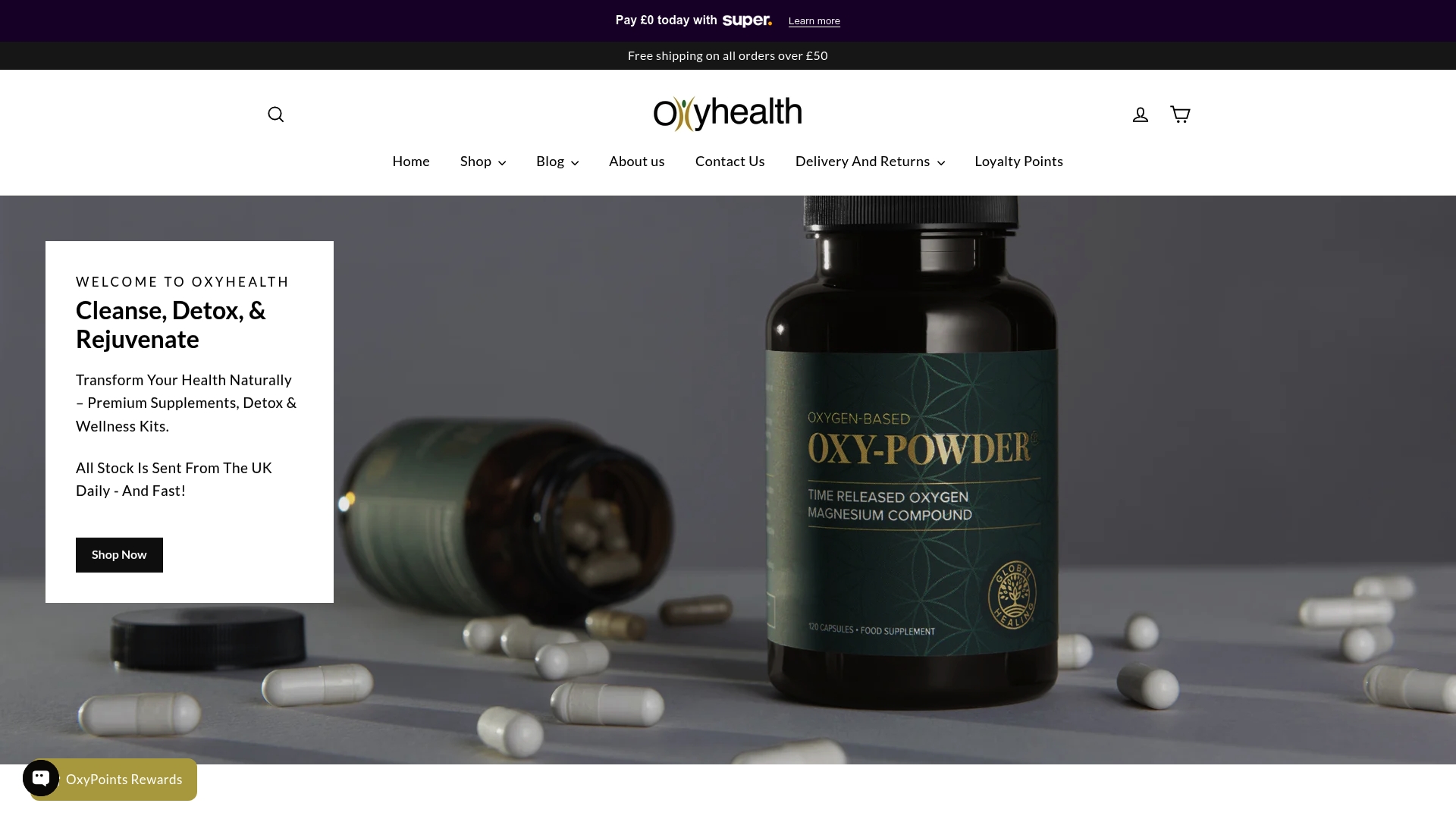
Whether you are looking to address a specific nutritional gap or take a more complete approach to wellness, the Oxyhealth supplements range includes options for immune support, gut health, and detoxification. For a more structured approach, the health kits and cleanse programmes offer everything you need in one place. Orders over £50 qualify for free UK delivery, with same-day dispatch available for orders placed before 2 p.m.
FAQ
What is the natural immunity definition?
Natural immunity refers to the immune protection your body develops either from birth (innate immunity) or after recovering from an infection (post-infection immunity). It is distinct from vaccine-induced immunity, though both involve the same underlying immune mechanisms.
Is natural immunity stronger than vaccine immunity?
Not necessarily. Vaccines may provide stronger and longer-lasting protection for some diseases than natural infection, particularly because they deliver a consistent, targeted antigen rather than relying on unpredictable disease exposure.
What boosts natural immunity?
Sleep, a nutrient-dense diet, regular moderate exercise, stress management, and targeted supplementation all support innate immune function. Vitamins D, C, and B12 are particularly relevant for UK adults, many of whom have suboptimal levels year-round.
How does natural immunity differ from adaptive immunity?
Innate immunity is immediate, nonspecific, and present from birth. Adaptive immunity develops in response to specific pathogens and creates immunological memory. The two systems work together, but only adaptive immunity remembers past encounters with specific threats.
Can lifestyle choices replace vaccination?
No. Lifestyle choices support your innate immune system’s normal function, which is genuinely valuable. However, they do not provide the specific, reliable protection against serious diseases that vaccines offer. The two approaches are complementary, not interchangeable.