
Role of Vitamins in Health – Vital Benefits Explained
Finding truly reliable organic vitamins can feel confusing when every label promises better health. If you care about keeping your wellness balanced and want to support detoxification naturally, knowing the real functions of each vitamin matters. British winters and busy routines often disrupt your dietary variety, making it harder to meet recommended daily intakes. Discover how vitamins work, where to source them in the UK, and why choosing trusted organic options makes a genuine difference for your wellbeing.
Table of Contents
- What Are Vitamins And Their Key Functions
- Understanding Essential Vitamin Types And Sources
- UK Recommendations For Daily Vitamin Intake
- Risks Of Deficiency And Over-Supplementation
- Choosing Quality Supplements For Better Health
Key Takeaways
| Point | Details |
|---|---|
| Vitamins Are Essential | Vitamins are vital for bodily functions and cannot be manufactured by the body, requiring dietary intake. |
| Deficiencies Are Common | Many individuals, especially in the UK, risk vitamin deficiencies due to limited sun exposure and diet. |
| Supplementation Is Often Necessary | Strategic supplementation can help close dietary gaps, especially for at-risk populations like vegans and the elderly. |
| Choose Quality Supplements | Opt for reputable brands with transparent sourcing to ensure safety and efficacy of vitamins. |
What Are Vitamins and Their Key Functions
Vitamins are organic compounds your body needs in small quantities to function optimally and maintain wellbeing. Unlike proteins or carbohydrates, you don’t burn vitamins for energy; instead, they act as catalysts and regulators that keep your biological systems running smoothly.
Think of vitamins like the spark plugs in your car’s engine. Without them, everything else might be present, but nothing fires up properly. Your body cannot manufacture most vitamins on its own, which is why obtaining them through diet or supplementation matters.
Vitamins and minerals support essential functions including immune defence, vision, bone strength, and energy production. Each vitamin performs distinct roles that your body depends upon daily.
Here’s what different vitamins actually do:
- Vitamin A strengthens your immune system and maintains healthy vision
- B vitamins unlock energy from the food you eat
- Vitamin C protects your cells and accelerates healing
- Vitamin D regulates calcium and phosphate for bone and muscle health
- Vitamin E preserves skin health and protects against cellular damage
- Vitamin K enables proper blood clotting
Your UK lifestyle makes consistent vitamin intake particularly relevant. Between limited winter sunshine affecting Vitamin D production and busy schedules affecting dietary variety, many health-conscious individuals find supplementation worthwhile.
Your body treats vitamins as non-negotiable essentials, not optional extras—deficiencies develop quietly before symptoms appear.
The amount you need varies significantly. Vitamin B12, for instance, requires tiny quantities, yet deficiency causes serious consequences like fatigue and nerve damage. Vitamin D needs fluctuate seasonally, with British winters typically demanding supplementation from October onwards.
Organic vitamin sources preserve nutrient density better than heavily processed alternatives. When you choose supplements, you’re investing in concentrated nutrition designed to fill genuine dietary gaps.
Pro tip: Track your current vitamin intake by noting your typical meals for three days, then identify which nutrients appear rarely—this reveals your genuine supplementation priorities rather than guessing what you might lack.
Understanding Essential Vitamin Types and Sources
Vitamins fall into two distinct categories: fat-soluble and water-soluble. Fat-soluble vitamins (A, D, E, K) store in your body’s fatty tissues, meaning excess amounts accumulate. Water-soluble vitamins (B complex and C) dissolve in water and aren’t stored, so you need regular intake.

This distinction matters for supplementation strategies. You can’t overdose on water-soluble vitamins because your body excretes surplus amounts through urine. Fat-soluble vitamins require more caution since accumulation can cause toxicity.
To help readers understand how vitamins behave in the body, here’s a summary comparing fat-soluble and water-soluble vitamins:
| Vitamin Type | Storage Method | Risk of Overdose | Key Examples |
|---|---|---|---|
| Fat-soluble | Stored in body fat | Toxicity possible | A, D, E, K |
| Water-soluble | Not stored, excreted | Rare, excess removed | B complex, C |
Your food choices determine whether you meet daily vitamin needs naturally. Essential vitamins come from varied food sources including oily fish, eggs, milk, fruits, vegetables, whole grains, nuts, and fortified foods.
Here’s where to find specific vitamins:
- Vitamin A appears in liver, cheese, and leafy green vegetables
- B vitamins hide in whole grains, meat, and eggs
- Vitamin C concentrates in citrus fruits and peppers
- Vitamin D comes from sunlight exposure, oily fish, and fortified dairy
- Vitamin E lives in plant oils and nuts
- Calcium and iron feature in dairy products, meat, and beans
British winters create a genuine vitamin D challenge. Limited sunlight from October through March makes natural production nearly impossible, which explains why supplementation becomes practical rather than optional for many people.
A truly balanced diet provides most vitamins you need—but modern lifestyles and seasonal changes often require strategic supplementation to close genuine gaps.
Organic sources preserve nutrient density better than heavily processed alternatives. When you select natural vitamins for wellness, you’re choosing concentrated nutrition designed to work synergistically with your body.
Certain population groups benefit from targeted supplementation. Vegans need B12 from fortified foods or supplements. Pregnant women require additional folic acid. Older adults often need extra vitamin D and B12.
Pro tip: Keep a simple food diary for one week, noting your meals and snacks, then cross-reference against vitamin sources to spot which nutrients appear rarely—this reveals your genuine supplementation gaps rather than guessing.
UK Recommendations for Daily Vitamin Intake
The UK government sets specific daily intake targets to keep your body functioning optimally and prevent deficiency. These recommendations vary by age, sex, and life stage because nutritional needs change throughout your life.
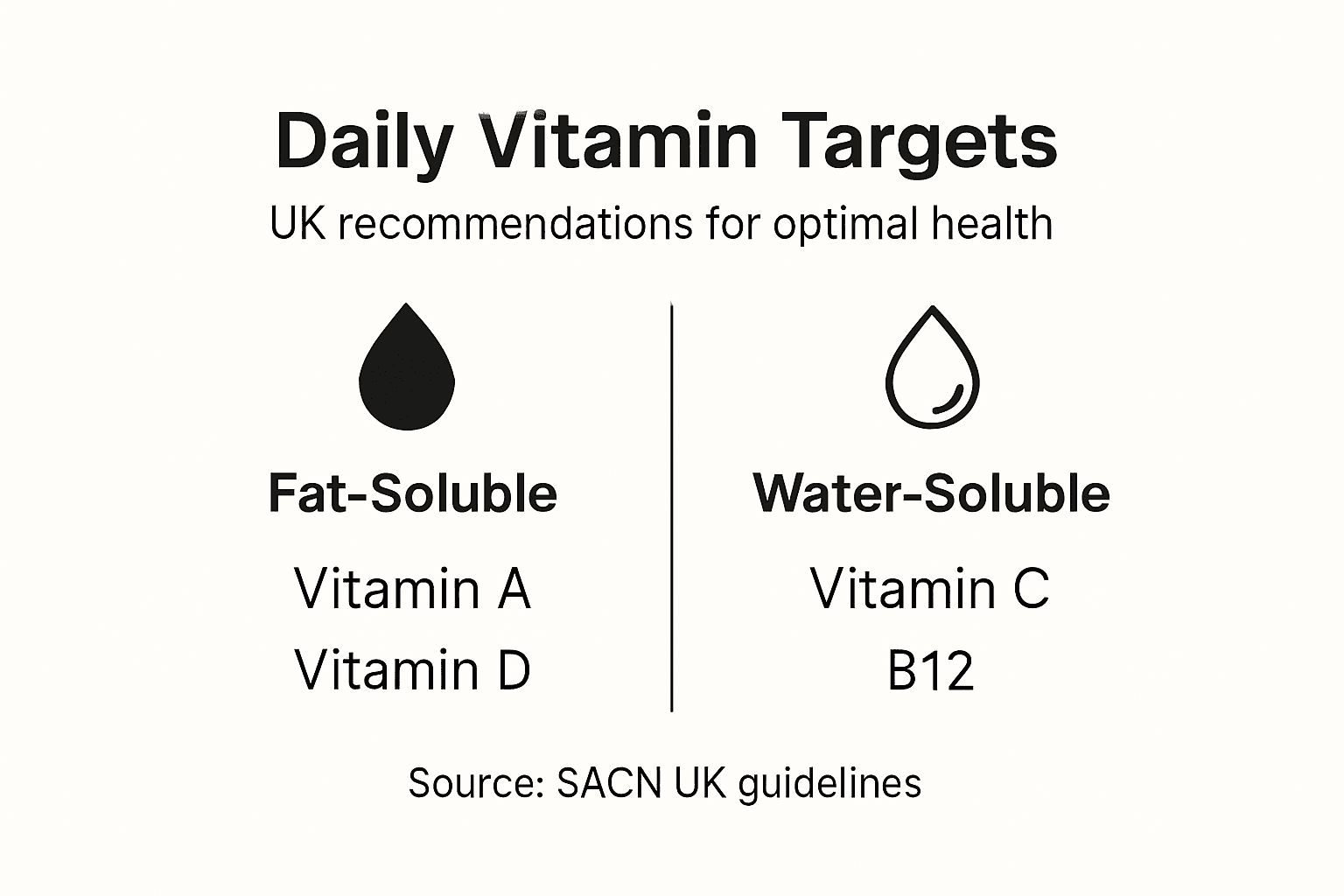
Government guidance specifies vitamin D intake at 10 micrograms daily for all UK adults year-round. This figure becomes especially critical during autumn and winter when sunlight exposure drops dramatically.
Here’s what you should aim for:
- Vitamin A 700 micrograms daily for men; 600 micrograms for women
- Vitamin B12 1.5 micrograms daily (vegans should supplement)
- Vitamin C 40 milligrams daily
- Vitamin D 10 micrograms daily, all year
- Vitamin E 4 milligrams for men; 3 milligrams for women
- Folic acid 200 micrograms daily; 400 for pregnant women
Certain groups face higher deficiency risk and need supplementation consideration. Those over 65, people with limited sun exposure, individuals with darker skin tones, and anyone with specific health conditions all benefit from strategic supplementation.
Pregnant and breastfeeding women require additional nutrients beyond standard recommendations. The extra demands on your body during these periods mean increased vitamin D, folic acid, and B12 needs.
For a clearer overview, here is a reference table highlighting which groups often require vitamin supplementation in the UK and why:
| Population Group | Supplement Needed | Primary Reason |
|---|---|---|
| Vegans | Vitamin B12 | Lacks in plant-based diets |
| Older adults | Vitamin D, B12 | Lower absorption, less sunlight |
| Pregnant women | Folic acid, Vitamin D | Increased nutritional demand |
| Limited sun exposure | Vitamin D | Insufficient sunlight |
| Darker skin tones | Vitamin D | Reduced skin synthesis |
Standard recommendations assume adequate sun exposure and varied diet—most UK residents fall short on one or both counts, making supplementation genuinely necessary rather than optional.
Vegans face particular challenges meeting B12 requirements through food alone. This vitamin exists naturally only in animal products, so establishing a daily supplement routine becomes essential rather than optional.
These recommendations come from the Scientific Advisory Committee on Nutrition (SACN), the body that reviews evidence and sets UK policy. They reflect current research about preventing deficiency whilst avoiding excess.
Your individual needs may differ based on medications, health conditions, or dietary restrictions. Someone taking specific medications that interfere with vitamin absorption might need higher doses. Anyone recovering from illness often needs temporary supplementation support.
Pro tip: Request a simple blood test from your GP to check vitamin D, B12, and iron levels—knowing your baseline allows you to supplement strategically rather than guessing, saving money whilst ensuring you actually address genuine gaps.
Risks of Deficiency and Over-Supplementation
Vitamin deficiency develops quietly, often causing damage before symptoms appear. Your body doesn’t alert you immediately—it compensates for weeks or months until reserves completely deplete.
Vitamin deficiencies create serious health problems ranging from scurvy (vitamin C deficiency) to rickets (vitamin D deficiency) and anaemia (B vitamin deficiencies). These conditions don’t develop overnight; they creep up gradually.
Vitamin D deficiency deserves particular attention in the UK climate. Limited winter sunlight makes deficiency extremely common, causing weak bones, poor immunity, and persistent fatigue that many people attribute to other causes.
Here’s what deficiency actually looks like:
- Vitamin C deficiency causes bleeding gums, slow wound healing, and extreme fatigue
- Vitamin D deficiency leads to bone pain, muscle weakness, and increased infection risk
- Vitamin B12 deficiency produces nerve damage, cognitive problems, and severe tiredness
- Iron deficiency causes anaemia, shortness of breath, and concentration difficulties
- Vitamin A deficiency impairs night vision and weakens immune function
But here’s the trap many people fall into: believing more vitamins always equals better health. Over-supplementation carries real risks that most people never consider.
Excessive fat-soluble vitamins (A, D, E, K) accumulate in body fat, potentially causing toxicity. Water-soluble vitamins excess gets excreted, making overdose less likely, but unnecessary supplementation still wastes money and may cause side effects.
Balance matters more than abundance—deficiency harms you, but excess can also damage organs and interfere with medication effectiveness.
High-dose vitamin A taken during pregnancy increases birth defect risk dramatically. Excessive vitamin D causes hypercalcaemia, leading to kidney damage and calcium deposits in soft tissues. Too much vitamin E interferes with blood clotting medications.
When selecting supplements, supplement quality matters significantly for both safety and effectiveness. Poor-quality products may contain contaminants or inconsistent dosages, creating unpredictable health outcomes.
The safest approach involves getting nutrients from varied whole foods whenever possible. Supplementation works best when addressing genuine, identified deficiencies rather than attempting to optimise already-adequate nutrition.
Consult your GP before starting high-dose supplementation. They can identify your genuine needs through blood tests rather than guessing.
Pro tip: Never exceed the recommended daily dose listed on supplement labels without professional guidance; request a nutrient consultation if you’re unsure which supplements you genuinely need versus which ones waste money.
Choosing Quality Supplements for Better Health
Not all supplements are created equal. The difference between a quality product and a poor one can mean the distinction between genuine health improvement and wasted money on ineffective ingredients.
Most people should obtain vitamins from a balanced diet first. Supplements work best when addressing genuine nutritional gaps rather than replacing whole foods. Think of them as targeted support for specific deficiencies, not insurance against poor eating habits.
Quality supplements require careful selection from reputable sources. Your purchase decisions matter because unregulated or low-quality products may contain contaminants, incorrect dosages, or undeclared ingredients that pose health risks.
Here’s what separates quality supplements from inferior products:
- Reputable manufacturer with transparent sourcing and quality testing
- Third-party certification from independent testing organisations
- Clear ingredient lists showing exactly what you’re consuming
- Appropriate dosages matching recommended daily intake guidelines
- Allergen information clearly marked on packaging
- Expiration dates and proper storage instructions included
When selecting supplements, read ingredient lists carefully. Many products contain fillers, artificial colours, and unnecessary additives that add no nutritional value. Organic formulations typically avoid these additions, making them superior choices for health-conscious individuals.
Quality supplements cost more upfront but deliver actual results—cheap supplements often contain poor-quality ingredients that your body cannot utilise effectively.
Natural supplements sourced from whole foods provide superior bioavailability compared to synthetic alternatives. Your body recognises and absorbs natural nutrients more efficiently, meaning you benefit more from smaller doses.
Using natural supplements provides measurable health benefits when you select quality products from trusted providers. This matters enormously for health outcomes and value for money.
Always verify that supplements meet UK quality standards. Check for certification marks indicating third-party testing and quality assurance. These markings reveal products that have undergone rigorous safety and efficacy testing.
Consult your GP or a registered dietitian before starting new supplements, especially if you take medications. Professional guidance ensures your choices complement your overall health strategy rather than causing interactions or adverse effects.
Pro tip: When purchasing supplements, prioritise reputable UK retailers offering transparency about sourcing, manufacturing, and third-party testing results—this single decision prevents wasting money on ineffective products.
Support Your Vitamin Needs with Trusted Natural Supplements
Understanding the vital role vitamins play in your health reveals the risks of deficiency and the challenge of balancing intake effectively. Whether you struggle with limited sunlight affecting your Vitamin D levels or need reliable B12 support as a vegan, meeting daily vitamin requirements can feel complex. Many UK residents face genuine gaps in their nutrition that require safe, high-quality supplementation designed to work naturally with your body.
Frequently Asked Questions
What are the different types of vitamins and how do they function in the body?
Vitamins are classified into two types: fat-soluble (A, D, E, K) which store in body fat, and water-soluble (B complex and C) that are excreted. Each vitamin performs distinct functions like immune support, energy production, and cellular protection.
How can I ensure I’m getting enough vitamins in my diet?
To ensure adequate vitamin intake, maintain a balanced diet rich in fruits, vegetables, whole grains, and lean proteins. Tracking your meals for a few days can help identify any nutritional gaps that may require supplementation.
What are the risks associated with vitamin deficiencies?
Vitamin deficiencies can lead to serious health issues, such as scurvy (vitamin C deficiency), rickets (vitamin D deficiency), and anaemia (B vitamin deficiencies). Symptoms often develop slowly and may include fatigue, weakened immunity, and cognitive issues.
Can I overdose on vitamins from supplements?
Yes, overdosing on certain vitamins, particularly fat-soluble ones (A, D, E, K), can lead to toxicity and harmful side effects. It’s crucial to follow recommended dosages and consult a healthcare provider before taking high-dose supplements.