
The role of sleep in detox: better health naturally
TL;DR:
- Deep, restorative sleep activates the brain’s glymphatic system, crucial for removing toxins.
- Sleep enhances cellular detox processes like autophagy and supports liver detox rhythms.
- Prioritizing consistent, quality sleep is essential for effective natural detoxification.
Most people assume detox means juice cleanses, supplement stacks, or strict elimination diets. The truth is far more surprising: your body’s most powerful detoxification process happens automatically, every single night, while you sleep. Research now confirms that deep, restorative sleep triggers a biological clean-up system in the brain that no green smoothie can replicate. If you’ve been pouring money into detox products while skimping on sleep, you may be missing the single biggest lever for genuine, lasting health. This guide walks you through the science of sleep-driven detox, what it means for your whole body, and exactly how to make the most of it.
Table of Contents
- Why sleep is essential for body detox
- How sleep triggers detox: a closer look at the science
- Sleep, the liver, and whole-body detox: sorting fact from fiction
- Optimising your sleep for detox: practical steps for better results
- A closer perspective: what most health guides don’t tell you about sleep and detox
- Next steps: enhance your natural detox journey
- Frequently asked questions
Key Takeaways
| Point | Details |
|---|---|
| Glymphatic system | Your brain’s unique cleansing system works best during deep sleep to remove toxins efficiently. |
| Liver detox timing | Liver detoxification peaks at night due to circadian rhythms, with sleep providing supportive conditions. |
| Deep sleep is critical | More hours of quality sleep, especially deep NREM, result in better body and brain detoxification. |
| Supplements and lifestyle | Smart use of natural supplements and healthy routines can enhance sleep-boosted detox, but sleep always comes first. |
Why sleep is essential for body detox
When most people hear the word “detox,” they picture the liver working overtime or a colon cleanse doing its thing. But in scientific terms, detoxification is simply the removal of cellular waste, damaged proteins, and metabolic by-products that accumulate as your body goes about its daily business. And while the liver absolutely plays a role, the brain has its own dedicated clean-up crew that only clocks in when you’re asleep.
That crew is called the glymphatic system. Think of it as your brain’s waste disposal network, a series of channels surrounding blood vessels that flush cerebrospinal fluid through brain tissue, sweeping out toxic debris. The critical detail? It operates almost exclusively during sleep. Brain detox via the glymphatic system is most efficient during deep non-REM (NREM) sleep, the slow-wave stages that dominate the first half of the night.
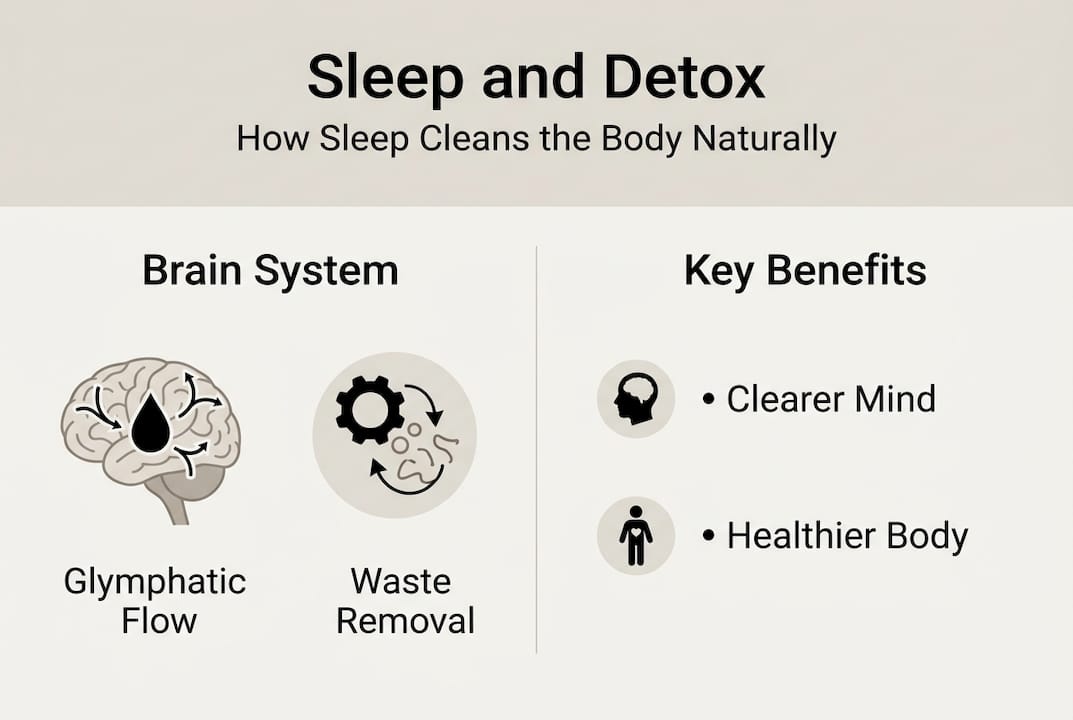
What exactly gets cleared? Two proteins in particular: amyloid-beta and tau. Both are strongly linked to neurodegenerative conditions, including Alzheimer’s disease, when they accumulate in excess. Morning plasma levels of amyloid-beta are measurably higher after normal sleep compared to sleep deprivation, which tells us that sleep genuinely drives this clearance process in humans, not just in animal models.
Here’s a quick breakdown of what the glymphatic system removes during sleep:
- Amyloid-beta and tau proteins
- Metabolic waste from neuronal activity
- Inflammatory signalling molecules
- Excess neurotransmitters
| Sleep state | Glymphatic activity | Detox efficiency |
|---|---|---|
| Deep NREM (slow-wave) | Very high | Peak clearance |
| Light NREM | Moderate | Partial clearance |
| REM sleep | Low | Minimal clearance |
| Wakefulness | Very low | Near zero |
“The glymphatic system is essentially offline when you’re awake. You cannot compensate for lost sleep with supplements or diet alone when it comes to brain detox.”
A common myth worth addressing: detox is not purely a liver function. The liver handles blood filtration and chemical neutralisation, yes. But the brain’s clean-up is entirely sleep-dependent, and ignoring it is a significant gap in most wellness routines. For a grounding overview of safe detox practices and what evidence actually supports, it’s worth separating hype from biology before spending on any protocol. You can also explore gentle detox trends to see how sleep fits into the broader 2026 wellness picture.
How sleep triggers detox: a closer look at the science
Now you know why sleep is crucial, let’s examine exactly how it facilitates detox and when you get the greatest benefit.
Sleep isn’t a single state. It cycles through distinct stages roughly every 90 minutes, and each stage does something different for your body. From a detox standpoint, the most important distinction is between deep NREM sleep and REM sleep.
Deep NREM sleep is where glymphatic clearance peaks, as established above. But it’s also when another critical process fires up: autophagy. Autophagy is your cells’ self-recycling system. Imagine a tiny internal waste compactor that breaks down damaged proteins and worn-out cell components, then repurposes the raw materials. A closely related process, mitophagy, specifically targets damaged mitochondria, the energy-producing structures inside your cells. Autophagy and mitophagy during sleep are disrupted when sleep is impaired, meaning that even a few nights of poor rest can leave cellular debris accumulating unchecked.
Here’s how the detox process unfolds across a typical night:
- Stages 1 and 2 (light NREM): Body temperature drops, heart rate slows, and the nervous system begins shifting resources toward repair.
- Stage 3 (deep NREM): Glymphatic flow increases dramatically. Autophagy ramps up. Growth hormone is released, supporting tissue repair alongside cellular clean-up.
- REM sleep: Brain consolidates memories and processes emotions. Detox activity is lower here, but REM deprivation still impairs overall recovery.
- Cycling through the night: Each 90-minute cycle repeats, with deep NREM dominating early cycles and REM lengthening toward morning.
| Process | Peak stage | What it clears |
|---|---|---|
| Glymphatic flushing | Deep NREM | Amyloid-beta, tau, waste metabolites |
| Autophagy | Deep NREM | Damaged proteins, cell debris |
| Mitophagy | Deep NREM | Dysfunctional mitochondria |
| Hormonal repair | Deep NREM | Tissue damage, inflammation |
Even modest sleep loss compounds quickly. Reducing sleep from eight hours to six hours over two weeks produces cognitive deficits equivalent to two full nights of total sleep deprivation, and the glymphatic clearance decline follows a similar pattern. The skin detox benefits of quality sleep are also worth noting, since cellular clean-up during sleep directly influences skin cell renewal. And if you’re interested in gut health, probiotics and detox work best when your body’s overnight repair systems are functioning properly.
Sleep, the liver, and whole-body detox: sorting fact from fiction
The brain isn’t the only organ relying on restorative sleep. Let’s see how sleep supports overall body detox, especially via the liver.
The liver is the body’s primary chemical processing plant. It filters blood, neutralises toxins, metabolises hormones, and packages waste for elimination. What most people don’t realise is that liver detox follows a strict internal clock. Liver detoxification follows circadian rhythms, with Phase I and Phase II detox enzymes, along with antioxidant activity, peaking during the night hours. Disrupting your sleep schedule consistently, through shift work or late nights, throws this timing off in measurable ways.
Melatonin deserves a mention here. Most people think of it purely as a sleep hormone, but it’s also a potent antioxidant. It supports hepatic (liver) detox by neutralising free radicals and protecting liver cells from oxidative stress. The key point is that melatonin production is triggered by darkness and peaks during sleep, which is one reason why maintaining a consistent sleep schedule genuinely supports liver function.
Here’s what the evidence does and doesn’t support:
- Supported: Circadian rhythm disruption impairs liver enzyme activity and antioxidant production
- Supported: Melatonin has antioxidant effects that benefit the liver during nighttime hours
- Less clear: A direct, isolated causal link between sleep duration and liver detox output (most evidence is circadian-rhythm based)
- Not supported: The idea that sleeping longer can “undo” poor diet or alcohol intake
The honest summary: brain detox is directly and powerfully sleep-dependent. Liver detox is more accurately described as circadian-rhythm dependent, with sleep being one important component of maintaining that rhythm.
Pro Tip: Going to bed and waking at consistent times, even at weekends, is one of the most effective ways to keep your liver’s detox timing on track. It’s free, requires no supplements, and the evidence behind it is solid.
For those wanting to go further, supporting liver detox naturally involves a combination of sleep, diet, and targeted nutrients. You can also read about minerals for detox and how they support the enzymatic processes that peak overnight.
Optimising your sleep for detox: practical steps for better results
Understanding the science is only the first step. Now, let’s put knowledge into action with practical strategies to maximise sleep-driven detox.
The starting point is duration. Prioritise 7 to 9 hours of quality sleep each night, with a focus on protecting those early deep NREM cycles. Cutting sleep short by even 90 minutes regularly can meaningfully reduce glymphatic clearance over time.
Here’s a practical step-by-step plan:
- Set a fixed bedtime and wake time. Your glymphatic system and liver enzymes both respond to consistent scheduling. Aim for the same times seven days a week.
- Sleep on your side. Animal studies suggest that lateral (side) sleeping may enhance glymphatic flow compared to sleeping on your back or front. It’s not confirmed in humans yet, but the risk is zero and the potential upside is real.
- Reduce blue light exposure from 9pm. Blue light suppresses melatonin production, delaying the onset of deep sleep. Use night mode on devices or switch to reading.
- Keep your bedroom cool. Core body temperature needs to drop to initiate deep NREM sleep. A room temperature of around 16 to 18 degrees Celsius is widely recommended.
- Exercise regularly, but not too late. Exercise boosts glymphatic function indirectly by improving sleep quality and depth. Morning or early afternoon sessions tend to work best for sleep onset.
Natural supplements worth considering:
- Magnesium glycinate: Supports muscle relaxation and deeper sleep stages
- Melatonin (low dose): May support liver antioxidant pathways and help reset circadian rhythm after disruption
- Ashwagandha: Some evidence for reducing cortisol and improving sleep quality
- Valerian root: Traditional use for sleep onset; evidence is mixed but generally safe
Pro Tip: Avoid alcohol as a sleep aid. While it may help you fall asleep faster, it suppresses deep NREM sleep, directly undermining glymphatic clearance for the entire night.
For a fuller picture of building a home-based routine, the detox at home guide is a practical resource. You can also explore herbs for natural detox and plant-based detox aids to find options that complement good sleep hygiene.
A closer perspective: what most health guides don’t tell you about sleep and detox
Here’s a frank perspective on what most wellness advice misses and why sleep should always come first.
The detox industry is built on the premise that you need to add something: a supplement, a kit, a protocol. What it rarely tells you is that the most powerful detox mechanism you have is already built in, and it only asks one thing of you: sleep well. We’ve seen people spend hundreds of pounds on cleansing programmes while staying up until 1am scrolling their phones, then wondering why they still feel foggy and sluggish.
The uncomfortable truth is that no supplement fully compensates for chronic sleep deprivation when it comes to brain health. Glymphatic clearance simply does not happen at meaningful levels while you’re awake, regardless of what you take. Products can support and complement your body’s processes, but they cannot replace them.
If you genuinely struggle to sleep, that’s worth addressing directly before reaching for a detox kit. Stress, poor sleep hygiene, inconsistent schedules, and excessive screen time are the most common culprits, and they’re all addressable without spending a penny. Once your sleep is solid, then layering in targeted support from trusted, natural sources makes genuine sense. Learning to detox safely means building on a foundation of rest, not papering over its absence.
Next steps: enhance your natural detox journey
If this guide has shifted how you think about detox, the next step is making those changes stick. Quality sleep is your foundation, but the right natural support can genuinely amplify what your body does overnight.
Frequently asked questions
How does sleep actually help detoxify the brain?
Sleep activates the glymphatic system, which flushes waste products including amyloid-beta and tau proteins most effectively during deep NREM sleep stages.
Is there evidence that sleep helps the liver detoxify the body?
Liver detox enzymes peak at night in line with circadian rhythms, and melatonin produced during sleep provides antioxidant support, though the direct sleep-liver link is less established than the brain evidence.
How much sleep do I need for effective detox?
Aim for 7 to 9 hours of quality sleep nightly, prioritising conditions that support deep NREM stages, such as a cool, dark room and a consistent schedule.
Do sleep aids help or harm detoxification?
Some pharmaceutical sleep aids suppress the brain oscillations needed for glymphatic clearance, meaning they can actively reduce detox efficiency; natural sleep routines and low-dose melatonin are generally safer options.
Recommended
- How to Detox Safely: Achieve Natural Cleansing Results – Oxyhealth
- Role of Probiotics in Detox—Benefits for Natural Health – Oxyhealth
- Natural skin detoxification guide: 55% improvement proven – Oxyhealth
- Role of Herbs in Detox – Natural Health Impact – Oxyhealth
- Boost weight loss with quality sleep in 2026 - Dietium