
Immune support explained: Fact, fiction and UK wellness tips
TL;DR:
- Supporting your immune system involves maintaining adequate micronutrient intake and healthy habits, not supercharging it through supplements.
- Excessive doses of certain vitamins and minerals can cause harm, so targeted supplementation based on individual need and professional advice is essential.
The idea of “boosting” your immune system sells millions of products every year, yet the science tells a more nuanced story. Immune support generally refers to measures designed to help your immune system function properly, most commonly by ensuring adequate micronutrient intake, rather than supercharging it to prevent all infections. The confusion is understandable. Marketing language, social media trends, and well-meaning advice all blur the line between genuine nutritional support and wishful thinking. This article cuts through the noise with evidence-based clarity on what immune support actually means, when supplements are genuinely useful, and how to build a sensible, sustainable approach to immunity that fits real UK life.
Table of Contents
- What does ‘immune support’ actually mean?
- How nutrition and supplements fit in
- Supplements: Benefits, limits and risks
- Safe and practical steps to support immunity
- Why the simple approach works best
- Explore effective wellness solutions for immune support
- Frequently asked questions
Key Takeaways
| Point | Details |
|---|---|
| Support, not boost | Immune support helps your system work well, but doesn’t make you super-immune or prevent all infections. |
| Balanced nutrition matters most | Most people in the UK benefit more from daily healthy eating than high-dose or trendy supplements. |
| Supplement when needed | Supplements are best used to correct real deficiencies or during times of increased need, with professional advice. |
| Excess can harm | More isn’t always better—overdoing vitamins or minerals can be dangerous, so stick with evidence and safety guidelines. |
| Simple daily habits work | Routine health practices like good sleep, movement and a varied diet are the backbone of resilient immunity. |
What does ‘immune support’ actually mean?
The phrase “immune support” appears on countless supplement bottles, health blogs, and supermarket shelves. But before you reach for an extra product, it helps to understand what the immune system actually needs.
Your immune system is not a single organ you can switch on or dial up. It is a complex, layered network involving white blood cells, antibodies, the gut lining, lymph nodes, and much more. What researchers know with confidence is that specific micronutrients play essential roles in keeping this network running smoothly. These include vitamins A, C, D, and E, as well as minerals such as zinc and selenium. When you are deficient in these nutrients, immune function can genuinely suffer. Filling those gaps restores normal function. It does not, however, make a healthy person’s immune system work above its natural capacity.
This is where the “boosting” myth falls apart. As a useful starting point, consider what authoritative bodies in the UK have to say:
“There are no single foods or diets that will ‘boost’ your immune system.” — British Heart Foundation
The BHF cautions against immunity claims tied to specific foods or supplements, noting that no particular product prevents infection. Under UK consumer guidelines, no food or drink is legally permitted to claim it directly boosts immunity against specific illnesses. The practical advice is always the same: eat a varied, healthy diet and consider vitamin D where recommended.
This matters because the distinction shapes how you should spend your money and your energy. Here is what genuine immune support looks like in practice:
- Ensuring adequate intake of key vitamins and minerals through food and, where needed, supplements
- Maintaining habits that allow immune cells to do their job effectively (sleep, activity, hydration)
- Avoiding factors that suppress immune function (chronic stress, smoking, excessive alcohol)
- Seeking professional advice when you suspect a deficiency or have ongoing health concerns
For a fuller picture of which products are genuinely backed by evidence, the expert immune supplement guide on our health hub is an excellent starting resource.
How nutrition and supplements fit in
Most people eating a reasonably varied diet in the UK already get much of what their immune system needs. Fruits, vegetables, wholegrains, lean proteins, and dairy collectively supply the key micronutrients that support immune function. No single “superfood” stands out as more important than overall dietary quality.
That said, there are clear and specific situations where supplementation is justified. The NHS notes that many people can get adequate nutrients from a balanced diet alone, but recognises important exceptions. These include people with restricted diets (vegetarians or vegans who may lack B12, iron, or zinc), older adults whose absorption capacity declines with age, those with chronic illness affecting nutrient uptake, and pregnant women who require folate and vitamin D above typical dietary levels.
| Nutrient | Main role in immunity | Key food sources | Who may need supplements |
|---|---|---|---|
| Vitamin D | Regulates immune cell activity | Sunlight, oily fish, eggs | Most UK residents, Oct to March |
| Vitamin C | Supports white blood cell function | Citrus, peppers, broccoli | Smokers, those with poor diet |
| Zinc | Essential for immune cell production | Meat, shellfish, seeds | Vegans, older adults |
| Selenium | Antioxidant, immune signalling | Brazil nuts, fish, eggs | Those on restricted diets |
| Vitamin A | Maintains mucosal barriers | Liver, dairy, carrots | People with fat malabsorption |
Vitamin D deserves particular attention for UK residents. Because the UK sits at a northern latitude, sunlight exposure is insufficient to generate adequate vitamin D in the skin between October and March. Public Health England recommends that everyone over the age of one considers a daily 10 micrograms supplement during these months. For those with darker skin tones or limited sun exposure, year-round supplementation is advisable. Our vitamin D guidance provides more detail on choosing the right form and dose.
Here is a simple framework for deciding whether you need a supplement:
- Assess your diet honestly over a typical week. Are you regularly eating a variety of vegetables, proteins, and whole foods?
- Consider your personal circumstances. Are you pregnant, elderly, housebound, or following a restricted diet?
- Check for deficiency symptoms: persistent fatigue, frequent colds, slow wound healing, or brittle nails can all suggest nutritional gaps.
- Consult your GP or a registered nutritionist before starting a supplement regime, particularly if you are on any medication.
- Choose supplements from reputable sources that clearly state their ingredients, dosages, and quality standards. Our supplement safety advice covers what to look for.
Pro Tip: If you are not sure whether you are deficient in a key nutrient, ask your GP for a blood test before investing in a supplement. Testing first means you are supplementing with purpose, not guesswork.
Supplements: Benefits, limits and risks
When the circumstances are right, supplements can make a real difference. But they are not without risks, and the popular assumption that “more is better” can cause genuine harm.

A 2026 PubMed review on the dual role of dietary supplements in immune health highlights a critical point: the same micronutrients that support immunity at adequate levels can impair it or cause toxicity at excessive doses. This is not a minor caveat; it changes how you should think about supplementation entirely.
Consider these real examples of what happens with overconsumption:
- Vitamin A in high doses is toxic and can cause liver damage. Pregnant women are specifically advised to avoid high-dose vitamin A supplements because excess retinol can cause birth defects.
- Vitamin E at doses above 400 IU daily has been associated with increased mortality risk in some studies, and can interfere with blood clotting.
- Zinc taken at doses above 40 mg daily over time can suppress copper absorption, leading to anaemia and neurological problems.
- Selenium has an especially narrow safe range. Just a few times the recommended daily intake of 75 micrograms can result in selenosis, causing hair loss, nail brittleness, and nerve damage.
| Supplement | Evidence for immunity | Safe daily range | Risk at high doses |
|---|---|---|---|
| Vitamin D | Strong | 10 to 100 mcg | Hypercalcaemia above 100 mcg |
| Zinc | Moderate | 7 to 25 mg | Copper deficiency, nausea |
| Vitamin C | Moderate | 40 to 1000 mg | Kidney stones, digestive upset |
| Vitamin A | Context-dependent | 600 to 1500 mcg | Liver toxicity, birth defects |
| Selenium | Limited but plausible | 55 to 75 mcg | Selenosis above 300 mcg |
The word “natural” on a label does not guarantee safety. Arsenic is natural. So is hemlock. What matters is dose, form, and individual health context. Our article on mineral supplement risks goes into more depth on this, and is worth reading before you combine multiple products.
What about herbal supplements such as elderberry or echinacea? The evidence on elderberry and echinacea is mixed but not entirely dismissive. Some studies suggest modest reductions in cold duration. Others find no benefit. Neither has strong enough evidence to be recommended as a primary immune support strategy, but neither is considered harmful at typical doses for most people. Context and individual needs matter here as much as anywhere else.
Pro Tip: When browsing supplements, look for products that display specific dosages per serving, list all ingredients clearly, and carry third-party quality certification. Vague labels claiming to “support wellness” without stating amounts are a warning sign.
Safe and practical steps to support immunity
Good immune health is not built in a single shopping cart. It is the cumulative result of daily habits, most of which cost very little. The immune system’s complexity means that no single supplement, food, or routine can serve as a silver bullet. Meeting baseline nutrient needs across the board is the most defensible strategy science can currently offer.
Here is what that looks like day to day:
- Eat broadly and colourfully. Different coloured vegetables and fruits contain different antioxidants and micronutrients. Variety is the single most reliable way to cover your nutritional bases without supplementing.
- Move regularly. Moderate exercise supports immune surveillance, the process by which immune cells patrol the body for threats. You do not need intense workouts; a 30-minute brisk walk most days is genuinely beneficial.
- Prioritise sleep. Immune cells are produced and regulated during sleep. Chronic poor sleep measurably impairs immune function. Optimising your sleep patterns naturally is a foundational step that no supplement can replace.
- Manage stress actively. Prolonged stress raises cortisol levels, which suppresses immune activity over time. Regular stress management practices, from walking in nature to breathing exercises, reduce this burden.
- Limit alcohol and avoid smoking. Both impair immune cell production and mucosal defences directly.
- Stay hydrated. Water supports lymph circulation, which carries immune cells through the body.
For supplementation, apply a simple rule: use supplements to fill specific, identified gaps rather than as a blanket measure. Our guide on natural immunity tips and the article on how to optimise vitamin intake for UK adults both offer practical frameworks rooted in current guidance.
Pro Tip: Avoid combining multiple immune supplements at once without professional advice. Stacking zinc, vitamin C, elderberry, and echinacea simultaneously does not produce compounding benefits; it increases the risk of excess intake and potential interactions.
Why the simple approach works best
After years in the natural wellness industry, one pattern stands out clearly: the people who experience the most consistent, genuine improvements in their health are not the ones chasing the latest trend. They are the ones who commit, without drama, to the fundamentals.
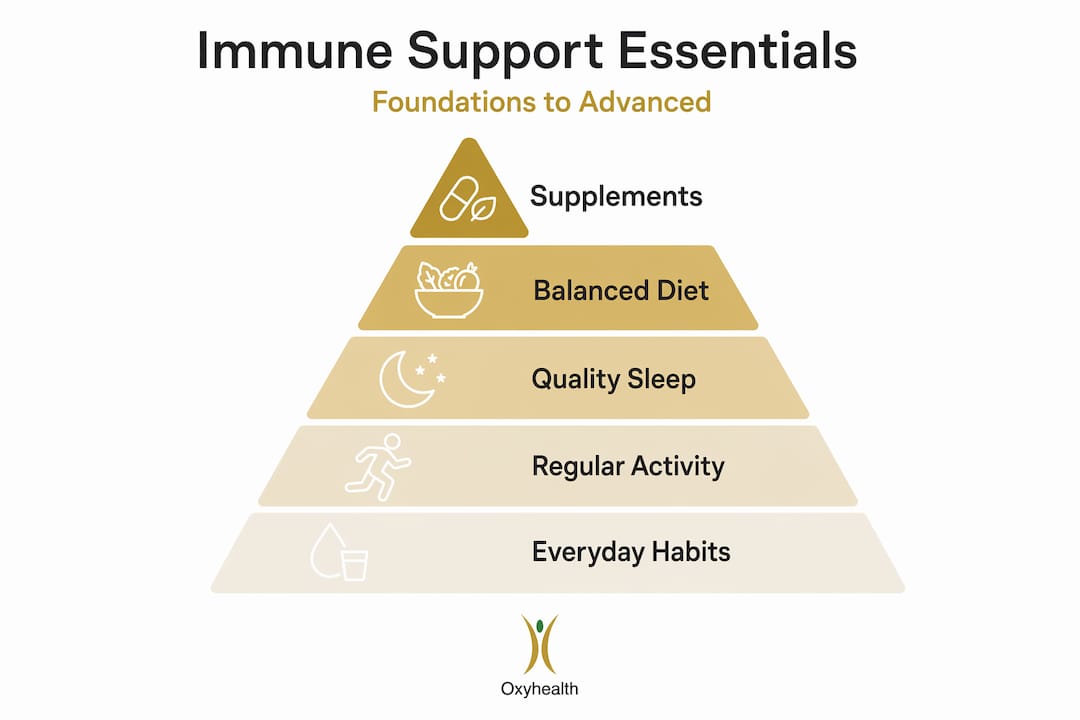
The supplement market thrives on novelty. Every season brings a new hero ingredient, a newly “discovered” plant extract, or a breakthrough formulation promising to transform your immunity. Most of these products are not dangerous. They are simply not necessary for the majority of people, and they often distract from the habits that genuinely matter.
Overcomplication is one trap. Complacency is the other. Some people assume that because they take a supplement, their diet does not need to be particularly good. Or that one product handles everything. Neither is true. The most reliable immune support comes from consistent daily choices, not periodic interventions.
There is also an important safety dimension that does not get enough attention. If you are taking prescription medicines, adding supplements is not neutral. The NHS Specialist Pharmacy Service recommends individual assessment of interactions and safety for anyone considering complementary products alongside conventional medicines. “No known interaction” is not the same as “no interaction possible.” For anyone managing an ongoing health condition, this is a conversation to have with a healthcare professional, not a label to skim.
Our view is straightforward: support your immune system the way nature intended. Start with food, sleep, movement, and stress management. Add targeted supplementation where a genuine need exists. Choose quality products from trusted sources. And resist the urge to spend your way to better health through an ever-growing collection of capsules. For those wanting to explore UK complementary products from trusted providers, the focus should always be on genuine quality and transparency over clever marketing.
Explore effective wellness solutions for immune support
If you have read this far, you are clearly serious about making genuinely informed choices for your health.
At Oxyhealth, we stock a carefully selected range of natural supplements and health kits and cleanse programmes sourced primarily from Global Healing, a provider known for organic, transparent formulations. Whether you are looking for targeted vitamin D support, a structured detox programme, or a wider immune wellness routine, our science-backed supplements are chosen with quality and integrity in mind. All orders over £50 qualify for free UK delivery, and same-day dispatch is available for orders placed before 2 p.m. Every purchase is backed by our 365-day satisfaction guarantee, because confidence in your wellness choices should never feel like a risk.
Frequently asked questions
What is the real difference between ‘boosting’ and ‘supporting’ immunity?
‘Supporting’ means helping your immune system function well by meeting basic nutritional and wellness needs; ‘boosting’ implies above-normal function, which current science does not support for any food or supplement product.
Who in the UK should consider immune-support supplements?
People who are deficient or at particular risk, such as those with restricted diets or individuals needing vitamin D supplementation in winter months, may benefit after professional advice rather than self-prescribing.
Are there risks to taking high doses of vitamins and minerals for immune support?
Yes, excessive intake of nutrients like vitamin A, E, zinc, or selenium can harm your health; a 2026 review on dual-role micronutrients confirms that indiscriminate high-dose supplementation should always be avoided.
Do herbal products like elderberry really support the immune system?
Some herbal supplements are traditionally believed to help, but the scientific evidence varies; immune system function is complex and herbal products should not replace proven nutritional or medical approaches.
Can supplements interact with prescription medication?
Yes, and professional advice should always be sought because, as the NHS Specialist Pharmacy Service makes clear, no supplement is guaranteed to be interaction-free when combined with conventional medicines.