
A step-by-step vitamin routine for better health
TL;DR:
- Building a tailored, evidence-based vitamin routine focused on genuine needs is more effective than following trends or stacking supplements.
- Maintaining good diet, hydration, sleep, and exercise supports natural detox processes better than expensive detox products.
Walk into any pharmacy or scroll through social media for five minutes and you will find dozens of conflicting opinions about which vitamins to take, how many to stack, and whether a “detox” is the missing piece. For UK adults trying to build a genuine health routine, this noise is exhausting and often counterproductive. The good news is that a structured, evidence-based vitamin routine does not need to be complicated. This guide cuts through the marketing and gives you clear, practical steps grounded in NHS guidance and credible UK sources.
Table of Contents
- Understanding your vitamin needs and the basics
- Key steps to build your vitamin routine
- Avoiding common mistakes and safety pitfalls
- Integrating natural detox principles safely
- A smarter approach to vitamins and detox: what most miss
- Ready to refine your vitamin and detox routine?
- Frequently asked questions
Key Takeaways
| Point | Details |
|---|---|
| Diet-first foundation | A varied, balanced diet should provide most of your vitamin needs with few exceptions. |
| Smart supplement selection | Only add supplements when addressing a known need based on diet, stage and lifestyle. |
| Routine safety matters | Avoid exceeding upper limits, particularly with fat-soluble vitamins like A and D. |
| Detox is lifestyle led | Real detox support comes from regular diet, movement and sleep, not pills or powders. |
| Personalise your approach | Tailor your routine to your life stage and individual requirements for the best results. |
Understanding your vitamin needs and the basics
Before you buy a single supplement, the most important question is: what does your diet actually look like? The NHS advises eating a healthy, varied diet to get most vitamins and minerals, and recommends a daily vitamin D supplement for most adults in the UK. That is a crucial starting point. Supplements are designed to fill gaps, not to replace the nutritional value of whole foods.
Most UK adults eating a reasonably balanced diet will already be getting adequate amounts of vitamin C, vitamin E, most B vitamins, and minerals like zinc and magnesium. Where things get more nuanced is when your circumstances change. Pregnancy, a vegan or vegetarian diet, older age, and certain medical conditions all shift your requirements significantly.
Who needs to pay extra attention?
- Pregnant women: Folic acid (400 micrograms daily until 12 weeks) and vitamin D are strongly recommended.
- Vegans and vegetarians: Vitamin B12 is almost exclusively found in animal products, making supplementation essential.
- Over-65s: Vitamin D, calcium, and sometimes B12 absorption declines with age.
- Those with limited sun exposure: Vitamin D deficiency is widespread across the UK, particularly in winter months from October to March.
- Infants and young children: The NHS recommends vitamin A, C, and D drops for children aged six months to five years.
Vitamin D stands apart from most other nutrients because getting enough from food alone is genuinely difficult, and UK sunlight is insufficient for synthesis during the colder months. This is why the NHS recommends that everyone consider a daily 10 microgram vitamin D supplement during autumn and winter, regardless of diet quality.
Spotting a potential deficiency is not always straightforward. Fatigue, low mood, frequent infections, and muscle weakness can all point to nutritional gaps, but they are also symptoms of dozens of other conditions. If you suspect a deficiency, a GP blood test is the most reliable route rather than self-diagnosing and self-supplementing in large doses.
The table below gives a practical overview of common supplement needs by life stage, which is a useful starting point when optimising vitamin intake for your specific situation.
| Life stage | Key supplements to consider | Notes |
|---|---|---|
| General adult | Vitamin D (Oct to Mar) | Diet-first for everything else |
| Pregnant | Folic acid, vitamin D | Start folic acid before conception |
| Vegan/vegetarian | B12, vitamin D, iodine | B12 is non-negotiable |
| Over 65 | Vitamin D, B12, calcium | Absorption decreases with age |
| Child (6 months to 5 years) | A, C, D drops | NHS Healthy Start scheme available |
Following a daily supplement routine guide that accounts for your life stage is far more effective than copying a generic supplement stack from an influencer.
Key steps to build your vitamin routine
Once you have a clear picture of your dietary baseline and individual needs, building a practical routine becomes straightforward. The key is to be systematic rather than reactive.
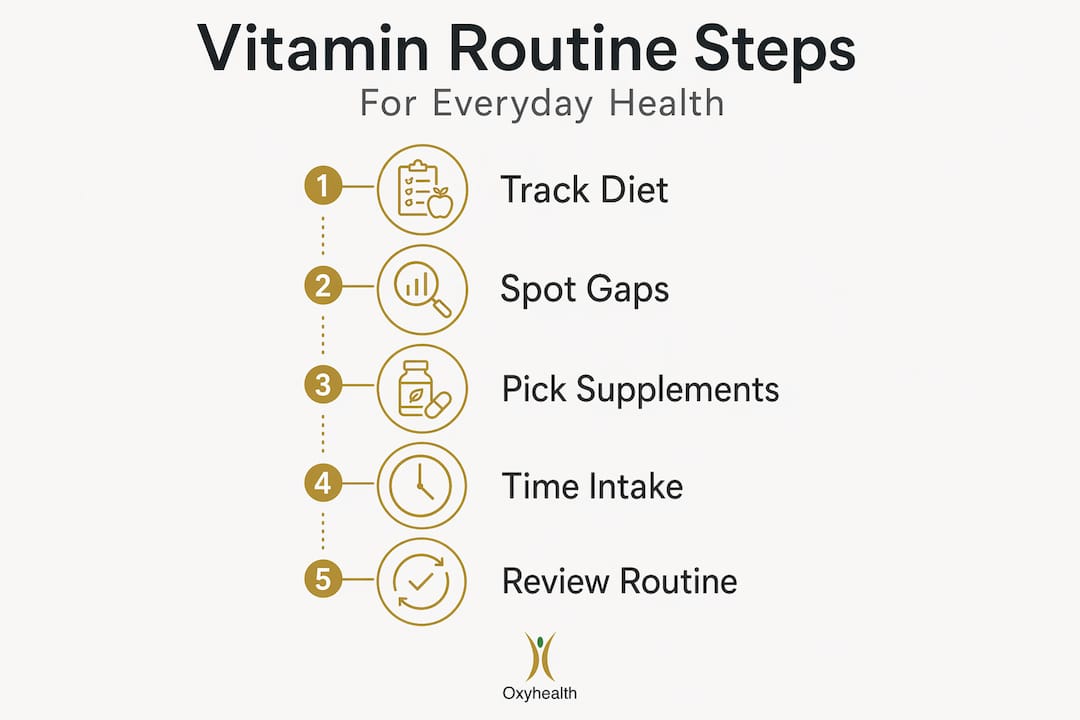
Step 1: Establish your food baseline
Spend a week honestly tracking your meals. You do not need a sophisticated app. A simple note of what you eat each day will reveal patterns: are you regularly eating oily fish, leafy greens, dairy or fortified alternatives, and a variety of coloured vegetables? If yes, your micronutrient needs from supplements are likely minimal.
Step 2: Identify genuine gaps
Based on your life stage, diet, and any GP advice, list the specific nutrients you are likely to be short on. Resist the urge to take a broad multivitamin that covers everything “just in case.” Many multivitamins contain nutrients you already get in abundance, while providing insufficient amounts of the ones you actually need.
Step 3: Choose targeted supplements
Select supplements that address only your identified gaps. For most UK adults, this means vitamin D in winter. For vegans, add vitamin B12 for vegans as a non-negotiable. For those planning pregnancy, folic acid becomes the priority. Targeted supplementation is both safer and more cost-effective than stacking multiple products.
Step 4: Time your supplements correctly
A safe, UK-aligned routine involves taking fat-soluble vitamins (A, D, E, and K) with a meal that contains some healthy fat, as this significantly improves absorption. Water-soluble vitamins like C and most B vitamins can be taken at any time, though some people find B vitamins more energising in the morning. Consistency matters more than timing for most supplements; taking them at the same time each day helps you build the habit and maintain steady levels.

Step 5: Review every three to six months
Your needs are not static. Pregnancy ends, seasons change, diets evolve. Set a reminder to reassess your routine regularly and adjust accordingly.
Pro Tip: Pair your vitamin D with your largest meal of the day, ideally one that includes avocado, olive oil, nuts, or oily fish. The fat content meaningfully improves how much vitamin D your body actually absorbs.
| Typical UK supplement routine | What most people actually need |
|---|---|
| Multivitamin plus omega-3 plus vitamin C plus zinc | Vitamin D (winter), B12 (if vegan) |
| High-dose vitamin C daily | Adequate if eating fruit and vegetables |
| Vitamin A supplement | Rarely needed; risk of excess |
| Iron supplement | Only if deficiency confirmed by GP |
Avoiding common mistakes and safety pitfalls
Supplement safety is where enthusiasm can turn into harm. The UK supplement market is largely unregulated in terms of dosage claims, which means products can legally contain amounts that exceed safe upper limits if taken alongside a varied diet.
The most common pitfalls to avoid:
- Exceeding upper limits for vitamin A: The NHS warns explicitly against taking too much vitamin A from supplements, including fish liver oil, and against eating liver more than once a week. Excess vitamin A is stored in the body and becomes toxic over time, with particular risks during pregnancy where it can harm the developing baby.
- Doubling up unknowingly: Many people take a multivitamin alongside individual supplements, not realising they are doubling or tripling their intake of certain nutrients. Check labels carefully and add up total daily amounts across all products.
- Vitamin D toxicity: While deficiency is common, taking very high doses of vitamin D for extended periods can cause hypercalcaemia (raised calcium levels in the blood), leading to nausea, weakness, and kidney problems. The NHS recommends 10 micrograms daily for most adults; doses above 100 micrograms daily should only be taken under medical supervision.
- Folic acid in later pregnancy: Folic acid supplementation is recommended before conception and up to 12 weeks. Continuing high-dose folic acid beyond this point is unnecessary and potentially counterproductive.
- Cod liver oil and vitamin A: Cod liver oil is high in both vitamin D and vitamin A. If you are already taking a multivitamin containing vitamin A, adding cod liver oil can push your intake well above safe levels.
Important: If you are pregnant, planning pregnancy, or managing a chronic health condition, always discuss supplement use with your GP or midwife before starting anything new. This is not optional caution; it is essential practice.
Pro Tip: Before buying any new supplement, check the label for the percentage of the Nutrient Reference Value (NRV) it provides. If a single supplement already gives you 100% or more of a fat-soluble vitamin’s NRV, you almost certainly do not need additional sources.
Interactions between supplements and medications are another underappreciated risk. High-dose vitamin E, for example, can interact with blood-thinning medications. St John’s Wort, often marketed as a natural supplement, can reduce the effectiveness of the contraceptive pill and certain antidepressants. Always check with a pharmacist if you are on prescribed medication.
Integrating natural detox principles safely
The word “detox” has been stretched so far by marketing that it has almost lost meaning. Juice cleanses, supplement packs promising to “flush toxins,” and expensive herbal blends dominate social media feeds. The reality is more straightforward and considerably less expensive.
The British Dietetic Association is clear on this: no pills or detox products do a better or “magic” job than the body’s own systems. Your liver, kidneys, lungs, and skin are continuously processing and eliminating waste products. What supports these systems is not a special supplement; it is the basics done consistently.
What genuinely supports your body’s natural elimination systems:
- Adequate hydration: aim for 6 to 8 glasses of fluid daily, primarily water
- Dietary fibre from vegetables, legumes, whole grains, and fruit to support gut transit
- Regular physical activity, which supports circulation and lymphatic drainage
- Sufficient sleep (7 to 9 hours for most adults), during which the brain’s glymphatic system clears waste products
- Limiting alcohol, ultra-processed foods, and excess sugar, which burden the liver
| What actually supports detox | What does not work as claimed |
|---|---|
| Adequate hydration | “Detox teas” and laxative blends |
| High-fibre diet | Short-term juice cleanses |
| Regular movement | Expensive supplement “detox kits” |
| Quality sleep | Foot patches and wraps |
| Limiting alcohol and processed foods | High-dose antioxidant megadosing |
That said, specific vitamins do play a supporting role. Vitamin C supports liver enzyme function. B vitamins are essential cofactors in the liver’s detoxification pathways. Magnesium supports hundreds of enzymatic reactions. The difference is that these nutrients support normal physiological function at adequate intake levels, not at megadose levels, and they work best when obtained through a balanced diet supplemented where genuinely needed.
For those interested in gentle detox strategies that are grounded in evidence, the focus should always be on sustainable lifestyle habits rather than short-term protocols. If you want to understand how to detox safely without falling for marketing myths, the answer is almost always the same: support your body’s existing systems rather than trying to override them.
Practical tips to combine vitamins and a detox-supportive lifestyle:
- Take vitamin D with breakfast alongside a glass of water to establish a consistent morning habit
- Eat a portion of cruciferous vegetables (broccoli, kale, Brussels sprouts) daily to support liver glucuronidation pathways
- Use your supplement routine as a trigger to drink a full glass of water, building hydration into the habit
- Prioritise sleep as seriously as you prioritise your supplement schedule
A smarter approach to vitamins and detox: what most miss
Here is something worth saying plainly: the supplement industry profits from complexity. The more products you feel you need, the more you spend. But the evidence consistently points in the opposite direction. Simpler routines, built around genuine individual needs, outperform elaborate supplement stacks every time.
We see this pattern repeatedly. Someone starts with vitamin D, adds a B-complex, then reads about magnesium, then adds omega-3, then picks up a greens powder, and before long they are spending £80 a month on supplements while still eating a poor diet. The supplements become a psychological substitute for the harder work of improving food quality, sleep, and movement.
The most effective vitamin routine is one that you can sustain for years, not weeks. It evolves with your life: pregnancy adds folic acid, winter adds vitamin D, a shift to plant-based eating adds B12. These are meaningful, targeted interventions. Everything else should be earned through food first.
The same logic applies to detox. The people with the best long-term health outcomes are not those who do an annual juice cleanse. They are the ones who drink enough water every day, eat vegetables at most meals, sleep well, and move regularly. These habits are unglamorous. They do not make for compelling social media content. But they are what the evidence actually supports.
Explore wellness best practices that reflect this food-first, habit-led philosophy, and you will find that the most enduring health improvements come from consistency rather than complexity.
Ready to refine your vitamin and detox routine?
Building a smarter routine starts with having access to supplements you can genuinely trust. At Oxyhealth, we stock a carefully selected range of natural, high-quality products sourced from Global Healing, with same-day UK dispatch for orders placed before 2 p.m. and free delivery on orders over £50.
Whether you are looking for targeted premium supplements to fill specific nutritional gaps, structured health kits designed to support a complete wellness programme, or evidence-aligned cleanse and detox solutions that work with your body rather than against it, you will find vetted options backed by our 365-day satisfaction guarantee. Take the knowledge from this guide and put it into practice with products that meet the same high standards you now expect from your routine.
Frequently asked questions
What is the best time of day to take vitamins?
Fat-soluble vitamins (A, D, E, and K) absorb better when taken with a meal containing healthy fats, while consistency of timing matters more than the specific hour for most other supplements.
Should I use a vitamin routine for detox?
Vitamin routines do not replace the body’s natural detox functions; the BDA recommends supporting your liver and kidneys through a balanced diet, adequate hydration, quality sleep, and regular physical activity instead.
Are there risks with taking multiple vitamin supplements?
Yes, over-supplementing can be genuinely harmful, particularly with vitamins A and D; the NHS warns explicitly against excess vitamin A from supplements and liver products, so always check UK upper safe limits before combining products.
How do I know if I need a vitamin supplement if I am vegan?
Vegans almost certainly need vitamin B12 as it is not found naturally in plant foods such as fruit, vegetables, and grains, making supplementation strongly recommended rather than optional.
How much folic acid is recommended before and during pregnancy?
The NHS recommends 400 micrograms of folic acid daily, starting before conception and continuing until 12 weeks of pregnancy, to support healthy neural tube development.