
Why choose clean skincare for healthier, radiant skin
TL;DR:
- Most UK products on shelves are not fully vetted, and “clean” claims lack a regulated standard, risking greenwashing.
- Choosing certified clean skincare with transparent ingredients reduces exposure to irritants, allergens, and hormone disruptors, improving long-term skin health.
Most people assume that if a product is sitting on a UK shelf, it has been thoroughly vetted and is safe to use. That assumption is understandable, but it is not entirely accurate. While the UK does ban or restrict a significant number of harmful substances in cosmetics, the regulatory framework still leaves gaps, and brands can make bold “clean” or “natural” claims with very little accountability. The result is a market where genuinely safer products sit alongside those that are anything but, and the difference is not always obvious from the packaging. This guide cuts through the noise to explain what clean skincare actually means, what benefits it delivers, and how to make smarter choices for your skin and your health.
Table of Contents
- What makes skincare ‘clean’?
- Health benefits of choosing clean skincare
- Decoding ingredients and avoiding greenwashing
- How to add clean skincare to your daily routine
- Why ‘clean’ matters more than ever: our perspective
- Explore clean skincare solutions with Oxyhealth
- Frequently asked questions
Key Takeaways
| Point | Details |
|---|---|
| Clean skincare reduces risks | Choosing clean products helps avoid common irritants and hormone disruptors found in conventional formulas. |
| Organic ingredients offer real benefits | Certified organic skincare is richer in nutrients and better for sensitive or allergy-prone skin. |
| Know how to spot greenwashing | Read ingredient lists and rely on third-party verification tools as ‘clean’ claims are not yet regulated in the UK. |
| Ease the transition gradually | Switch key products step by step and monitor your skin for best results. |
What makes skincare ‘clean’?
The honest answer is that there is no single, legally binding definition of “clean skincare” in the UK or across the EU. Unlike “organic,” which has some regulatory framework attached to it, “clean” is essentially a marketing term that any brand can use freely. That said, the concept does carry genuine meaning when it is applied consistently and backed by credible standards.
In practical terms, clean skincare in the UK typically refers to formulations that deliberately exclude ingredients linked to irritation, hormone disruption, or long-term health concerns. Clean skincare avoids potentially harmful synthetic ingredients like parabens, phthalates, and certain fragrances that are banned or restricted in the UK, reducing risks of irritation, allergies, and hormone disruption. That is a meaningful distinction from conventional skincare, which may use these ingredients legally within permitted concentration limits.
The most credible benchmarks for clean skincare in Britain come from certification bodies. The Soil Association and the COSMOS standard (Cosmetic Organic and Natural Standard) both require rigorous ingredient scrutiny, supply chain transparency, and the exclusion of synthetic preservatives, artificial fragrances, and petrochemical derivatives. UK regulations ban or restrict toxic ingredients such as Lilial and Zinc Pyrithione, with mandatory ingredient lists allowing consumers to avoid allergens. Clean products that align with Soil Association or COSMOS standards go further than the legal minimum.
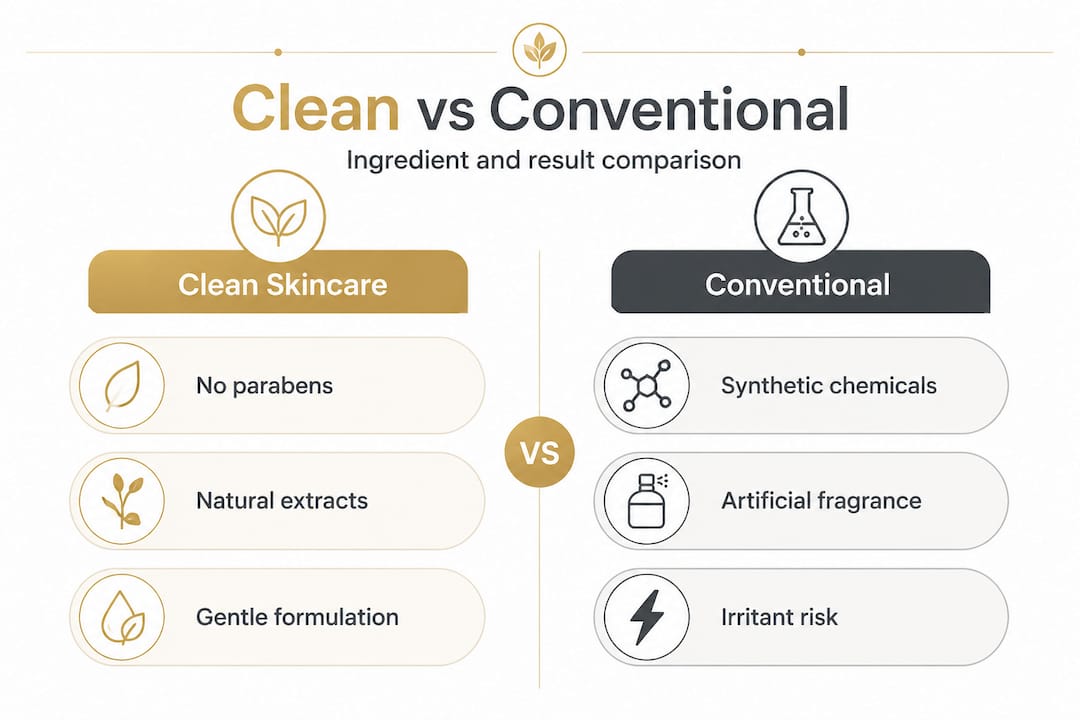
Clean vs conventional: a quick comparison
| Feature | Clean skincare | Conventional skincare |
|---|---|---|
| Parabens | Excluded | Often included |
| Synthetic fragrances | Excluded or minimal | Commonly used |
| Petrochemical derivatives | Avoided | Frequently present |
| Third-party certification | Soil Association, COSMOS | Rarely required |
| Ingredient transparency | Prioritised | Variable |
| Regulatory compliance | Exceeds legal minimum | Meets legal minimum |
The mandatory ingredient list, known as the INCI list (International Nomenclature of Cosmetic Ingredients), is printed on every UK product and is your most powerful tool. Learning to read it actively, rather than relying on front-of-pack claims, puts you in control.
Key ingredients to watch for: Parabens (methylparaben, propylparaben), phthalates (often hidden under “fragrance”), formaldehyde-releasing preservatives (DMDM hydantoin), synthetic musks, and oxybenzone are among the most commonly flagged substances in conventional products.
Exploring effective organic ingredients that genuinely support skin health is a far more rewarding approach than simply trusting a label that says “natural.”
Health benefits of choosing clean skincare
Understanding what clean skincare excludes is one thing. Understanding what it actually does for your skin and body is what makes the switch feel worthwhile. The evidence here is increasingly compelling, and it goes well beyond marketing language.
Clinical studies show that gentle clean cleansers improve hydration by 46%, improve barrier function scores to 9.27, and reduce impurities without causing irritation. That is a significant finding, because barrier function is the foundation of healthy skin. A compromised barrier allows irritants and allergens to penetrate more easily, which triggers inflammation and accelerates ageing. Clean formulations that support rather than strip the barrier are doing something structurally important.
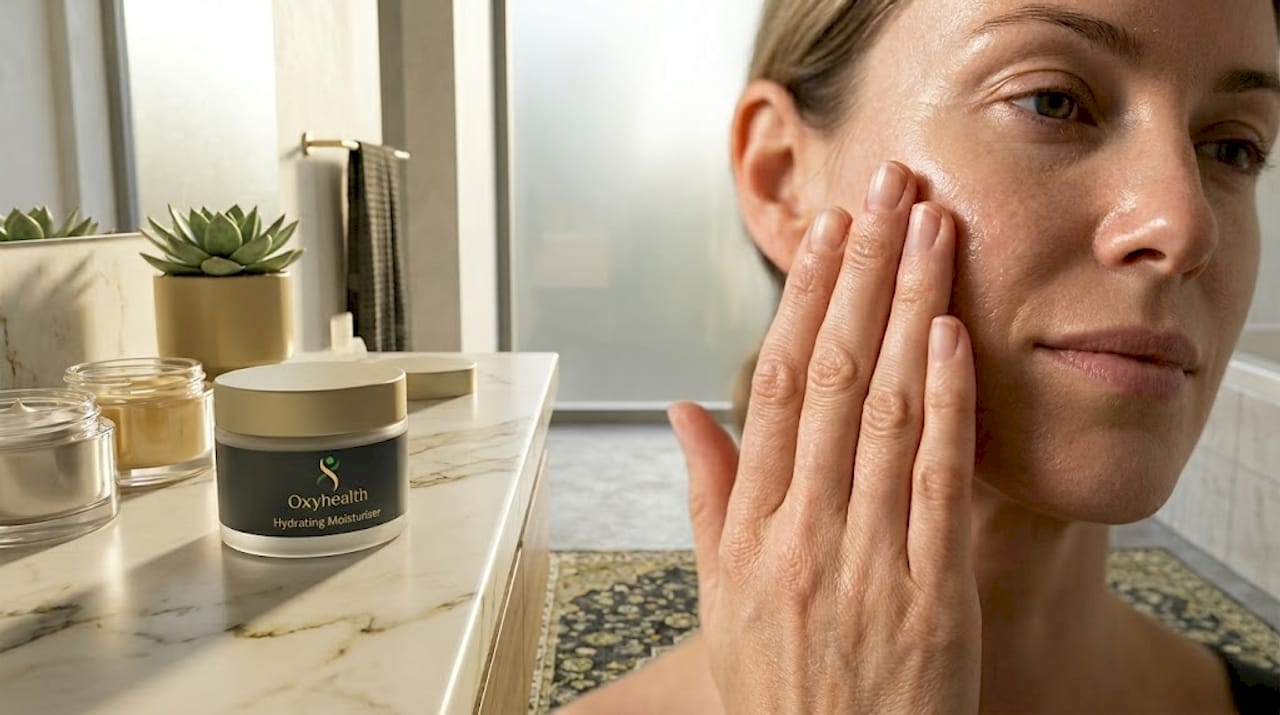
Allergic reactions are another major concern. The NHS notes that cosmetics cause allergic contact dermatitis through preservatives and fragrances, and clean formulations minimise these risks, particularly fragrance-free options. Allergic contact dermatitis is not a minor inconvenience. It can cause persistent redness, itching, and skin thickening that takes weeks to resolve. For people with eczema or rosacea, exposure to common cosmetic allergens can trigger extended flares.
The market data reinforces this shift in consumer behaviour. Organic skincare sales grew 7% in the UK according to the Soil Association’s 2025 report, with studies showing a 22% reduction in eczema flares compared to conventional products. That is not a small margin. It reflects a real, measurable difference in outcomes for people who make the switch thoughtfully.
Key health benefits at a glance
- Reduced allergen exposure: Fewer synthetic fragrances and preservatives means fewer triggers for sensitive skin
- Improved skin barrier: Gentle, plant-based ingredients support the skin’s natural protective layer
- Lower hormone disruption risk: Avoiding parabens and phthalates reduces potential endocrine interference
- Calmer, less reactive skin: Particularly relevant for eczema, rosacea, and acne-prone skin types
- Better long-term skin health: Less cumulative chemical exposure over years of daily use
Pro Tip: If you are transitioning to clean skincare, start by replacing your daily cleanser first. It is the product that spends the most time in contact with your skin and is rinsed off, making it a lower-risk first swap that can still deliver noticeable improvements in comfort and hydration.
The detoxification benefits of supporting your skin from the inside out are also worth considering alongside topical changes. Products like ozonated olive oil therapy represent a genuinely different approach to skin support, using ozone-infused olive oil to deliver antimicrobial and antioxidant properties directly to the skin. And if you want to understand how nutrition and clean skincare work together, the connection between what you eat and how your skin behaves is far stronger than most people realise.
Decoding ingredients and avoiding greenwashing
Here is where things get complicated. Because there is no regulated definition of “clean,” any brand can use the word on its packaging without meeting any particular standard. This creates fertile ground for greenwashing, which is the practice of making products appear more natural or safe than they actually are.
No regulated “clean” definition exists, and varying standards from bodies like EWG and Sephora lead to greenwashing risks. Notably, natural ingredients can still cause allergies, with essential oils implicated in 30 to 45% of allergic contact dermatitis cases. That last point is critical. “Natural” does not automatically mean “safe.” Lavender oil, tea tree oil, and citrus extracts are all natural, and all are known sensitisers for some people.
EWG Skin Deep rates ingredients and products on a scale of 1 to 10 for potential hazards, and it is one of the most useful tools available to UK consumers who want to check toxicity before buying. A score of 1 to 2 indicates low hazard, while anything above 6 warrants careful consideration.
How to vet a “clean” claim: a step-by-step approach
- Read the INCI list first. Ignore the front-of-pack claims entirely and go straight to the ingredient list. If you cannot find it, that is already a red flag.
- Search for flagged ingredients. Use a reference list of commonly banned or restricted substances. Parabens, phthalates, formaldehyde releasers, and synthetic musks are your starting points.
- Check EWG hazard ratings for unfamiliar ingredients. If an ingredient you do not recognise appears high on the list (meaning it is present in a larger quantity), look it up before purchasing.
- Look for third-party certification. Soil Association, COSMOS, and Leaping Bunny logos are independently verified. A brand’s own “clean” badge is not.
- Patch test every new product. Apply a small amount to your inner forearm for 48 hours before full use, regardless of how clean the formulation claims to be.
- Research the brand’s transparency. Does it publish its full ingredient sourcing? Does it respond clearly to consumer questions? Brands with nothing to hide tend to share openly.
Worth remembering: The word “fragrance” or “parfum” on an ingredient list can legally conceal dozens of individual chemical compounds, including known allergens. If a product lists “fragrance” without further breakdown, it is not being fully transparent.
Learning organic label navigation takes a little practice but quickly becomes second nature. Once you know what to look for, spotting greenwashing becomes much easier.
How to add clean skincare to your daily routine
Switching to clean skincare does not need to be an overnight overhaul. In fact, a gradual transition is smarter, both for your skin and your budget. Introducing too many new products at once makes it impossible to identify what is working and what might be causing a reaction.
Organic ingredients in clean skincare are richer in antioxidants, vitamins, and nutrients due to the absence of pesticides, supporting skin barrier function, hydration, and anti-ageing. This means that even a simple routine built on quality organic ingredients can outperform a complex conventional one.
A realistic transition plan
- Start with your cleanser. It is used daily, covers your whole face, and sets the tone for everything that follows. Replacing a harsh, sulphate-heavy cleanser with a gentle, certified clean alternative is often the single most impactful change you can make.
- Swap your moisturiser next. This is the product that sits on your skin longest, so ingredient quality matters enormously here. Look for Soil Association certified options with recognisable plant-based ingredients.
- Introduce one new product per fortnight. This gives your skin time to adjust and allows you to monitor any changes, positive or negative, accurately.
- Keep a simple skin diary. Note how your skin feels after each new introduction. Hydration levels, redness, and breakouts are all worth tracking. You will start to see patterns quickly.
- Use up existing products before replacing them. There is no need to bin everything at once. Finish what you have, then replace with a cleaner alternative when the time comes.
- Revisit your choices seasonally. Your skin’s needs change with the weather, particularly in the UK where humidity and temperature vary significantly. Your routine should adapt accordingly.
Pro Tip: When beginning your organic skincare transition, photograph your skin in natural light every two weeks. It is far easier to see gradual improvements in texture, tone, and clarity when you have a visual reference to compare against.
If you are ready to browse clean skincare lines that align with these principles, look for products that list every ingredient clearly and carry recognised third-party certification. A soothing facial mist can also be a gentle, low-risk starting point for those new to clean formulations, offering hydration and skin support without a complex ingredient profile.
Why ‘clean’ matters more than ever: our perspective
We have watched the clean beauty conversation evolve over the past decade, and our honest view is this: the term has been both a genuine force for good and a tool for exploitation in equal measure. The brands that use “clean” as a meaningful commitment to ingredient transparency are doing important work. The brands that use it as a marketing shortcut are making the whole category harder to trust.
What concerns us most is the gap between the claim and the reality. A product can call itself clean while still containing ingredients that provoke reactions in sensitive skin. It can carry a green colour scheme and botanical imagery while hiding synthetic compounds behind the word “fragrance.” This is not hypothetical. It happens regularly, and it affects real people who are trying to make better choices for their health.
The empowering truth is that UK consumers have more tools than ever to push back. Mandatory ingredient lists, third-party certification bodies, and databases like EWG Skin Deep mean that the information is available. The skill is knowing how to use it, and that is exactly what ingredient literacy gives you.
Our experience at Oxyhealth is that customers who take the time to understand what is in their products make better long-term choices and see better results. Buzzwords fade. Ingredient knowledge compounds. The more you learn, the less you can be misled. Explore health insights that go beyond skincare to understand how your entire wellness routine connects, because skin health does not exist in isolation from the rest of your body.
Explore clean skincare solutions with Oxyhealth
At Oxyhealth, we believe that what goes on your skin matters as much as what goes in your body. Our carefully selected range of skincare products is sourced from Global Healing, a provider known for its commitment to organic, non-toxic formulations and full ingredient transparency.
Whether you are just beginning your clean skincare journey or looking to refine an existing routine, our UK-based selection makes it straightforward to find products that align with your values and your skin’s needs. From everyday essentials to targeted treatments, every product we stock is chosen with ingredient integrity in mind. Shop clean skincare to explore our full range, or if you are curious about the benefits of ozone therapy for skin health, try ozonated olive oil as a genuinely different approach to skin support. Orders over £50 qualify for free UK delivery, with same-day dispatch available for orders placed before 2 p.m.
Frequently asked questions
What ingredients should I avoid for clean skincare?
Avoid parabens, phthalates, and fragrances banned or restricted in the UK, as well as formaldehyde-releasing preservatives, synthetic musks, and oxybenzone, all of which are linked to irritation, allergies, or hormone disruption.
Is clean skincare suitable for sensitive skin or eczema?
Yes, and the evidence is meaningful. Studies show a 22% reduction in eczema flares with organic skincare versus conventional products, and the NHS acknowledges that cosmetics containing fragrances and preservatives are common triggers for allergic contact dermatitis.
Are organic ingredients really better for my skin?
Organic ingredients are richer in antioxidants, vitamins, and nutrients due to the absence of pesticides, which directly supports barrier function, hydration, and long-term skin resilience.
How can I tell if a product’s ‘clean’ claim is genuine?
Always read the full INCI ingredient list and cross-reference unfamiliar ingredients using EWG Skin Deep’s hazard ratings, which score ingredients from 1 (low hazard) to 10 (high hazard), giving you an objective basis for comparison beyond marketing claims.