
What is gentle cleansing? The guide to balanced skin
TL;DR:
- Squeaky clean sensation indicates barrier damage, not proper cleansing.
- Gentle cleansers preserve skin barrier, microbiome, and reduce water loss.
- Over-cleansing with harsh products worsens skin health over time.
That satisfying tightness after washing your face? It is actually a warning sign. The skin barrier is damaged when you feel that so-called squeaky clean sensation, not refreshed. Gentle cleansing is the approach that keeps your skin comfortable, balanced, and protected by using mild formulations that clean without stripping. It is backed by solid clinical evidence and is far more effective long-term than the aggressive scrubs and foaming soaps many of us grew up with. In this guide, we will cover what gentle cleansing really means, why it works, how it compares to harsher methods, and how to build a practical daily routine.
Table of Contents
- What is gentle cleansing?
- How does gentle cleansing benefit your skin?
- Gentle vs harsh: Comparing cleansing approaches
- Practical gentle cleansing: How to do it right
- A fresh perspective on gentle cleansing: Why less is truly more
- Enhance your natural cleansing routine with Oxyhealth
- Frequently asked questions
Key Takeaways
| Point | Details |
|---|---|
| Gentle cleansing explained | It means using mild, barrier-preserving methods to clean skin without harsh stripping. |
| Science-backed skin benefits | Empirical studies show gentle cleansers improve hydration, reduce water loss, and protect the skin’s microbiome. |
| Choose smart, not harsh | Avoid cleansers with strong soaps and heavy fragrances for better long-term skin health. |
| Practical steps matter | Gentle routines, soft water temperature, and product selection greatly impact your results. |
What is gentle cleansing?
Gentle cleansing is the practice of removing dirt, oil, and impurities from the skin using mild, low-foaming, or soap-free products that respect the skin’s natural barrier. It is not about cleansing less thoroughly. It is about cleansing more intelligently.
Traditional cleansers, particularly bar soaps and heavy-foaming face washes, rely on strong surfactants to lift oil and debris. The problem is that those surfactants do not stop at the grime. They take your skin’s natural lipids with them too, leaving the barrier compromised and the microbiome disrupted. Harsh cleansers strip lipids, increase transepidermal water loss (TEWL), and disturb the microbiome. Gentle cleansers, by contrast, maintain that balance.
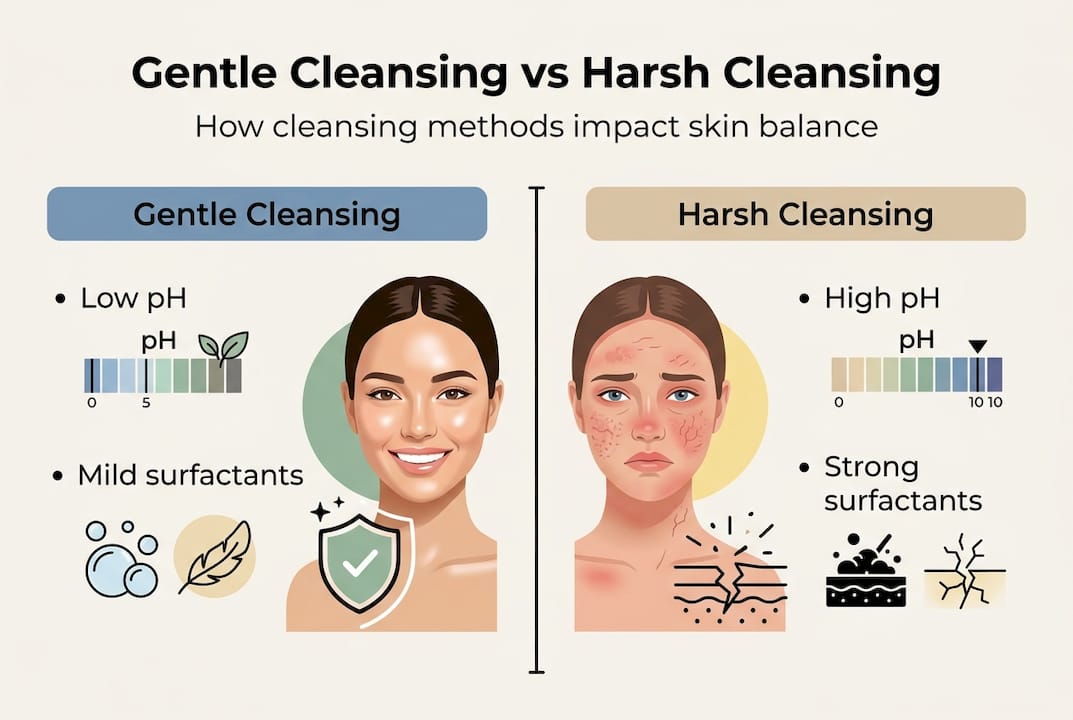
That feeling of tightness after cleansing is not a sign of cleanliness. It is your skin telling you something has gone wrong. A well-chosen gentle cleanser will leave skin feeling comfortable, neither oily nor taut, because it has cleaned without over-removing.
Here is what to look for in a genuinely gentle cleanser:
- pH-balanced formulation (ideally between 4.5 and 5.5, matching the skin’s natural acid mantle)
- Minimal surfactants or mild alternatives like glucosides and betaines
- Fragrance-free or lightly scented with natural botanical extracts
- No alcohol or sulphates as primary ingredients
- Hypoallergenic and dermatologist-tested where possible
“The squeaky clean sensation that people associate with thorough cleansing is actually a sign of barrier damage. Comfortable, balanced skin after washing is the real sign of an effective cleanser.” — Expert in skin science, The Conversation
For anyone exploring a more natural approach to their routine, the skin care collection at Oxyhealth offers products that align with these gentle principles. Gentle cleansing is not a trend. It is simply the scientifically sound way to care for your skin every day.
How does gentle cleansing benefit your skin?
The benefits of gentle cleansing go well beyond comfort. Clinical research shows measurable, meaningful improvements in skin health when harsh products are replaced with gentle alternatives.

A standout study found that a soap-free lotion reduced TEWL by 40.73% and improved hydration by 46.07 units compared to baseline. Those are not marginal gains. That is the difference between skin that is chronically dehydrated and inflamed and skin that is resilient and well-functioning.
| Outcome measured | Change with gentle cleanser |
|---|---|
| Transepidermal water loss (TEWL) | Reduced by 40.73% |
| Skin hydration level | Improved by 46.07 units |
| Skin barrier integrity | Significantly preserved |
| Impurity removal efficacy | Comparable to standard cleansers |
Beyond hydration, gentle cleansing protects your skin microbiome. Your skin hosts millions of beneficial bacteria that help defend against infection, regulate inflammation, and maintain pH. Aggressive cleansers disturb this ecosystem, which can trigger breakouts, redness, and sensitivity. Gentle cleansers work with your microbiome, not against it.
For anyone interested in how cleansing connects to broader skin health, the natural skin detoxification guide is a useful resource. You can also learn more about how structured routines help by reading about the benefits of cleansing kits.
Pro Tip: After cleansing, press the back of your hand gently to your cheek. If your skin feels comfortable and slightly supple rather than tight or slippery, your cleanser is likely maintaining your barrier function correctly.
The evidence is consistent. Choosing a gentle cleanser is one of the highest-impact, lowest-effort changes you can make to your skin health. It costs no more effort and delivers measurably better outcomes over time.
Gentle vs harsh: Comparing cleansing approaches
Understanding the difference between gentle and harsh cleansers is not just academic. It directly influences the choices you make in the chemist or online, and the long-term condition of your skin.
| Factor | Gentle cleanser | Harsh cleanser |
|---|---|---|
| pH level | 4.5 to 5.5 (skin-matched) | Often above 7 (alkaline) |
| Key ingredients | Mild glucosides, betaines | SLS, SLES, strong soaps |
| Effect on TEWL | Reduces or maintains | Significantly increases |
| Microbiome impact | Preserving | Disruptive |
| Post-wash sensation | Comfortable, balanced | Tight, dry, or stripped |
| Suitable for sensitive skin | Yes | Generally not recommended |
Harsh cleansers carry real risks. Harsh cleansers increase TEWL, risking dryness and microbiome disturbance. One lesser-known hazard is rebound oiliness. When the skin is stripped of its natural oils repeatedly, the sebaceous glands overcompensate by producing more oil. People with oily skin who use harsh cleansers can actually worsen the very problem they are trying to solve.
Ingredients to avoid if you want to cleanse gently:
- Sodium lauryl sulphate (SLS) and sodium laureth sulphate (SLES)
- Alkaline bar soaps, particularly those with high pH
- Heavy synthetic fragrances, which are common irritants
- Alcohol-based toners used immediately after cleansing
- Microbeads or abrasive scrubs used daily
Gentle cleansing is particularly important for children, the elderly, and anyone with sensitive or reactive skin. Children’s skin barrier is thinner and less mature. Elderly skin produces less natural oil and repairs more slowly. For both groups, even moderate surfactants can cause significant disruption. You can explore cleanse and detox options suited to a more considered approach. For those curious about ingredient comparisons in cleansing oils, this Vitamin C cleansing oil comparison offers a useful reference point.
Practical gentle cleansing: How to do it right
Knowing that gentle cleansing is better is only useful if you can actually put it into practice. Here is a straightforward approach that works for most skin types in UK conditions.
- Choose the right cleanser. Look for a pH-balanced, soap-free, fragrance-free formulation. Micellar waters, gentle cream cleansers, and oil cleansers are all excellent choices depending on your skin type.
- Use lukewarm water. Hot water disrupts the lipid barrier and increases TEWL. Cold water does not emulsify cleanser effectively. Lukewarm is the sweet spot.
- Apply with your fingertips. Avoid flannels or sponges unless they are very soft and freshly laundered. Your fingertips provide enough gentle friction to shift daily debris.
- Spend 30 to 60 seconds cleansing. Work in small circular motions without pulling the skin. This is adequate for daily cleansing.
- Rinse thoroughly. Cleanser residue left on the skin can itself cause irritation. Take an extra 15 seconds to ensure full removal.
- Pat dry, do not rub. Use a clean, soft towel and press gently. Rubbing damages the surface layer of skin cells.
One factor many UK guides overlook is water hardness. Around 60% of England has hard water, which is high in calcium and magnesium. Hard water can reduce the foam your cleanser produces, but this does not reduce its effectiveness. If you notice residue or irritation, using filtered water for cleansing can make a noticeable difference.
Pro Tip: Before committing to a new cleanser, patch test it on the inside of your wrist for 48 hours. This simple step catches sensitivity reactions before they affect your face.
“Healthy, balanced skin after cleansing looks calm, feels comfortable, and shows no redness or tightness. These are the real markers of an effective cleanse.” — Skin science expert
For a more structured approach, reading about using cleansing kits can help you build a routine with clear, consistent steps.
A fresh perspective on gentle cleansing: Why less is truly more
Here is something the marketing world will never tell you: most people are over-cleansing, over-spending, and over-complicating their routines based on promises that were never grounded in science.
The push for extreme purity, whether through multi-step systems, foaming double cleansers, or antibacterial washes, is largely a commercial construct. The skin does not want to be squeaky clean. It wants to be balanced. Hard water reduces foam but not cleansing power, which tells you something important: visible lather is performance, not proof of efficacy.
Gentle cleansing fits into a wider wellness philosophy where less product and smarter habits outperform complexity and cost. This means adjusting your routine by season. In winter, when central heating dries the air and skin is more vulnerable, a cream cleanser over a gel is worth considering. In summer, a lightweight micellar water may suit your skin better.
Local water quality matters too. If you live in a hard water area and are experiencing persistent sensitivity, the issue may not be your cleanser at all. It may be the water itself interacting with even a gentle product.
What most routine guides also miss is the psychological dimension. A short, calm cleansing ritual done consistently beats an elaborate system you abandon after two weeks. Understanding why cleansing kits matter can help you see cleansing as part of a larger, more intentional approach to your health rather than an isolated cosmetic habit.
Frequently asked questions
Is gentle cleansing good for sensitive or eczema-prone skin?
Yes. Gentle cleansers maintain barrier and hydration making them the recommended choice for sensitive and eczema-prone skin where barrier disruption is a key concern.
How often should you practise gentle cleansing?
Most people benefit from cleansing once or twice daily. Once in the evening to remove the day’s build-up is essential, while a light morning cleanse is optional depending on your skin type and activity level.
Can hard water in the UK affect gentle cleansing?
Hard water may reduce foam but not cleansing power. If you notice irritation in hard water areas, filtered water for rinsing can help.
Are natural cleansers always gentle?
Not necessarily. Some natural ingredients, such as essential oils or high-pH plant-based soaps, can still irritate the skin. Always check for pH balance and a minimal list of active irritants before assuming a product is gentle.